
Thoughtful Planning and Execution for Driveways in Morecambe: Insights from an Industry Specialist
Driveways in Morecambe present a unique set of challenges and opportunities for procurement managers and operations directors. The town’s coastal climate, characterised by frequent rainfall, salt-laden air, and variable temperatures, directly influences the choice of materials and installation techniques. Selecting the right driveway solution is not a mere aesthetic decision but a strategic operational choice that affects longevity, maintenance budgets, and overall site performance. This article draws on extensive industry experience to explore the critical factors involved in specifying and procuring driveway installations in Morecambe, with particular emphasis on resin bound solutions.
Understanding Variants of Driveways in Morecambe and Their Impact on Procurement Choices
In Morecambe, driveway options typically fall into four main categories: resin bound, tarmacadam, block paving, and concrete. Each type brings distinct technical characteristics that influence procurement decisions, installation complexity, and lifecycle costs.
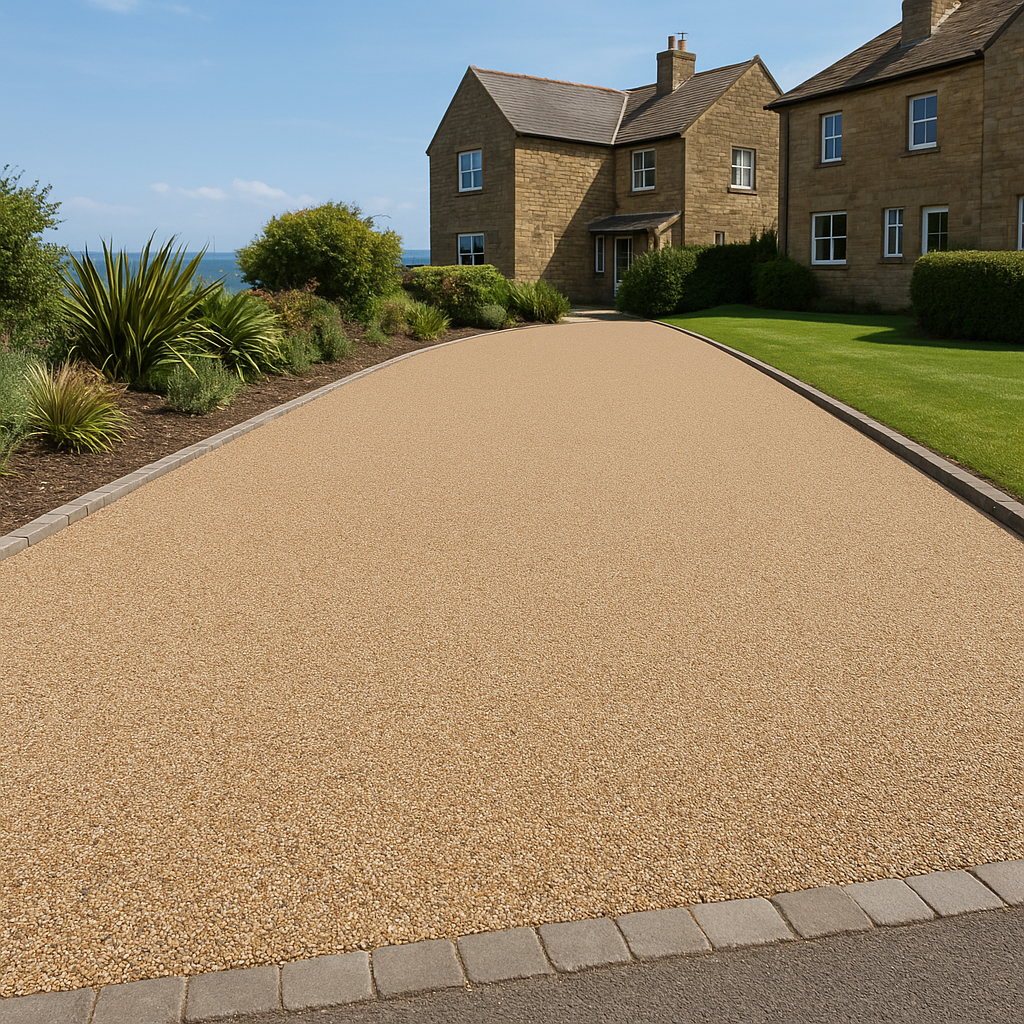
Resin bound driveways have gained popularity due to their permeability, aesthetic versatility, and relatively low maintenance. This system involves mixing aggregate stones with a clear resin binder, which is then applied to a prepared base. In a coastal environment like Morecambe, permeability is a significant advantage since it mitigates surface water runoff and complies with Sustainable Drainage Systems (SuDS) regulations. However, resin bound installations require specialised mixing equipment and skilled applicators familiar with appropriate curing times and substrate preparation.
Tarmacadam remains a cost-effective choice for larger commercial or industrial sites requiring robust, load-bearing surfaces. Its resilience to heavy traffic loads makes it suitable for logistics yards or municipal facilities. Procurement managers must consider that tarmacadam’s impermeability can exacerbate drainage issues in areas with high rainfall, necessitating additional infrastructure like soakaways.
Block paving offers design flexibility and durability but demands precise base preparation and jointing materials resistant to salt ingress. Morecambe’s proximity to the sea introduces risks of efflorescence and salt crystallisation, which can degrade certain jointing sands and lead to premature failure.
Concrete driveways deliver longevity and strength but are less adaptable aesthetically and can be prone to cracking if substrate movement occurs. Coastal soil conditions with variable moisture content require thorough geotechnical evaluation before deciding on concrete to prevent subgrade settlement.
From a procurement perspective, the driveway type influences the equipment market substantially. Resin bound works necessitate specialised mixers from manufacturers such as Putzmeister or Marshalltown, while tarmac installations rely on asphalt pavers and rollers from brands like Bomag or Caterpillar. Block paving demands compaction plates and cutting tools, often from Husqvarna or Stihl. Compatibility with existing site equipment and the availability of trained operatives are crucial factors that buyers frequently overlook during tender evaluations.
Essential Technical Checks Before Committing to a Driveway Installation Project
Before committing to any driveway installation in Morecambe, a detailed technical evaluation is indispensable. Soil composition in the area often features sandy loam with underlying clay layers, which can affect drainage and base stability. A geotechnical survey should assess soil bearing capacity and permeability to inform base design. Substrate inspection must include checks for organic matter contamination, compaction quality, and moisture content, as these directly impact adhesion and long-term performance.
For resin bound driveways, resin quality is paramount. Buyers should verify compliance with British Standard BS EN 13813, which covers screed materials and floor screeds, including resin-based binders. Aggregate grading must be consistent to ensure uniform surface texture and avoid segregation. The binder-to-aggregate ratio should adhere strictly to manufacturer specifications to prevent issues such as premature yellowing or brittleness.
Another critical inspection stage involves preparatory works. A common pitfall is inadequate substrate priming or insufficient edge restraints, leading to spreading or edge failure. Contractors should demonstrate adherence to established installation protocols, including curing timeframes adjusted for local temperature and humidity conditions. Procuring parties must also scrutinise warranty terms to ensure coverage against material defects and installation faults.
Calculating True Value: Total Cost of Ownership Considerations for Resin and Other Driveway Types
When evaluating driveway options for Morecambe projects, focusing solely on upfront installation costs is a frequent mistake. Total cost of ownership (TCO) encompasses maintenance, refurbishment, expected lifespan, and downtime costs, all of which significantly affect procurement decisions.
Resin bound driveways, while often more expensive initially than tarmac, offer reduced maintenance requirements due to their permeability and UV resistance. However, one scenario encountered regularly involves supply chain delays in obtaining specialist resins, especially during periods of high demand or raw material shortages. This can impact project timelines and increase holding costs.
The availability of spare parts and consumables for installation equipment is another factor. Modern resin mixers from manufacturers like Evercrete or Maris Polymers tend to be more efficient and precise, reducing resin wastage and improving curing consistency compared to legacy equipment. Yet, older equipment may have lower capital costs but incur higher operational expenses and risk of breakdowns, affecting project scheduling.
Tarmacadam, while cheaper to install, requires periodic resurfacing and crack sealing to maintain performance, especially in coastal environments where salt accelerates binder degradation. Block paving demands ongoing joint maintenance to prevent weed ingress and water penetration, which can compromise base integrity. Concrete driveways have high upfront costs and potential repair expenses due to cracking or spalling, which are exacerbated by freeze-thaw cycles prevalent in Morecambe’s climate.
Navigating Compliance and Regulatory Frameworks for Driveways in Morecambe
Driveway installations in Morecambe must align with local planning permissions and environmental regulations. The Lancashire County Council enforces SuDS requirements to manage surface water runoff sustainably, often favouring permeable surfaces such as resin bound systems. Procurement managers should ensure that proposed driveway solutions meet these regulations to avoid costly redesigns or enforcement actions.
Contractors and materials must also comply with relevant certifications. For resin bound installations, adherence to ISO 9001 quality management standards and certification from bodies like the Resin Flooring Association (RFA) is increasingly expected. These certifications assure procurement teams of consistent product quality and installer competence.
Compliance considerations extend to health and safety regulations during installation. The Control of Substances Hazardous to Health (COSHH) applies to resin handling, necessitating appropriate training and protective equipment for operatives. Failure to comply can lead to project delays and increased liability.
Procurement in Practice: Real-world Scenarios from Residential and Commercial Driveway Projects
One residential estate upgrade in Morecambe involved replacing failing concrete driveways with resin bound surfaces to improve permeability and aesthetic appeal. The project required coordination with local authorities to ensure SuDS compliance and involved a phased installation to minimise resident disruption. The procurement team prioritised suppliers with proven experience in coastal settings, ensuring materials were UV-stable and salt-resistant. Despite initial concerns about resin curing times during a wet autumn, careful scheduling and substrate preparation resulted in a durable, low-maintenance solution.
In a commercial logistics centre expansion, the requirement was for a high-load capacity driveway capable of supporting frequent heavy goods vehicle traffic. Tarmacadam was selected for its cost-effectiveness and load-bearing properties, but procurement managers insisted on enhanced base layers using recycled aggregates to improve drainage and sustainability credentials. Supply chain challenges emerged when a key aggregate supplier faced delays, prompting the team to source from an alternative regional quarry with compatible specifications. This flexibility avoided project overruns and kept the installation on schedule.
During a municipal car park refurbishment, block paving was considered for its visual appeal, but detailed site investigations revealed problematic soil conditions prone to movement. The procurement team decided against block paving in favour of a resin bound system with flexible properties better suited to the substrate. This decision was informed by technical advice from specialist contractors and material suppliers, illustrating the value of integrating expert knowledge early in the procurement process.
Addressing Common Concerns: Expert Answers to Frequently Asked Questions About Driveways in Morecambe
What factors most frequently cause resin driveway failures in coastal Morecambe environments, and how to avoid them?
Resin driveway failures in Morecambe are often linked to inadequate substrate preparation and poor resin quality. Coastal conditions accelerate material degradation if UV-stabilised resins are not used, and salt exposure can compromise binder adhesion. Avoiding these failures requires strict adherence to installation protocols, including thorough substrate cleaning, moisture control, and selecting resins formulated to withstand coastal climates. Additionally, ensuring proper edge restraints and drainage prevents water ingress that can undermine the base.
How does seasonal weather affect the installation and curing process of resin bound driveways?
Seasonal weather significantly influences resin bound driveway installation. In Morecambe, cooler temperatures and high humidity during autumn and winter slow curing times and can cause surface blush if rain occurs before full set. Installers must monitor weather forecasts carefully and may need to adjust resin formulations or delay work to ensure optimal conditions. In practice, scheduling installations during drier, warmer months improves outcomes, but when unavoidable, techniques such as temporary covers and heated substrates can mitigate weather-related risks.
What are the best practices for ongoing maintenance to maximise the lifespan of decorative driveways?
Maintenance best practices include regular cleaning to remove organic debris and prevent moss or algae growth, which can retain moisture and degrade surface binders. For resin bound driveways, avoiding harsh chemicals and mechanical abrasion preserves the resin’s integrity. Periodic inspections to identify early signs of cracking or edge damage allow for timely repairs. In Morecambe’s coastal environment, rinsing surfaces to remove salt residues can also prolong lifespan.
How do procurement managers verify the authenticity and quality of resin materials and installer credentials?
Verification involves requesting detailed product datasheets, certifications, and compliance documents from suppliers. Procurement managers should seek evidence of BS EN 13813 compliance for resin materials and certifications such as ISO 9001 for manufacturers. Installer credentials are similarly assessed by reviewing membership in professional bodies like the Resin Flooring Association, references from previous projects, and warranty offerings. Site visits to ongoing or completed installations provide practical insights into workmanship quality.
Bringing It All Together: Ensuring Confident Driveway Decisions in Morecambe’s Environment
The decision to install a driveway in Morecambe requires a comprehensive understanding of local environmental conditions, material science, and regulatory frameworks. Procurement managers and operations directors must navigate a complex array of factors, from soil composition and drainage to resin chemistry and compliance standards. In practice, integrating these considerations early in the project lifecycle reduces risks and enhances long-term value.
Engaging with experienced local specialists who are intimately familiar with Morecambe’s coastal climate and planning requirements can significantly improve project outcomes. Such expertise ensures that material choices and installation methods are optimised for durability and performance, while also streamlining procurement and compliance processes.
For those seeking detailed information and professional guidance on driveways in Morecambe, the resource at Mason’s Resin Driveways Morecambe offers valuable insights and tailored services. Their practical knowledge and proven track record in delivering high-quality resin bound and decorative driveways make them a reliable point of reference for discerning buyers in the region.