
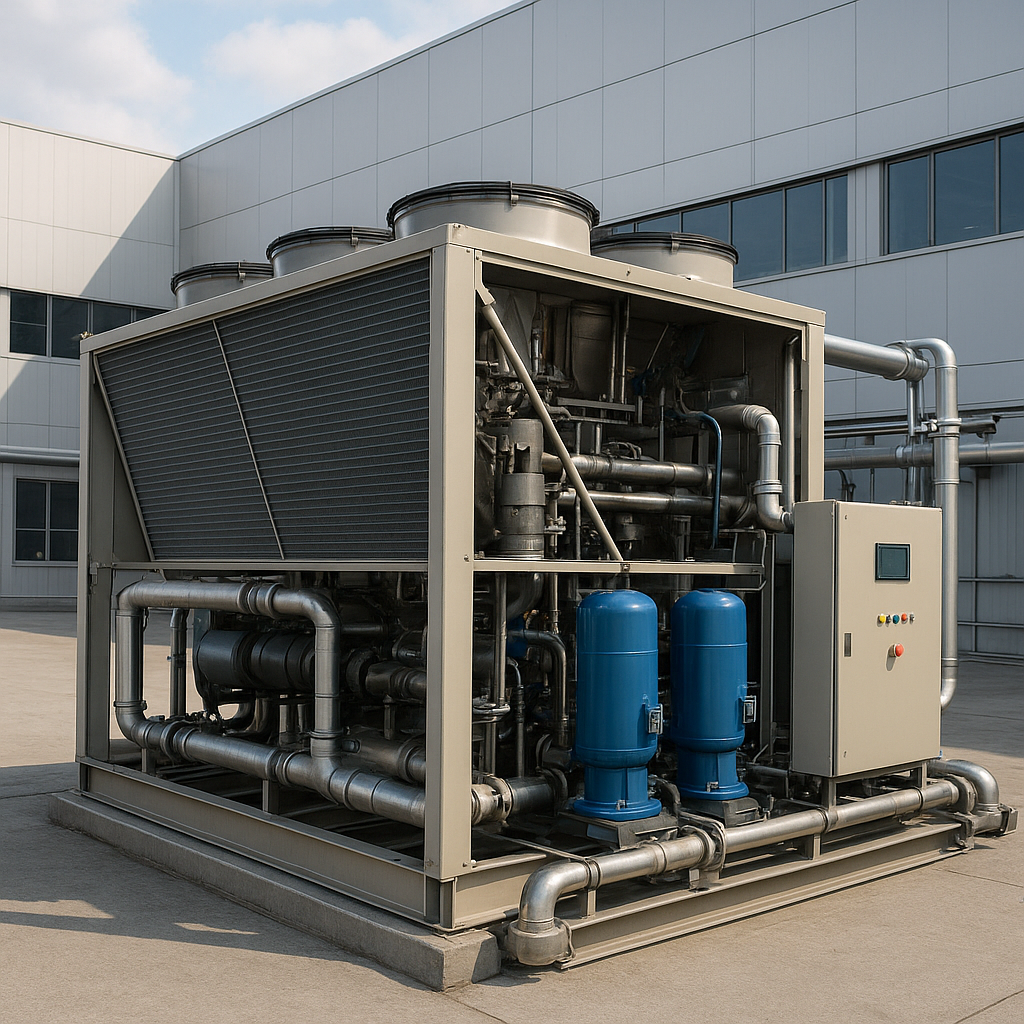
A Strategic Guide to Industrial Chillers: Insights for Procurement and Operations Excellence
Industrial chillers play a pivotal role in maintaining process stability, safeguarding equipment, and optimising energy use across a variety of manufacturing and processing sectors. From pharmaceuticals to plastics, food production to automotive parts, the choice of industrial chillers directly impacts operational reliability, maintenance costs, and regulatory compliance. For procurement managers, plant engineers, and operations directors, understanding the technical nuances and practical considerations behind selecting the right chiller system is critical for long-term success.
Why Choosing the Right Industrial Chiller Is Critical for Operational Success
Industrial chillers are integral to many process environments where precise temperature control is non-negotiable. In practice, a poorly matched chiller can lead to temperature fluctuations that compromise product quality or accelerate wear on ancillary equipment. For example, in pharmaceutical manufacturing, even small deviations in cooling can affect batch consistency or validation compliance, resulting in costly production interruptions.
Procurement decisions here extend beyond initial capital outlay. Buyers frequently overlook how operational parameters influence energy consumption patterns and maintenance cycles. An inefficient chiller may seem cheaper upfront but can double electricity costs and increase downtime due to premature failures. Moreover, a common pitfall is underestimating the complexity of site integration requirements, such as space constraints and existing infrastructure compatibility, which can delay installation and commissioning.
Thus, selecting an industrial chiller involves a strategic balance of technical performance, lifecycle economics, and operational fit. This balance is essential to mitigate risks such as unexpected breakdowns, regulatory non-compliance, or escalating utility bills.
Understanding Industrial Chiller Variants and Their Impact on Buyer Decisions
The industrial chiller market broadly divides into air-cooled and water-cooled systems, each presenting distinct advantages and limitations that affect buyer choices. Air-cooled chillers are often favoured for their simpler installation and lower water consumption, making them suitable for sites with limited water availability or stringent discharge regulations. However, they typically occupy a larger footprint and may struggle to maintain peak efficiency in high ambient temperatures.
Water-cooled chillers, by contrast, generally offer superior energy efficiency and quieter operation due to the use of cooling towers or closed-loop water circuits. This makes them a preferred option in large-scale operations such as automotive assembly plants or chemical processing facilities where consistent cooling loads demand sustained performance. Yet, they require more complex infrastructure, including water treatment and regular inspections to prevent corrosion and biofouling.
Within these categories, compressor type is a crucial differentiator. Scroll compressors dominate smaller capacity chillers due to their simplicity and reliability. Screw compressors are prevalent in medium to large capacity units, offering high efficiency and robustness under varying loads. For very large industrial applications, centrifugal compressors provide excellent efficiency but come with higher capital and maintenance costs. Each compressor type influences the reliability profile and operational flexibility, a factor often overlooked during procurement.
Another consideration is modular versus packaged chillers. Modular chillers allow incremental capacity scaling, which suits industries such as food processing where production volumes fluctuate seasonally. Packaged chillers, being self-contained units, simplify installation and are common in pharmaceuticals and plastics manufacturing where space and rapid deployment are priorities.
What to Inspect and Evaluate When Selecting Industrial Chillers for Your Facility
Technical evaluation before procurement is vital to avoid costly missteps. Key mechanical components warrant close inspection, starting with the heat exchanger. Buyers should assess signs of fouling, corrosion, or tube leaks, as these degrade heat transfer efficiency and increase energy use. Compressor wear patterns provide insight into past operational stresses and remaining service life, especially if purchasing refurbished equipment.
The integrity of the refrigerant circuit is another critical element. Given the evolving environmental regulations and the shift toward low global warming potential (GWP) refrigerants, verifying the refrigerant type and the condition of associated seals and valves is essential. Leaks not only reduce cooling capacity but also risk regulatory penalties under F-Gas legislation.
Electrical controls and automation features significantly influence operational precision. Modern chillers often incorporate variable speed drives and advanced diagnostics that enable fine-tuned temperature regulation and predictive maintenance alerts. Inspectors should verify the functionality of control panels and ensure compatibility with facility-wide building management systems (BMS) to support integrated operations.
Noise and vibration assessments can reveal hidden faults such as imbalanced compressors or loose mounts, which if left unaddressed, accelerate equipment wear and compromise workplace safety. Proper insulation around refrigerant lines and compressor housings also reduces heat losses and noise transmission, contributing to overall system efficiency and operator comfort.
Evaluating Total Cost of Ownership Beyond Purchase Price
While initial cost remains a key procurement metric, total cost of ownership (TCO) considerations frequently determine long-term value. Energy consumption is typically the largest operational expense, so chillers with higher efficiency ratings often justify their premium through reduced utility bills. This is especially relevant in sectors with continuous cooling demands such as data centres or chemical plants.
Spare parts availability and manufacturer support can heavily influence maintenance overheads. Buyers often discover that older or niche chiller models suffer from scarce components or prolonged lead times, increasing downtime risks. For example, one scenario we encounter regularly involves a food processing client whose ageing water-cooled screw chiller required proprietary compressor parts, leading to weeks-long delays and costly cold storage alternatives.
Refurbishment options provide a cost-effective alternative to new equipment but require rigorous assessment. A refurbished chiller’s value depends on the scope of component renewal, warranty coverage, and compliance with current environmental standards. Lead times for refurbished units are often shorter, which can be critical when replacing failed chillers during peak production periods.
Navigating Compliance, Environmental Standards, and Industry Regulations
Compliance with environmental and safety regulations is an essential consideration in industrial chiller procurement. The UK and EU’s F-Gas regulations impose strict controls on refrigerant use, leak detection, and reporting. Choosing chillers compatible with low-GWP refrigerants such as R1234ze or R513a helps ensure future regulatory alignment and reduces the risk of costly retrofits.
Health and safety regulations also influence chiller selection, particularly in sectors like food and pharmaceuticals where contamination risks must be minimised. Ensuring that chillers incorporate hygienic design features and materials compliant with relevant standards such as EHEDG (European Hygienic Engineering & Design Group) can simplify validation and audits.
Compatibility with existing plant infrastructure, including integration with building management systems and renewable energy installations, is increasingly important. For example, some modern chillers can modulate output based on real-time energy availability from solar or heat pump systems, optimising overall site efficiency and carbon footprint.
Real-World Scenarios Highlighting Practical Procurement Challenges and Solutions
One illustrative case involved a UK-based pharmaceutical manufacturer upgrading their chiller plant to meet tighter temperature controls mandated by new regulatory standards. The project required balancing stringent validation timelines with minimal production downtime. By selecting a modular air-cooled chiller system with advanced automation, the facility achieved compliance while maintaining operational continuity.
Another scenario concerned an automotive parts supplier retrofitting ageing water-cooled chillers. The existing units exhibited declining efficiency and frequent compressor faults. The procurement team opted for screw compressor chillers with enhanced variable speed drives and remote monitoring capabilities. This retrofitting reduced energy consumption by 15% and extended maintenance intervals, demonstrating the value of modernised controls.
In the food processing sector, a manufacturer faced seasonal production spikes that strained their cooling capacity. They sourced modular chillers that could be deployed and removed as demand fluctuated. This flexibility maintained product quality during peak periods without incurring the permanent costs of oversized equipment.
Pure Thermal’s tailored chiller solutions have benefited plastics moulding companies experiencing frequent downtime from ageing chillers. Their approach includes detailed site audits, selecting air-cooled scroll compressor chillers that fit compact spaces and provide stable cooling cycles. This reduced maintenance overheads and improved part quality consistency.
These examples underscore the importance of aligning chiller specifications with operational realities and future growth plans.
Addressing Common Queries from Procurement and Engineering Teams
How do I determine the optimal chiller capacity for fluctuating production loads?
Capacity sizing must account for peak demand periods, safety margins, and anticipated future expansions. Oversizing leads to inefficient cycling and increased wear, while undersizing risks insufficient cooling during critical operations. In practice, detailed load profiling and simulation with suppliers enable a tailored solution. It is also prudent to consider modular or staged chillers that allow capacity adjustments aligned with production changes.
What are the advantages of refurbished chillers compared to new units?
Refurbished chillers offer cost savings and often shorter lead times, which can be advantageous during urgent replacements. However, thorough inspection is essential to evaluate the extent of component renewal, particularly for compressors, heat exchangers, and control systems. Compliance with current environmental standards must be verified to avoid future retrofitting. Warranty terms and after-sales support also vary widely, so these factors should be carefully weighed against a new unit’s guaranteed performance and service.
How important is refrigerant type in modern industrial chillers?
Refrigerant selection affects environmental compliance, system efficiency, and maintenance complexity. With tightening regulations on high-GWP refrigerants such as R134a and R404a, many chillers now utilise alternatives like R513a or natural refrigerants such as ammonia or CO2. These choices impact not only operational costs but also safety protocols and staff training requirements. Selecting chillers compatible with evolving refrigerant standards is crucial for future-proofing investments and reducing regulatory risks.
What maintenance practices should be integrated into chiller procurement contracts?
Effective maintenance protocols extend chiller lifespan and prevent unexpected failures. Contracts should specify scheduled inspections focused on refrigerant leaks, compressor health, and heat exchanger cleanliness. Incorporating predictive maintenance technologies, such as vibration analysis and remote monitoring, enables early fault detection. Clear definitions of service intervals, parts availability, and emergency response times ensure operational resilience and minimise downtime.
Drawing Practical Insights Together to Inform Your Industrial Chiller Investment
Selecting industrial chillers requires a comprehensive understanding of both technical specifications and operational contexts. The best procurement decisions are those that balance upfront costs with long-term efficiency, reliability, and compliance. Experience consistently shows that the most successful projects integrate detailed mechanical and electrical evaluations with a realistic appraisal of total cost of ownership. This approach mitigates risks related to energy consumption, maintenance complexity, and regulatory changes.
Recognising the distinctions between air-cooled and water-cooled chillers, compressor types, and modular versus packaged configurations enables buyers to align their choices closely with production demands and site constraints. Equally important is verifying compatibility with existing infrastructure and future energy strategies, including renewable integration where applicable. Procuring chillers that support advanced control systems and predictive maintenance can translate into significant operational benefits.
For those navigating these complexities, exploring tailored solutions can be invaluable. The industrial chillers offered by Pure Thermal exemplify an approach grounded in practical expertise and sector-specific knowledge. Their offerings reflect the kind of detailed, hands-on understanding that procurement managers and engineers rely on to make informed decisions and maintain operational excellence in industrial cooling.