
Expert Guide to Chiller Hire: Practical Insights for Industrial Procurement and Operations
Why Chiller Hire is a Strategic Choice in Industrial Temperature Control
In industrial environments where precise temperature control is critical, chiller hire offers a flexible and cost-effective solution that often outperforms outright equipment purchase. Whether in manufacturing, event management, or process cooling, the ability to quickly deploy or scale cooling capacity can prevent costly downtime and maintain operational continuity.
For plant engineers and procurement managers, chiller hire provides operational agility, allowing businesses to respond promptly to unplanned equipment failures, seasonal production peaks, or temporary expansions. For example, a food processing facility experiencing a surge in production volume during harvest season might require additional cooling capacity for short periods. In such cases, hiring a chiller avoids the capital expenditure and long lead times associated with purchasing new equipment.
Moreover, long-term hire agreements can offer an alternative to capital investment, freeing up budget for other priorities while still ensuring access to modern, well-maintained chillers. In practice, this approach is particularly valued in industries such as pharmaceuticals and chemicals where compliance and operational reliability are paramount. Here, chiller hire serves as a risk mitigation tool, allowing operations directors to maintain process stability without committing to ownership of ageing or specialised plant.
Understanding Different Chiller Types and Their Impact on Procurement Decisions
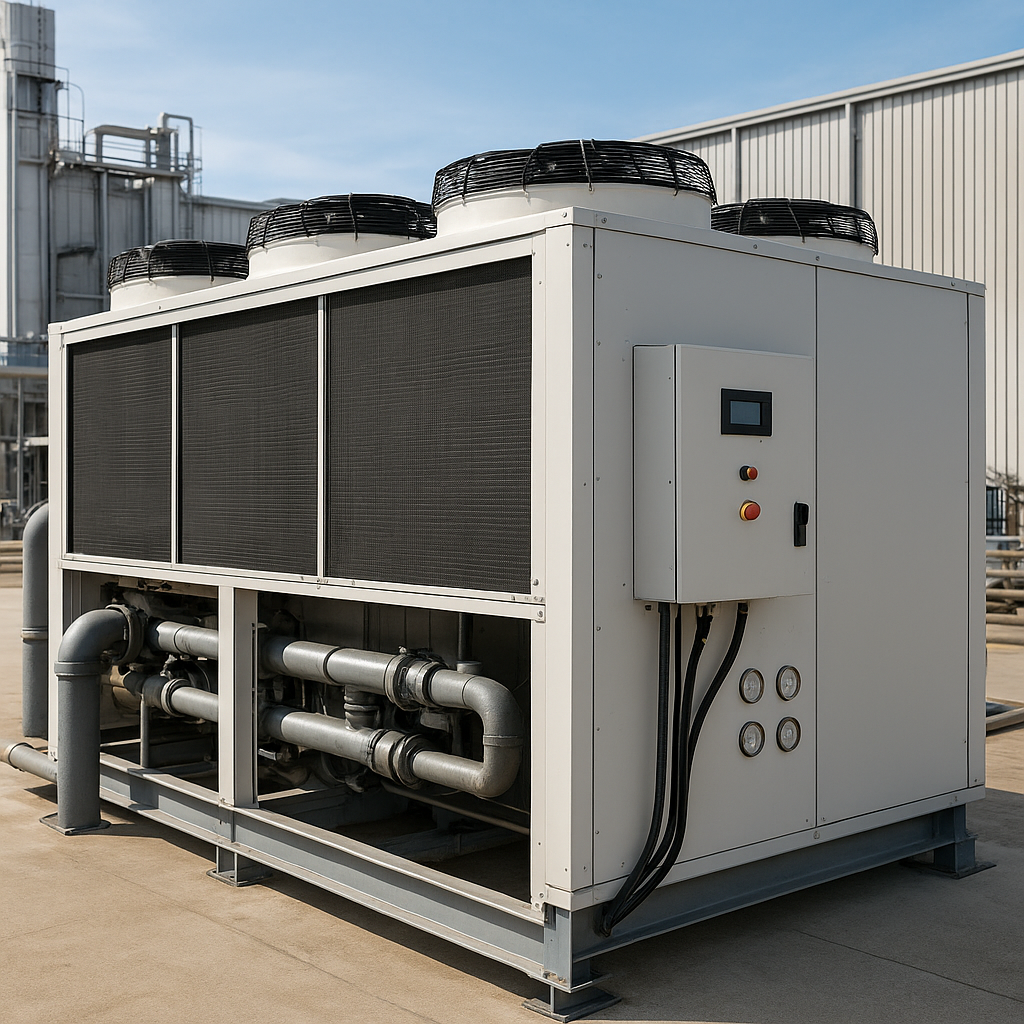
Choosing the right chiller type is foundational to successful hire arrangements. The two principal categories are air-cooled and water-cooled chillers, each with distinct performance and site requirements. Air-cooled chillers use ambient air to dissipate heat and tend to have a smaller footprint and simpler installation, making them suitable for sites without access to chilled water or cooling towers. However, their efficiency can drop in high ambient temperatures, a consideration for sectors operating in warmer climates or with variable environmental conditions.
Water-cooled chillers, by contrast, rely on water circuits and cooling towers or other heat rejection methods. They generally provide better energy efficiency and higher cooling capacities, making them a preferred choice in large-scale manufacturing plants or facilities with existing water infrastructure. The trade-off is increased complexity in installation and maintenance, which can affect hire costs and lead times.
Within these categories, portable versus stationary chillers represent another important distinction. Portable units are typically compact, skid-mounted, and designed for rapid deployment in temporary or constrained spaces such as event sites or short-term process cooling needs. Stationary chillers are integrated into permanent plant layouts and tend to offer higher capacities and more robust control systems. Understanding where the chiller will operate, both physically and in terms of process demands, is crucial for matching the hire equipment to operational requirements.
Refrigeration capacity is measured in kilowatts (kW) or refrigeration tonnes (RT), with one refrigeration tonne equating to approximately 3.5 kW of cooling power. Accurate sizing is essential. Undersized chillers will fail to meet process loads, risking overheating or product quality issues, while oversized units can lead to inefficient operation and unnecessary hire costs. In practice, procurement managers should work closely with technical specialists to assess process heat loads, ambient conditions, and future scalability when selecting chiller size.
Practical Technical Checks to Conduct Before Committing to a Chiller Hire
Before finalising a chiller hire agreement, comprehensive technical evaluation is critical to ensure reliability and compatibility. A common pitfall is accepting a chiller based solely on advertised capacity without verifying its suitability for specific process conditions.
Key evaluation criteria include verifying the chiller’s cooling capacity against the actual thermal load, factoring in ambient temperature variations that can affect performance. For instance, in heavy industry environments where ambient temperatures fluctuate, a chiller rated at 250 kW under standard conditions may deliver significantly less cooling during peak heat.
Inspection of core components such as compressors is equally important. Chillers typically employ scroll, screw, or centrifugal compressors, each with distinct operational characteristics. Scroll compressors are common in smaller units due to their compactness and reliability but may be less energy-efficient at higher capacities. Screw compressors offer robust performance for mid-range capacities and are widely used in industrial chillers. Centrifugal compressors are favoured for large-scale applications due to their efficiency but require more stringent maintenance and control systems.
Condenser type and condition should also be assessed, as fouling or corrosion can severely reduce heat rejection efficiency. Control systems must be reviewed for compatibility with site infrastructure and ease of integration with existing monitoring platforms. Maintenance records provide insight into the unit’s service history and help predict future reliability.
Refrigerant type is another crucial factor. Compliance with F-Gas regulations in the UK and EU mandates the use of low Global Warming Potential (GWP) refrigerants such as R134a, R410A, or newer blends. Buyers should confirm that the hired chiller uses compliant refrigerants and that leak detection and servicing protocols are in place to minimise environmental impact and regulatory risk.
Balancing Total Cost of Ownership with Hire Flexibility and Equipment Age
While chiller hire primarily involves rental fees, a full understanding of total cost of ownership is essential for informed procurement decisions. Running costs, including electricity consumption, maintenance, and potential downtime, can vary widely depending on the age and technology of the equipment.
Modern inverter-driven chillers offer variable speed operation that optimises energy use by adjusting compressor output in response to load changes. This contrasts with older fixed-speed units that operate at full capacity regardless of demand, leading to higher electricity bills and mechanical wear. In many hire fleets, a mix of new and refurbished chillers is available, so buyers should weigh efficiency gains against upfront hire rates.
Refurbishment status and spare parts availability influence reliability and repair turnaround times. For instance, a plant engineer hiring a screw compressor chiller from a fleet with comprehensive spare parts inventory can expect quicker repairs than with obscure or discontinued models. This aspect is critical in industries such as pharmaceuticals or food and beverage, where process interruptions can have severe consequences.
Lead times for delivery and installation are another facet of total cost. Procuring a new chiller can entail weeks or months of lead time due to manufacturing and commissioning, whereas hire units can often be deployed within days. This speed can prove decisive in emergency scenarios, such as sudden equipment failure or urgent process modifications.
Navigating Compliance, Safety, and Environmental Standards in Chiller Hire
Compliance with relevant standards is non-negotiable in industrial temperature control. UK and European regulations such as BS EN 378 set out requirements for the safety, efficiency, and environmental impact of refrigeration systems. Ensuring that hired chillers meet these standards protects operations from legal and financial penalties while safeguarding worker safety.
Environmental considerations are increasingly critical. The management of refrigerants, including leak detection, recovery, and responsible handling, must align with F-Gas regulations to minimise greenhouse gas emissions. Hire providers typically incorporate these protocols into their service agreements, but clients should verify that monitoring and reporting mechanisms are in place.
Electrical compatibility is another key consideration. Sites vary in their power supply ratings and safety protocols, so confirming that the hired chiller’s electrical requirements match site infrastructure avoids installation delays and operational hazards. In complex plants, integration with building management or process control systems may be necessary, requiring compatible control interfaces and communication protocols.
Real-World Procurement Examples Illustrating Effective Chiller Hire Solutions
One scenario encountered frequently involves a UK-based food processing plant that faced a sudden spike in demand during the autumn harvest. Their existing cooling system could not meet the increased load, risking product spoilage. By quickly hiring a water-cooled screw compressor chiller rated at 300 kW from a local fleet, they were able to maintain process temperatures within specification for the duration of the peak period. The hire arrangement included on-site service support and ensured compliance with hygiene standards crucial to the sector.
Another example is a pharmaceutical manufacturer requiring temporary cooling for a cleanroom while their primary chiller underwent scheduled maintenance. Given the stringent environmental controls, the hired chiller had to meet BS EN 378 and F-Gas compliance, alongside seamless integration with existing HVAC controls. A portable air-cooled chiller with modular controls was deployed within 48 hours, minimising downtime and maintaining regulatory compliance.
In the events sector, large-scale festivals and industrial exhibitions often rely on portable chillers to provide beverage cooling and air conditioning in temporary structures. These applications demand units that are not only compact and transportable but also robust enough to operate continuously under variable loads and outdoor conditions. Portable air-cooled chillers with scroll compressors are commonly hired for these purposes, with service contracts ensuring rapid response to any faults during multi-day events.
Answering Common Questions from Procurement and Operations Professionals
What lead times should I expect when arranging chiller hire for urgent or planned projects?
Lead times for chiller hire depend primarily on the availability of suitable units within the hire fleet, the required cooling capacity, and the complexity of site preparation. For urgent needs, some providers can deliver within 24 to 48 hours, especially for smaller portable units. Larger, water-cooled or custom-configured chillers may require up to two weeks to mobilise, allowing time for transport, installation, and commissioning. It is essential to confirm lead times early in the procurement process to align with operational deadlines and avoid last-minute disruptions.
How do I ensure the hired chiller matches my process’s thermal load without overspending?
Accurate sizing requires a detailed heat load analysis that considers all sources of thermal gain, including process equipment, ambient conditions, and ventilation. Engaging experienced suppliers or consultants who understand the specific industry context helps avoid common errors such as oversizing, which inflates hire costs and energy consumption, or undersizing, which compromises process integrity. Many hire providers offer technical support to assist with load calculations and recommend appropriate chiller capacities, ensuring the solution fits both operational and budgetary requirements.
What are the key maintenance responsibilities during the hire period?
Typically, the hire provider assumes responsibility for major servicing and repairs throughout the rental period, including compliance with refrigerant handling regulations and scheduled maintenance tasks. However, the client is expected to monitor basic operational parameters such as temperature settings, pressure gauges, and alarm indicators, reporting any anomalies promptly. This shared responsibility model helps reduce downtime and protects both parties from liability in the event of equipment failure stemming from neglect or misuse.
Can I integrate a hired chiller with my existing control systems and infrastructure?
Integration depends on the chiller’s control interface and the existing site infrastructure. Modern chillers often support standard communication protocols like Modbus or BACnet, facilitating connection to building management systems or process control platforms. Prior to hire, it is advisable to discuss control system requirements with the supplier, providing details of site infrastructure to ensure compatibility. In some cases, additional interface modules or custom programming may be necessary, which can be factored into the hire agreement.
Bringing Technical Expertise and Practical Experience to Your Chiller Hire Decisions
Selecting the appropriate chiller hire solution involves more than simply matching cooling capacity to a process. In practice, buyers frequently overlook the importance of thorough technical inspection and regulatory compliance, which can lead to operational interruptions and increased costs. Understanding the differences between air-cooled and water-cooled chillers, recognising the implications of compressor types, and ensuring maintenance and service provisions are in place are critical steps towards securing reliable performance.
Moreover, total cost of ownership considerations extend beyond rental fees to encompass energy efficiency, spare parts logistics, and lead time impacts on project delivery. Modern inverter-driven chillers may command higher hire rates but deliver significant savings in running costs and environmental compliance. Refurbished units, while cost-effective, require scrutiny of service records and spare parts availability to avoid unexpected downtime.
For procurement managers and plant engineers seeking a reliable partner with deep sector knowledge and a comprehensive hire fleet, exploring the service offerings at Newsome’s chiller hire page can provide practical options tailored to demanding industrial environments. Their technical expertise and range of chillers support applications across manufacturing, events, and process cooling, ensuring that operational continuity and compliance standards are met with confidence.