
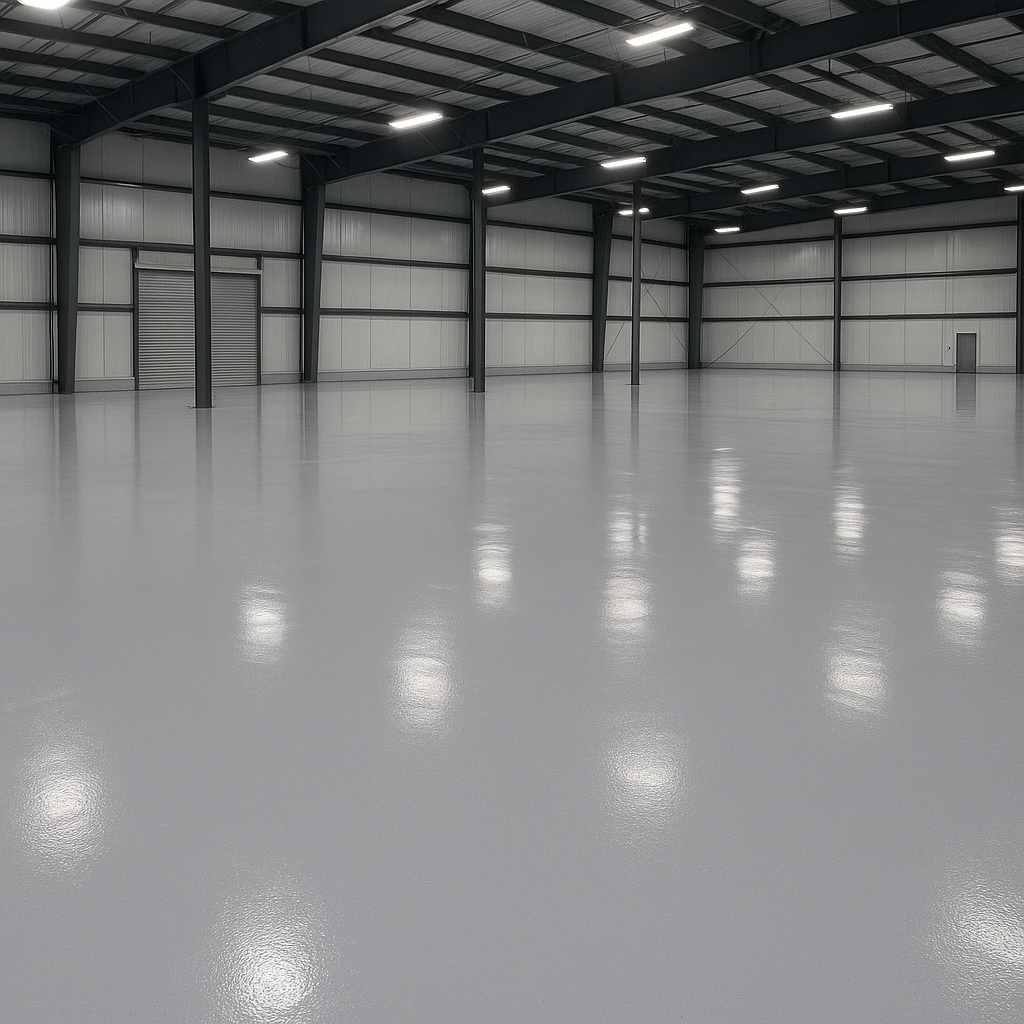
Industrial Epoxy Flooring: Expert Insights for Informed Procurement and Long-Term Performance
Why Epoxy Flooring is a Critical Operational Decision for Industrial Buyers
In industrial environments, the choice of flooring is far more than a matter of aesthetics. Epoxy flooring plays a pivotal role in ensuring plant safety, optimising maintenance schedules, and maintaining operational productivity. For procurement managers and plant engineers, selecting the right epoxy resin floor coating is a strategic decision that impacts equipment longevity, workplace safety, and overall cost-efficiency.
Operational workflows often involve heavy machinery, chemical exposure, and high foot or vehicle traffic, all of which place considerable stress on flooring materials. Epoxy flooring’s inherent chemical resistance, abrasion strength, and seamless finish make it one of the most suitable options for these demanding conditions. However, buyers frequently overlook factors such as substrate preparation, curing environment, and coating variants, which can lead to premature failures or extended downtime during installation.
Moreover, the integration of epoxy flooring with existing equipment footprints and cleaning regimes is essential to avoid operational bottlenecks. For instance, in manufacturing plants where automated guided vehicles (AGVs) or forklifts operate, the floor’s thickness, surface profile, and slip resistance must be carefully matched to equipment specifications to prevent accidents and reduce wear on tyres. Failure to account for these factors during procurement often results in costly rework or safety incidents.
Understanding the Different Types of Epoxy Flooring and Their Industrial Applications
Epoxy flooring is not a one-size-fits-all solution; understanding the distinctions between various epoxy systems is crucial. The primary differentiation lies between solvent-based, water-based, and 100% solids epoxy coatings, each presenting unique performance characteristics and application considerations.
Solvent-based epoxies offer robust chemical resistance but face increasing regulatory restrictions due to volatile organic compound (VOC) emissions. Water-based epoxies are more environmentally friendly and easier to apply in controlled environments but typically provide lower chemical and abrasion resistance compared to their solvent-based counterparts.
100% solids epoxy systems deliver maximum durability and thickness per coat without solvent evaporation, making them ideal for heavy industrial use. They often require more precise surface preparation and professional installation but yield superior mechanical properties and longer service life. Buyers encountering legacy polyurethane or acrylic floors often opt to upgrade to 100% solids epoxy when chemical exposure or mechanical loading exceeds the original design parameters.
Another important classification concerns the physical form and application method. Self-leveling epoxies are used to create smooth, even surfaces that can accommodate light to moderate traffic and facilitate cleaning. Mortar epoxy coatings, incorporating graded quartz or other aggregates, are designed for heavy-duty environments where impact resistance and load-bearing capacity are critical, such as warehouses with forklift traffic or manufacturing cells with heavy presses.
These variants influence cleaning regimes and downtime windows. For example, self-leveling floors cure faster and allow for quicker return to service, which is valuable in food processing or pharmaceutical plants where production halts are costly. Mortar epoxies, while more durable, require longer curing times and more extensive preparation, necessitating careful scheduling to minimise operational disruption.
Key Technical Checks to Perform Before Committing to an Epoxy Flooring Solution
Prior to installation, a thorough technical evaluation is essential to ensure the flooring system will meet operational demands and longevity expectations. Surface profile and moisture testing are among the most critical assessments. In practice, buyers frequently overlook substrate moisture content, which can lead to adhesion failures and blistering if not controlled. Using tools such as a hygrometer or calcium chloride moisture test helps establish whether moisture vapour transmission from concrete slabs is within acceptable limits.
The substrate condition itself must be carefully inspected. Concrete floors should be structurally sound, free from cracks or laitance, and may require diamond grinding or shot blasting to achieve the necessary surface profile for optimal epoxy adhesion. Repairing surface defects before coating is non-negotiable; otherwise, these imperfections can telegraph through the epoxy layer, compromising both aesthetics and performance.
Curing times and environmental constraints often challenge industrial clients. Epoxy systems are sensitive to ambient temperature and relative humidity during application. In environments such as cold storage or high-humidity food plants, special formulations or additives may be necessary to ensure proper curing. Failure to accommodate these factors can result in tacky surfaces, incomplete polymerisation, or reduced chemical resistance.
Assessing the Total Cost of Ownership Beyond Initial Installation
While initial material and installation costs are important, the total cost of ownership (TCO) provides a more comprehensive view of value. Lifecycle maintenance, refurbishment cycles, and unplanned downtime costs must be incorporated into procurement decisions. For instance, a mid-sized automotive supplier recently replaced an ageing polyurethane floor with a 100% solids epoxy system after experiencing frequent chemical damage and costly patch repairs. Though the upfront cost was higher, the extended service life and reduced maintenance downtime delivered significant savings over five years.
Spare parts and repair material availability also influence ongoing support. Some older coating systems use proprietary formulations or additives that are no longer manufactured, making timely repairs challenging and expensive. Modern epoxy products tend to have better supply chain resilience and compatibility with standard repair kits, reducing the risk of prolonged outages.
Comparing older epoxy systems with modern alternatives reveals efficiency gains. Newer formulations cure faster, require fewer coats, and often incorporate enhanced chemical resistance and UV stability. This translates to shorter installation windows and less frequent refurbishments, which are vital in continuous production environments.
Navigating Compliance and Compatibility in Industrial Flooring Projects
Compliance with relevant standards and regulations is a critical aspect often underestimated during procurement. In the UK and Europe, BS EN 13813 specifies requirements for screed materials including epoxy resin coatings, addressing properties such as abrasion resistance, bond strength, and reaction to fire. Procurement managers must ensure that selected products meet or exceed these benchmarks to guarantee safety and durability.
Specific sectors impose additional requirements. For example, food processing and pharmaceutical plants demand hygienic, non-porous flooring with chemical resistance to acids, alkalis, and cleaning agents. Epoxy flooring systems used here must also comply with health and safety regulations concerning slip resistance and ease of sanitation, often necessitating smooth, gloss finishes that resist bacterial colonisation.
Fire rating and slip resistance are further considerations tailored to operational environments. Warehouses handling flammable materials require coatings with appropriate fire retardant properties, while manufacturing facilities with wet or oily floors need slip-resistant surfaces to prevent accidents. These factors must be clearly specified and tested as part of the procurement process.
Real-World Procurement Scenarios Illustrating Practical Decision-Making
One scenario we encounter regularly involves a mid-sized automotive parts manufacturer transitioning from a polyurethane floor to a 100% solids epoxy system. The plant faced persistent chemical exposure from lubricants and cleaning solvents, resulting in frequent patch repairs and safety hazards. After detailed substrate evaluation and moisture testing, the procurement team selected a high-performance epoxy coating capable of withstanding the harsh chemical environment and heavy forklift traffic. The result was a significant reduction in maintenance costs and improved operational uptime.
In another case, a food processing plant required hygienic flooring that could cure rapidly to minimise downtime between production shifts. The client specified a water-based, fast-curing epoxy resin with antimicrobial additives compliant with hygiene industry standards. The coating was applied overnight during scheduled maintenance, allowing production to resume without delay. This scenario highlights the importance of matching epoxy variants to operational constraints.
A heavy-duty warehouse serving a logistics company opted for a mortar epoxy system to handle frequent forklift loads and pallet jack traffic. The procurement team prioritised surface preparation involving shot blasting and crack repairs to ensure a durable bond. The thick, aggregate-filled epoxy coating provided excellent impact resistance and extended floor life, reducing the need for disruptive refurbishments.
Addressing Common Questions from Procurement and Operations Professionals
What factors determine the suitability of epoxy flooring for high-traffic industrial environments?
Suitability hinges on the epoxy system’s abrasive wear resistance, chemical tolerance, and mechanical strength. High-traffic areas demand coatings with high solids content and enhanced formulations that resist scuffing and chemical degradation. Surface profile and thickness also influence durability. Additionally, consideration of curing time and maintenance regimes is essential to avoid excessive operational downtime.
How do environmental conditions such as humidity and temperature affect epoxy curing and performance?
Epoxy curing is a chemical reaction sensitive to temperature and moisture. High humidity can cause amine blush, a greasy surface film that affects adhesion, while low temperatures slow cure rates, increasing vulnerability to damage during installation. Selecting epoxy products formulated for specific environmental conditions or incorporating additives can mitigate these risks. Pre-installation environmental control or scheduling is often necessary in industrial settings.
What inspection criteria should be prioritised during post-installation quality assurance?
Post-installation inspections should verify adhesion strength, surface uniformity, absence of pinholes or bubbles, and correct thickness according to specification. Moisture content in the substrate should be re-checked to identify latent issues. Slip resistance testing and visual inspection under various lighting conditions help ensure safety compliance. Documenting these parameters facilitates warranty validation and future maintenance planning.
How does epoxy flooring compare with other industrial flooring options in terms of long-term value and safety?
Compared to alternatives such as polyurethane, acrylic, or vinyl floors, epoxy flooring generally offers superior chemical resistance and mechanical strength, translating to longer service life in harsh conditions. It is also seamless and easier to clean, reducing contamination risks. However, epoxy floors can be less UV stable outdoors and may require more careful substrate preparation. When specified and installed correctly, epoxy flooring delivers excellent value through reduced maintenance and enhanced safety.
Bringing It All Together: Expert Guidance for Selecting and Specifying Epoxy Flooring
Selecting the appropriate epoxy flooring system requires a detailed technical evaluation aligned with the realities of the operational environment. Understanding the differences between epoxy types, assessing substrate conditions, and accounting for environmental factors during installation are essential steps often overlooked but critical to success. A tailored approach, considering equipment interactions, chemical exposure, and maintenance capabilities, mitigates risks and supports asset longevity.
Procurement decisions grounded in comprehensive inspection protocols and total cost of ownership analysis ensure that the chosen epoxy flooring solution delivers value beyond initial installation. Real-world scenarios from automotive manufacturing to food processing illustrate how matching epoxy variants to sector-specific demands can dramatically improve performance and operational continuity.
For those seeking specialised solutions that meet stringent industrial demands, exploring the range of epoxy flooring products and services offered by MCG Epoxy Coatings provides a practical starting point. Their expertise in epoxy resin floor coatings reflects the technical depth and operational insight necessary to navigate complex industrial flooring projects successfully.