
Practical Guidance for Selecting Coir Mats in Commercial Flooring Applications
Coir mats are an essential component in commercial flooring strategies, serving far more than a decorative role. Their natural fibre construction, durability, and functional benefits make them a preferred choice for many facility managers, plant engineers, and procurement professionals. Understanding the technical nuances and operational implications of coir mats is critical when specifying these products for high-traffic environments. This article draws on hands-on industry experience to explore the diverse types of coir mats, key evaluation criteria, and real-world procurement considerations that influence long-term performance and value.
Understanding the Practical Importance of Coir Mats in Commercial Settings
In commercial or industrial premises, coir mats predominantly function as the first line of defence against dirt ingress and moisture accumulation. Unlike synthetic alternatives, coir mats’ natural coconut fibre composition provides an inherently rough texture that excels at scraping debris from shoe soles. This reduces the volume of dirt tracked into buildings, thereby safeguarding flooring surfaces and lowering cleaning costs.
Beyond dirt control, coir mats contribute to moisture management, especially in transitional zones such as building entrances or loading bays. The mat’s dense fibre network absorbs residual water, reducing slip hazards that could affect staff and visitors alike. This makes their role pivotal in compliance with workplace safety regulations, for example, Health and Safety Executive (HSE) guidelines on slip resistance.
Operationally, selecting the right coir mat impacts maintenance cycles and flooring longevity. A well-chosen mat reduces wear on underlying surfaces and extends intervals between deep cleans or refurbishments. Conversely, an unsuitable mat can accelerate floor deterioration, increase slip risks, and inflate operational costs. Thus, coir mats should be considered a strategic procurement decision rather than a simple aesthetic choice.
Distinguishing Coir Mat Variants and Their Effect on Procurement Decisions
Coir mats come in several variants, with distinctions that materially affect durability, texture, and suitability for specific environments. At the fibre level, two primary types exist: brown coir and white coir. Brown coir is derived from the outer husk of coconut shells, producing coarser, more robust fibres. This variant is typically favoured in industrial or outdoor settings where abrasion resistance is paramount. White coir, obtained from the inner husk layers, is finer and softer, making it appropriate for office receptions or retail entrances where aesthetic considerations and foot comfort take precedence.
Weave construction and backing materials further influence performance characteristics. Common weave types include open-weave for enhanced dirt trapping and tight-weave for increased durability under heavy foot traffic. Backing options such as natural latex, rubber, or vinyl are selected based on environmental conditions and substrate compatibility. For example, rubber-backed coir mats are ideal in warehouses with concrete floors due to their slip resistance and moisture barrier properties, while latex-backed mats offer flexibility for office spaces with tiled or wooden floors.
Customisation also plays a role in procurement choices. Thickness and pile density determine the mat’s ability to absorb moisture and trap dirt, while edging treatments like stitched or bound edges prevent fibre shedding and extend the mat’s lifespan. Buyers should assess these attributes relative to the expected footfall and cleaning regimes of their specific application.
Key Technical Criteria for Evaluating Coir Mats Before Purchase
Evaluating coir mats requires attention to several technical specifications often overlooked in initial procurement assessments. Fibre quality is paramount; longer fibres generally provide better resilience and abrasive strength, while coarseness affects the mat’s scraping efficacy. A mat with short, brittle fibres may degrade quickly under heavy usage, leading to rapid replacement cycles.
Backing material and adhesion quality are critical for ensuring the mat remains stable during use. In manufacturing plants or warehouses, mats must adhere firmly to floors to prevent trip hazards and withstand mechanical cleaning processes. Rubber backing is typically preferred where anti-slip performance is essential, but buyers should verify the compatibility of backing adhesives with their flooring substrates to avoid damage or detachment.
Inspection for manufacturing defects such as uneven weave, inconsistent fibre density, or dye instability is necessary before acceptance. Particularly in humid or outdoor transitional areas, mats should be checked for resistance to fungal or microbial growth, which can compromise hygiene and longevity. This is especially important in sectors like food processing where cleanliness standards are stringent.
Balancing Upfront Cost with Long-Term Value in Coir Mat Acquisition
Procurement managers often face the challenge of balancing initial expenditure with total cost of ownership. Coir mats, while typically more expensive upfront than synthetic alternatives, can offer superior lifecycle value. Expected wear rates vary by environment; for example, hospitality venues with moderate footfall may see a mat last several years, whereas industrial warehouses might require replacement within 12 to 18 months due to heavier traffic.
Refurbishment and repair options should factor into purchasing decisions. Some coir mats allow for edge repairs or re-backing, which can extend service life and reduce waste. Availability and lead times are also crucial, particularly for bespoke or large-format mats. Suppliers like Coco Mats or FibreTech often operate on lead times of several weeks, which can affect project schedules. Understanding these supply chain dynamics helps prevent costly delays.
Spare parts availability is another consideration for buyers managing large estates. Facilities with multiple mat locations benefit from standardised products that simplify maintenance and replacement logistics. Investing in mats with known refurbishment pathways can deliver cost efficiencies over time by avoiding full replacements.
Meeting Compliance and Operational Compatibility for Safety and Standards
Coir mats must comply with relevant safety and environmental standards to be suitable for commercial use. Fire resistance is a key factor, with many sectors requiring products to meet BS EN 13501 standards. While coir is naturally combustible, treatments and backing choices can improve fire retardancy, ensuring compliance with building regulations.
Slip resistance is governed by HSE guidelines in the UK, which recommend mats capable of maintaining grip under wet conditions. Rubber-backed coir mats often achieve these criteria, making them suitable for entrance zones exposed to rain or snow. Additionally, environmental considerations are increasingly important. Coir mats are biodegradable, supporting green building certifications such as BREEAM, but buyers must confirm that any chemical treatments or backing materials used do not compromise environmental credentials.
Operational compatibility extends to integration with cleaning systems and equipment. In automated cleaning environments or where conveyor belts operate nearby, fibre shedding can pose risks to machinery. Selecting tightly woven mats with robust edging minimises fibre loss and ensures smooth coexistence with facility operations.
Real-World Procurement Challenges and Solutions in Industry Contexts
One scenario encountered regularly involves a retail chain rolling out coir mats across more than 50 sites nationwide. The procurement team faced the challenge of maintaining consistent product quality while accommodating local environmental variations such as coastal humidity or urban pollution. By selecting rubber-backed brown coir mats with dense pile and reinforced edging, the chain achieved uniform appearance and durability, reducing replacement frequency by 20% compared to previous synthetic options.
In a food processing plant, mats must endure frequent washdowns without degrading or losing anti-slip properties. Here, the buyer opted for white coir mats with vinyl backing, which resisted moisture ingress and met hygiene standards. The procurement decision was informed by supplier data on microbial resistance and onsite testing under production conditions, ensuring compliance with food safety regulations.
A public sector office refurbishment highlighted the importance of reliable lead times and supplier communication. The project required large-format coir mats to cover entrance lobbies. Delays from overseas manufacturers threatened the refurbishment schedule, prompting the facility manager to source from a specialist UK supplier familiar with bespoke coir mat production. This switch ensured timely delivery and reduced installation disruptions.
Addressing Common Technical and Operational Concerns in Coir Mat Use
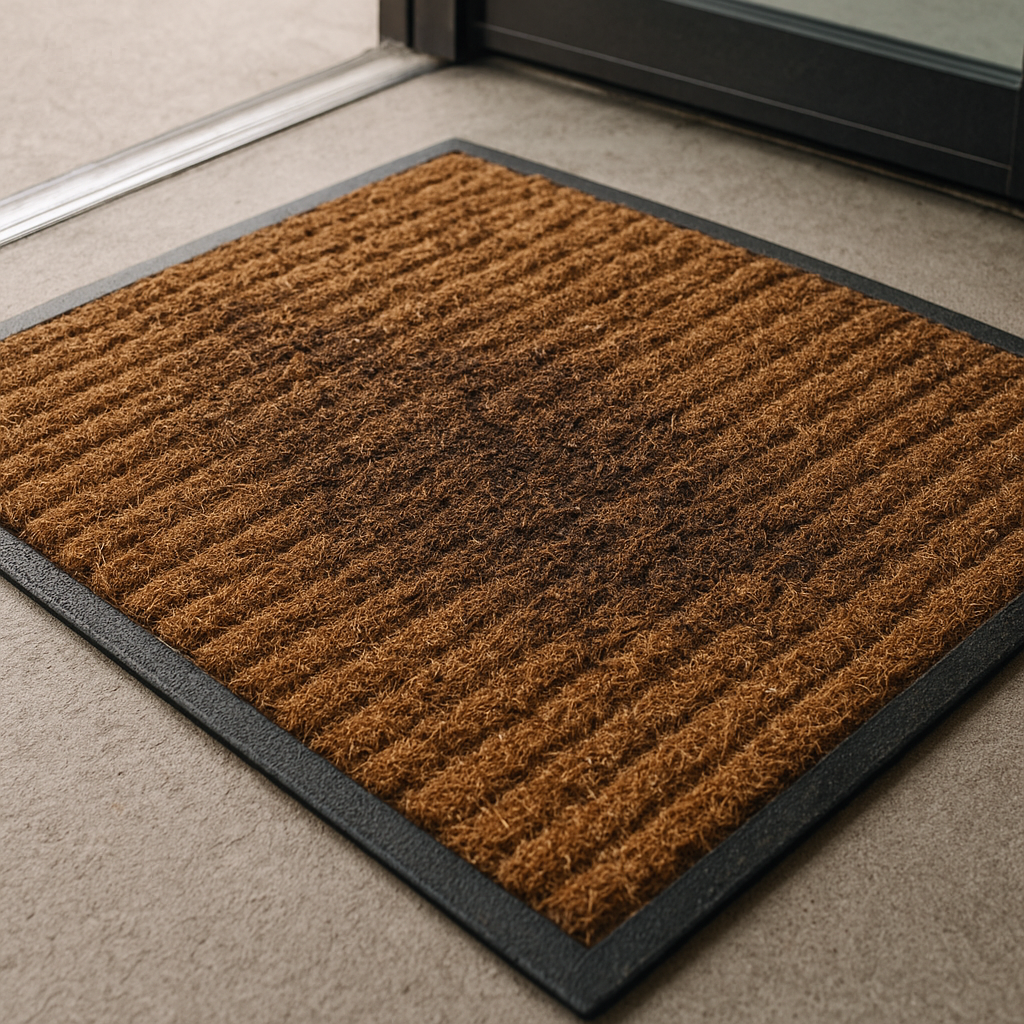
Understanding mat wear patterns is essential for anticipating replacement timing. Areas near main entrances typically show accelerated fibre breakage due to concentrated foot traffic. Procurement managers should implement regular inspections focusing on pile integrity and backing adhesion to identify mats approaching end of life before slip or hygiene issues arise.
Cleaning regimes significantly influence mat durability. Vacuuming with high-suction machines removes surface dirt without damaging fibres, while spot cleaning with mild detergents prevents staining. Avoiding harsh chemicals or excessive water prolongs mat life, especially for coir mats with natural latex backing susceptible to degradation from moisture.
In complex floor layouts, mat placement requires careful planning to maximise dirt-trapping efficiency without creating trip hazards. Layering mats can improve moisture absorption but must be executed to maintain level transitions. Procurement teams should work closely with installation specialists to ensure mats fit precisely and comply with accessibility standards.
Frequently Asked Questions About Coir Mats in Commercial Applications
What factors influence the lifespan of a coir mat in industrial versus office environments?
The lifespan of a coir mat depends heavily on foot traffic intensity and environmental conditions. In industrial settings with heavy machinery movement and frequent ingress of abrasive materials, coarser brown coir with reinforced backing may last around 12 to 18 months. In office environments, where traffic is lighter and conditions more controlled, finer white coir mats can maintain appearance and functionality for several years. Maintenance practices and exposure to moisture also affect longevity.
Are coir mats effective in wet or outdoor areas, and what backing options improve water resistance?
Coir mats perform well in wet or outdoor transitional areas primarily due to their natural absorbency and rough texture. However, backing material selection is critical for water resistance. Rubber-backed mats provide excellent slip resistance and prevent water from seeping through to the floor, making them suitable for entranceways exposed to rain. Vinyl backing offers moisture barriers but may be less flexible. Ensuring proper drainage and regular cleaning complements these features to maintain performance.
How do coir mats compare to synthetic alternatives in terms of environmental impact and performance?
Coir mats have a clear environmental advantage as they are made from renewable coconut fibres and are biodegradable. Synthetic mats, often derived from petrochemicals, can persist in landfill for decades. Performance-wise, coir provides superior scraping ability and moisture absorption in many commercial contexts. However, synthetics may offer better resistance to chemicals or prolonged moisture exposure. Selecting between them depends on specific operational priorities and sustainability goals.
What inspection checkpoints should procurement teams mandate before accepting a coir mat delivery?
Procurement teams should verify fibre quality for length and coarseness uniformity, check backing adhesion strength, and inspect for manufacturing defects such as uneven weave or loose edges. Dye consistency and resistance to fading are important for aesthetic longevity. Additionally, mats intended for humid or outdoor areas should be examined for signs of fungal resistance or treatment. Confirming compliance with relevant safety standards, such as fire resistance certification, is also essential.
Integrative Reflections on Choosing the Right Coir Mat Solution
Specifying coir mats for commercial flooring involves a nuanced balance of technical, operational, and commercial factors. Recognising the differences in fibre types, weave patterns, and backing materials allows procurement professionals to match mat characteristics precisely with site requirements. Attention to inspection criteria and compliance ensures that mats not only perform effectively but also adhere to safety and environmental standards.
Experience shows that considering total cost of ownership rather than upfront price prevents costly replacements and operational disruptions. Evaluating refurbishment options and supplier reliability, especially concerning lead times and bespoke orders, is vital for maintaining continuity in large estates or refurbishment projects. Understanding these complexities supports decision-making that enhances building longevity and occupant safety.
For those seeking detailed product specifications and sector-specific advice, the Grimeford Mill coir mats page offers a comprehensive resource. It reflects practical insights and real-world applications that can guide procurement managers, plant engineers, and operations directors towards selecting coir mats that deliver sustained operational efficiency and value.