
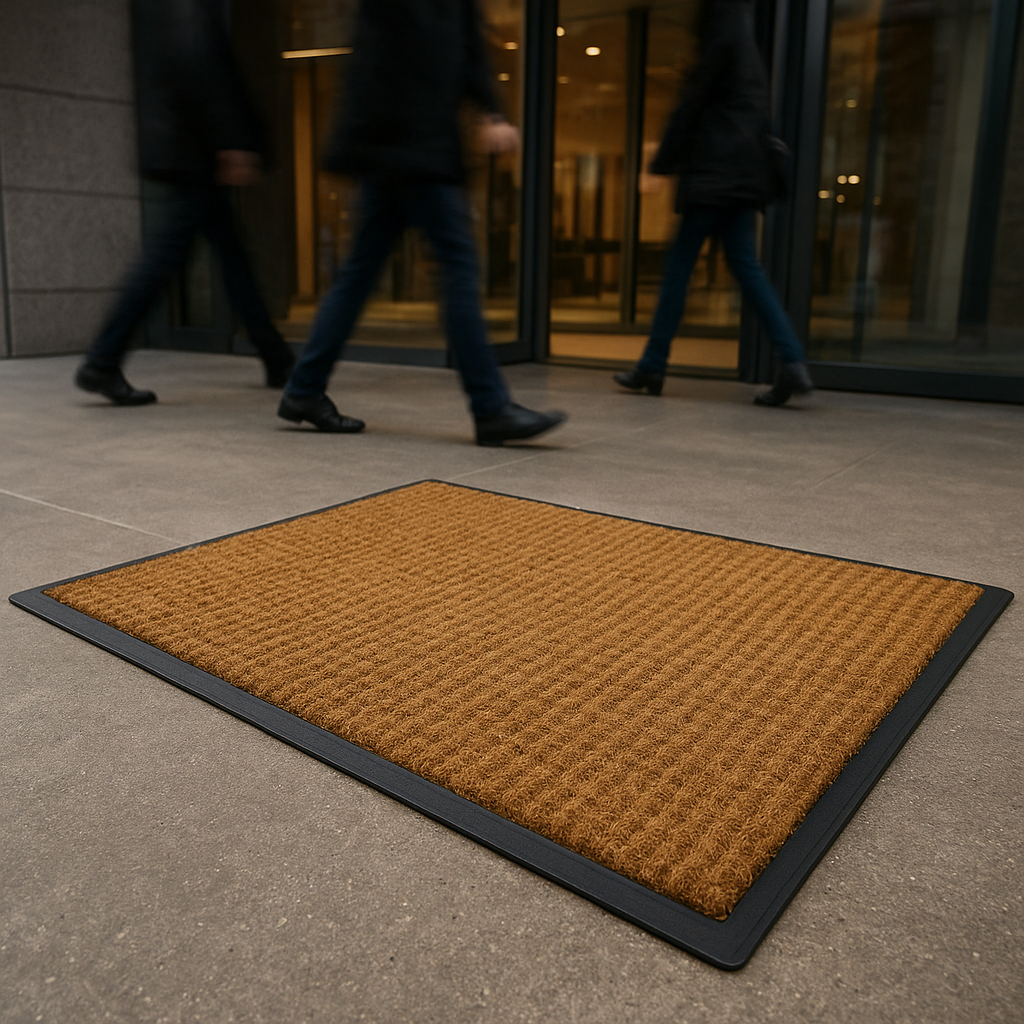
Maximising Commercial Flooring Efficiency with Expert Use of Coir Mats
Understanding the Strategic Importance of Coir Mats in Commercial Settings
In commercial environments, entrance matting is far more than a simple aesthetic feature; it plays a vital role in operational efficiency, health and safety, and overall visitor impression. Coir mats, made from natural coconut fibres, have long been valued for their durability and effective dirt-trapping capabilities. However, selecting coir mats is a nuanced procurement decision that requires a thorough understanding of site-specific needs rather than treating them as a commodity purchase.
Commercial premises ranging from retail outlets and office complexes to manufacturing plants frequently face challenges in balancing durability, cleaning requirements, and compliance with safety standards. Buyers often overlook the subtle differences in coir mat construction that can dramatically influence performance. For example, a busy retail store entrance demands mats that not only withstand heavy foot traffic but also maintain a professional appearance over time. Conversely, a food processing facility prioritises mats that meet stringent hygiene and slip resistance standards. In practice, failure to assess these factors can lead to premature wear, increased maintenance costs, and even safety incidents.
Recognising the role of coir mats as a strategic operational asset rather than a low-cost expendable item is essential. This approach improves facility maintenance budgets and enhances the experience for staff, visitors, and customers alike.
Variants of Coir Mats and Their Impact on Commercial Use and Market Options
Coir mats are not a uniform product category. Variations in fibre density, backing materials, weave styles, and finishing techniques all affect their suitability for different commercial environments. Understanding these differences is critical to making informed purchasing decisions.
Natural coir fibres vary in density and length, influencing the mat’s ability to trap dirt and moisture. Higher density coir mats generally provide superior scraping action and longevity but may come with a higher initial cost. Backing materials such as rubber, vinyl, or latex impact flexibility, durability, and slip resistance. Rubber-backed mats tend to offer excellent grip on hard flooring, making them ideal for wet environments, while vinyl backing may be preferred in areas requiring chemical resistance.
Weave style also plays a role. Coir mats with a tighter weave tend to shed less fibre and maintain structural integrity longer, which is a significant consideration in high-traffic zones. Edge finishing, often overlooked, contributes to resistance against fraying and curling, extending the mat’s usable life.
These product variants influence availability in both new and used matting markets. For instance, refurbishment of rubber-backed coir mats is more feasible than those with vinyl backings due to repair complexities. Buyers in sectors with rapid replacement cycles, such as hospitality or retail, may prioritise mats that are readily available in bulk and compatible with existing mat frames or recesses.
Essential Technical Criteria to Assess Before Purchasing Coir Mats
Before committing to a coir mat purchase, detailed technical evaluation is paramount. Buyers frequently overlook critical performance criteria that define a mat’s operational lifespan and safety profile.
Abrasion resistance is a key metric, especially in environments with constant heavy footfall. Laboratory tests simulating wear, such as Martindale or Taber abrasion tests, can provide quantitative performance data, but real-world feedback from similar use cases is invaluable. Moisture absorption capacity affects how effectively a mat controls water ingress, directly impacting slip hazards inside the building.
Slip resistance must be assessed both on the mat surface and the backing interface with the floor. Backing adhesion methods—whether bonded or mechanically fixed—determine dimensional stability and resistance to curling or shifting. In practice, rubber or latex backings bonded with high-grade adhesives provide better long-term adhesion than cheaper alternatives.
Fire retardancy is another vital consideration, particularly for public buildings and workplaces subject to fire safety regulations such as BS EN 13501-1. Mats treated with fire-resistant compounds or inherently compliant materials reduce risk in emergency scenarios. Anti-microbial treatments and resistance to mould or mildew are essential in humid or food production environments, where hygiene standards are strictly enforced.
Considering the Total Cost of Ownership Beyond Initial Price Tags
While the upfront cost of coir mats is often a primary concern, total cost of ownership (TCO) provides a more comprehensive framework for procurement decisions. Durability directly impacts replacement frequency, and thus long-term expenditure. High-quality coir mats with robust backing and fibre treatments may command a premium initially but deliver significant savings over time by reducing maintenance and replacement needs.
Cleaning frequency and ease also factor into TCO. Some coir mats require professional cleaning or careful handling to maintain performance, while others tolerate routine vacuuming and spot cleaning. Procurement managers must consider the availability of refurbishment services and spare parts. For example, certain manufacturers like Milliken and Custom Mats offer refurbishment programmes for rubber-backed coir mats, which can extend service life significantly. Lead times for new mats versus refurbished stock influence operational continuity, especially in large-scale deployments.
Comparing older coir mat designs with modern innovations reveals notable differences. Advances in fibre processing and backing formulations have improved water resistance, durability, and anti-slip properties. Buyers evaluating existing stock or used mats must weigh the benefits of upgrading to current standards against the cost and downtime involved.
Navigating Compliance and Compatibility Standards Relevant to Commercial Matting
Compliance with fire safety, health and safety, and hygiene standards is non-negotiable in commercial matting procurement. The fire classification standard BS EN 13501-1 defines reaction to fire performance for building products, including entrance matting, and is often a contractual or regulatory requirement. Failure to meet such standards can result in legal and insurance complications.
Slip resistance is governed by guidelines from the Health and Safety Executive (HSE) and other local authorities. Mats must meet minimum coefficients of friction to reduce slip risks, especially in wet or oily environments. Testing under wet conditions is critical, as dry slip ratings can be misleading.
Compatibility with existing flooring surfaces is another practical consideration. Coir mats placed on vinyl or stone floors should not cause staining or surface degradation. Some backing materials can react chemically with certain flooring adhesives or finishes, leading to discolouration or damage. Procurement teams should collaborate with floor maintenance specialists to identify suitable matting solutions and verify compatibility through spot testing.
Practical Procurement Scenarios Demonstrating Coir Mat Selection Challenges
One scenario we encounter regularly involves a large UK retail chain replacing worn coir mats across 150 outlets. The procurement team needed mats that balanced durability and aesthetics while fitting into existing recessed mat wells. Their challenge was sourcing mats with uniform thickness and backing compatibility to avoid costly floor repairs. After evaluating samples from multiple suppliers, they opted for medium-density coir with rubber backing and reinforced edges, which delivered the required lifespan and a consistent brand image.
In another instance, a food processing plant in the Midlands required entrance matting compliant with strict hygiene standards and slip resistance due to wet floors. The buyer specified coir mats with anti-microbial treatment and vinyl backing resistant to cleaning chemicals. The mats underwent third-party slip testing to satisfy internal health and safety audits. This procurement also included a planned maintenance schedule to ensure mats were replaced before fibre degradation compromised hygiene.
A public sector office tasked with refurbishing its main entrance sought coir mats that complied with fire retardancy regulations and offered anti-microbial properties due to high footfall. The procurement team selected mats certified to BS EN 13501-1 with latex backing and fire-resistant fibre treatment. Their supplier provided detailed compliance documentation, easing the internal approval process and ensuring regulatory adherence.
Answers to Common Questions from Procurement and Operations Professionals
What factors determine the lifespan of a coir mat in a high-traffic commercial setting, and how can maintenance extend it?
The lifespan of a coir mat hinges on fibre density, backing quality, and environmental conditions. High foot traffic accelerates fibre wear and backing degradation, particularly in wet or dirty settings. Regular cleaning to remove trapped grit and moisture prevents premature fibre breakdown. Rotating mats or using modular sections can distribute wear more evenly. Maintenance protocols that include vacuuming and prompt replacement of damaged sections also significantly extend service life.
How do different backing materials influence the performance and suitability of coir mats for wet or oily environments?
Backing materials affect slip resistance, chemical resistance, and dimensional stability. Rubber backings generally provide excellent grip on wet floors and resist water penetration, making them suitable for outdoor or wet-area use. Vinyl backings offer good chemical resistance but may become slippery if contaminated with oils, limiting their use in industrial environments. Latex backings balance flexibility and adhesion but can degrade under prolonged chemical exposure. Selecting the correct backing material aligned with the environment mitigates safety risks and prolongs mat performance.
Are coir mats suitable for outdoor use, and what treatments or product variations improve weather resistance?
Coir mats can be used outdoors, but untreated fibres are susceptible to mould, mildew, and fibre rot in damp conditions. Mats intended for external use often feature water-repellent treatments and UV stabilisation to preserve colour and integrity. Backings designed for outdoor resilience, such as heavy-duty rubber with drainage channels, improve water dispersal and reduce slip hazards. Buyers should specify outdoor-rated coir mats when exposed to the elements to avoid rapid deterioration.
When specifying coir mats, how important is third-party certification or compliance documentation for procurement approval?
Third-party certification is increasingly vital in formal procurement processes, especially for public sector and safety-critical environments. Certifications verifying fire retardancy, slip resistance, and anti-microbial efficacy provide objective assurance that mats meet required standards. Compliance documentation facilitates internal approvals and supports audit trails. Absence of such evidence can delay projects or result in non-compliance penalties, making certification a key factor in supplier evaluation.
Drawing Together Insights on Coir Mats for Informed Commercial Decisions
Choosing coir mats for commercial use involves a complex interplay of technical specifications, environmental conditions, and regulatory demands. The diversity in fibre densities, backing materials, and finishing techniques means buyers must carefully match product attributes to site-specific requirements. In practice, overlooking critical factors such as slip resistance or fire safety compliance can lead to costly operational disruptions and safety incidents.
Furthermore, evaluating total cost of ownership rather than focusing solely on initial purchase price ensures that matting solutions deliver value over their service life. Understanding refurbishment options, supplier support, and lead times adds an important layer to procurement planning, especially for large-scale or multi-site deployments.
For those seeking detailed information and a comprehensive range of coir mat products tailored for commercial applications, the coir mats section at Commercial Matting offers an invaluable resource. It provides technical data, compliance insights, and practical guidance that help procurement managers, plant engineers, and operations directors make well-informed decisions aligned with their operational priorities.