
Expert Insights into Stainless Steel Fabrication for Industrial Applications
Understanding the Strategic Importance of Stainless Steel Fabrication in Industrial Procurement
Stainless steel fabrication plays a pivotal role in industrial sectors such as food processing, pharmaceuticals, and chemical manufacturing, where material performance directly influences operational reliability and compliance. Selecting the right fabrication approach is not merely about securing a product; it is a strategic decision that impacts equipment longevity, maintenance requirements, and regulatory adherence.
In practice, buyers frequently overlook subtle fabrication details that can lead to premature corrosion or mechanical failure under real plant conditions. For instance, a food processing facility may specify stainless steel pipework assuming all 316-grade materials behave identically, yet differences in fabrication quality—such as weld integrity or surface finish—can drastically affect hygiene compliance and cleanability.
Furthermore, the precision of fabrication tolerances correlates directly with installation ease and system efficiency. Poorly fabricated components often require costly onsite adjustments or lead to leaks and contamination risks. Hence, procurement managers must assess fabrication quality alongside material grade to ensure equipment performs reliably under operational stresses.
Differentiating Stainless Steel Grades and Fabrication Variants: Implications for Buyer Decisions
The stainless steel industry offers a variety of grades, each suited to specific environmental and mechanical demands. Austenitic grades like 304 and 316 are most prevalent, with 316 preferred in chloride-rich environments due to its enhanced corrosion resistance. Ferritic stainless steels, while less costly, exhibit lower ductility and are typically reserved for less demanding applications. Duplex stainless steels combine the advantages of both, offering higher strength and improved corrosion resistance, making them suitable for aggressive chemical processing.
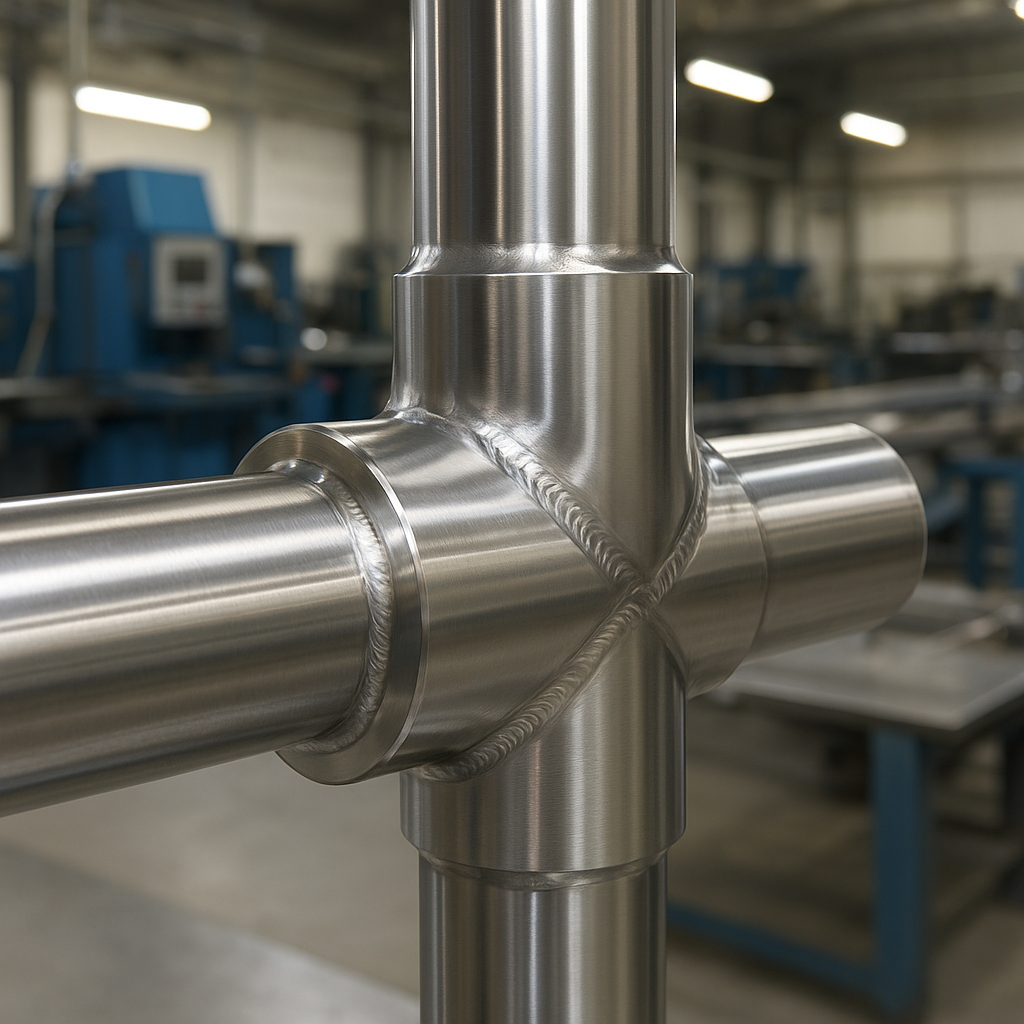
Fabrication methods must align with the chosen steel type and intended use. Laser cutting provides precise, clean edges, which is crucial for maintaining tight tolerances in sanitary equipment. TIG welding remains the gold standard for stainless steel fabrication due to its ability to produce high-quality, contamination-free welds essential in pharmaceutical and food sectors. CNC bending allows for complex geometries but demands careful process control to prevent work hardening, especially in duplex steels.
The surface finish also plays a crucial role. Mill finish stainless steel is often used in structural applications where aesthetics and hygiene are less critical. Brushed finishes reduce glare and hide minor scratches but may harbour contaminants if not properly maintained. Electropolishing, a chemical process that smooths and passivates the surface, is prized in pharmaceutical and food processing industries where minimising bacterial adhesion is paramount. This finish enhances corrosion resistance and facilitates cleaning, albeit at higher initial cost and longer lead times.
Critical Inspection and Evaluation Criteria for Stainless Steel Fabrication Projects
Before committing to a stainless steel fabrication project, buyers should rigorously evaluate dimensional accuracy and weld quality. Dimensional tolerances must comply with design specifications, often within fractions of a millimetre, to ensure proper fit and function. For weld inspection, visual examination is the first step but insufficient for critical applications. Dye penetrant testing can detect surface cracks, while ultrasonic testing reveals subsurface defects. In sanitary fabrications, even minor weld imperfections can compromise cleanability and regulatory compliance.
Surface finish inspection is equally important. Buyers should specify and verify passivation procedures that restore the chromium oxide layer after welding, as this layer confers corrosion resistance. Standards such as ASTM A967 describe accepted passivation practices. In cleanroom or pharmaceutical environments, surface roughness measurements are employed to ensure finishes meet hygienic design requirements.
Assessing the fabrication facility’s credentials is essential. Certifications like ISO 3834, which addresses quality requirements for welding, and ASME Section IX, governing welding procedure qualifications, indicate a commitment to quality. Reviewing historical project documentation and client references can provide insight into the fabricator’s ability to handle complex assemblies and maintain consistent standards.
Assessing Total Cost of Ownership: Beyond Initial Price in Stainless Steel Fabrication Procurement
Cost considerations extend well beyond the initial fabrication price. Choosing between new and refurbished fabricated stainless steel equipment involves balancing upfront savings against long-term operational costs. For example, a chemical plant upgrading corrosion-resistant tanks may find that refurbished duplex stainless steel units offer cost advantages but come with higher risks related to spare parts availability and shorter remaining service life.
Lead times are another critical factor. In many industrial settings, such as dairy processing plants undergoing phased expansions, minimising downtime is paramount. Fabricators with efficient supply chains and in-house capabilities can deliver bespoke stainless steel components more quickly, reducing project delays and associated costs.
Complexity in fabrication design also influences maintenance overhead. Over-engineered assemblies with excessive welds or intricate geometries may increase failure points and cleaning difficulty. Conversely, robust, well-considered designs reduce unexpected failures and simplify routine maintenance, as demonstrated in several food processing installations where Holden’s Engineering collaborated closely with plant engineers to optimise component design for ease of service.
Navigating Compliance and Industry Standards in Stainless Steel Fabrication
Compliance is a fundamental concern in stainless steel fabrication, dictated by both material standards and sector-specific regulations. BS EN 10088 provides comprehensive guidance on stainless steel grades and their chemical compositions, serving as a baseline for specifying materials. For hygienic equipment, the European Hygienic Engineering and Design Group (EHEDG) guidelines outline best practices to prevent contamination, influencing surface finish and design choices.
Welding procedure compliance is equally critical. Welding Procedure Qualification Records (WPQR) and Procedure Qualification Records (PQR) ensure that welding methods meet required standards, which affects warranty acceptance and certification. Traceability of materials and welds is often mandated, especially in pharmaceutical and food sectors, to support audits and incident investigations.
Additional regulatory frameworks may apply depending on industry context. ATEX certification is mandatory for stainless steel fabrications intended for explosive atmospheres, common in chemical manufacturing. The US FDA’s 21 CFR Part 11 and 210/211 regulations impose stringent requirements on sanitary design and materials for pharmaceutical equipment. Ensuring fabrication aligns with these standards reduces the risk of regulatory non-compliance and costly retrofits.
Practical Procurement Scenarios Illustrating Stainless Steel Fabrication Challenges and Solutions
One scenario we encounter regularly involves a mid-sized dairy processing plant requiring custom stainless steel pipework with extremely tight hygienic tolerances. The client’s challenge was to meet aggressive production schedules while ensuring the pipework met EHEDG standards for cleanability. Holden’s Engineering implemented a phased fabrication approach combined with onsite inspection at critical stages, enabling early detection of dimensional deviations and weld imperfections. This approach prevented schedule slippage and ensured compliance with hygiene requirements.
In another example, an industrial chemical manufacturer needed to upgrade corrosion-resistant tanks fabricated from duplex stainless steel. The project faced significant lead time constraints due to global supply chain disruptions affecting duplex plate availability. By leveraging strong supplier relationships and utilising advanced CNC cutting and welding techniques, the fabricator managed to meet the tight deadline without compromising material or fabrication quality.
A pharmaceutical cleanroom retrofit presented a different challenge. The client required electropolished stainless steel surfaces to meet validation standards for contamination control. Surface finish and welding quality were critical, as any imperfections could compromise cleanroom classification. Detailed surface roughness testing and nondestructive weld inspections were integral to acceptance criteria, ensuring that the fabricated assemblies met both operational and regulatory expectations.
Common Procurement Queries Addressed: Clarifying Stainless Steel Fabrication Complexities
How does the choice of stainless steel grade influence maintenance cycles and corrosion resistance in harsh chemical environments?
The stainless steel grade selected directly affects both corrosion resistance and maintenance frequency. For example, 304 stainless steel offers good general corrosion resistance but is vulnerable to chloride-induced pitting, making it less suitable for chemical environments with high chloride content. In contrast, 316 or duplex grades provide superior resistance, thereby extending maintenance intervals and reducing downtime. However, higher-grade materials come with increased upfront costs, so buyers must balance operational conditions with budget constraints.
What inspection techniques provide the best assurance of weld integrity in sanitary fabrication projects?
Sanitary applications demand welds free from cracks, porosity, and undercuts. Visual inspection is a necessary first step but insufficient alone. Dye penetrant testing detects surface flaws invisible to the eye, while ultrasonic testing can reveal subsurface defects. In some cases, radiographic inspection is employed for critical welds. Combining these methods ensures comprehensive weld integrity assessment, crucial for maintaining hygiene and preventing contamination.
In what circumstances is electropolishing necessary versus mechanical finishing, and how does this affect cost and compliance?
Electropolishing is essential when the highest level of surface smoothness and passivation is required, such as in pharmaceutical manufacturing or sterile food processing. It removes microscopic peaks and valleys beyond the capability of mechanical brushing, reducing bacterial adhesion and enhancing corrosion resistance. Mechanical finishes like brushing or grinding may suffice in less critical applications but carry higher contamination risks. Electropolishing adds cost and lead time but often pays dividends in regulatory compliance and product quality assurance.
What are the key indicators that a fabrication provider can reliably deliver complex stainless steel assemblies on time and to specification?
Reliable fabricators demonstrate robust quality management systems, evidenced by certifications like ISO 3834 and documented welding qualifications. Their track record with similar projects, including references and case studies, provides insight into their capacity to meet deadlines and specifications. Effective communication channels and transparency about production schedules are also vital. In practice, fabricators that integrate onsite inspections and phased deliveries tend to manage risk better, ensuring timely and compliant project delivery.
Bringing Expertise into Focus: Why Informed Stainless Steel Fabrication Decisions Matter
Stainless steel fabrication is a complex interplay of material science, precision engineering, and operational requirements. Decisions made early in the procurement process regarding steel grade selection, fabrication methods, and surface finishing profoundly influence the durability, compliance, and maintenance profile of industrial equipment. This complexity underscores the value of partnering with fabricators who bring deep technical expertise and a history of delivering standards-compliant projects.
Collaborating closely with experienced fabricators such as those at Holden’s Engineering can streamline design iterations, ensure adherence to regulatory frameworks, and mitigate installation risks. Their approach to stainless steel fabrication integrates thorough inspection protocols and an understanding of sector-specific challenges, whether in food processing, pharmaceuticals, or chemical manufacturing.
For buyers seeking detailed guidance and reliable production of stainless steel components, exploring the stainless steel fabrication services offered by Holden’s Engineering provides a practical starting point. Their expertise in delivering complex, compliant fabrications on schedule reflects a commitment to addressing the nuanced demands that industrial procurement managers, plant engineers, and operations directors confront daily.