
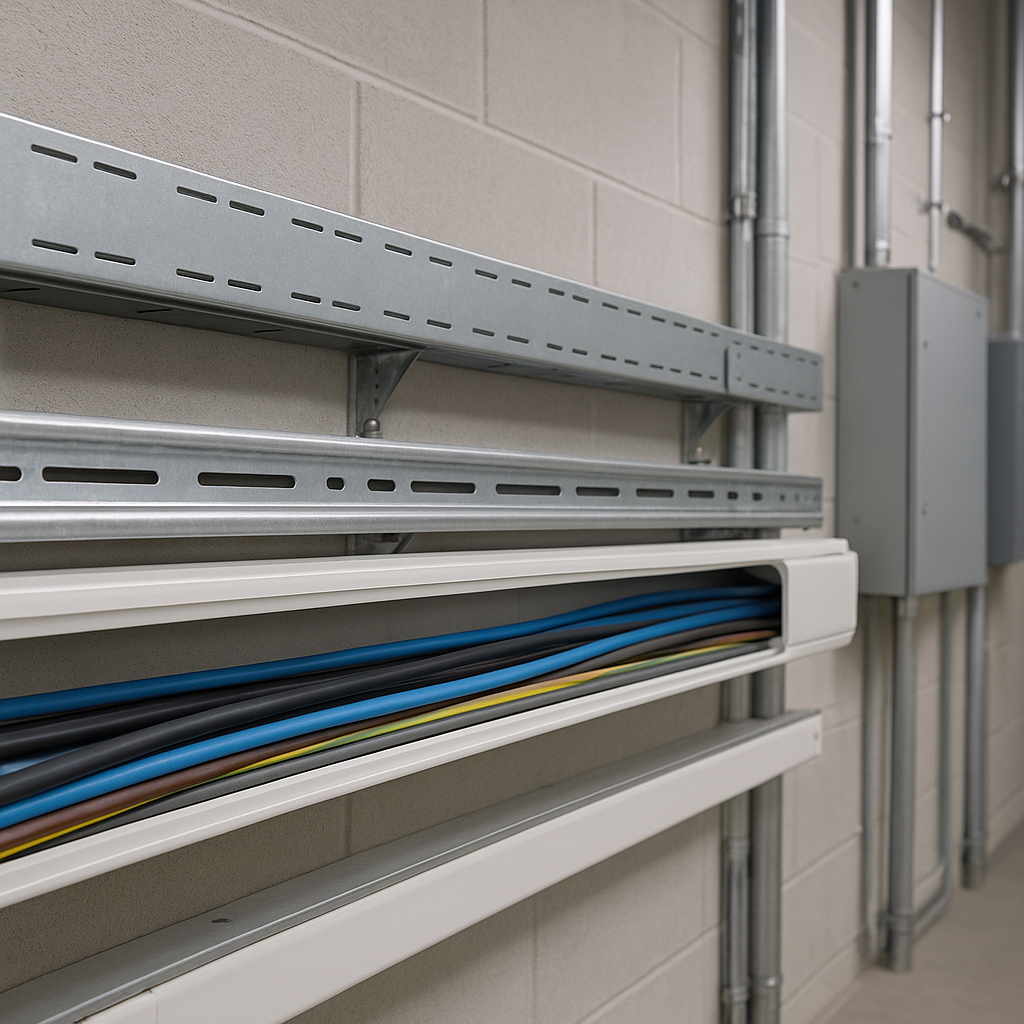
Informed Strategies for Selecting and Specifying Cable Trunking Solutions
Cable trunking is a fundamental component in electrical containment and cable management across industrial and commercial environments. Beyond simply housing cables, it plays a critical role in protecting electrical infrastructure, facilitating maintenance, and ensuring compliance with safety regulations. For procurement managers, plant engineers, and operations directors, making the right choices around cable trunking can have profound effects on operational efficiency, asset longevity, and risk management. This article explores the technical considerations, practical challenges, and sector-specific insights that underpin effective cable trunking selection and specification.
The Strategic Importance of Cable Trunking in Industrial and Commercial Environments
In practice, cable trunking does much more than keep cables organised and out of sight. It serves as a protective barrier against mechanical damage, environmental hazards, and accidental interference, which is especially vital in high-traffic or harsh industrial settings. For example, in manufacturing plants where heavy machinery operates nearby, robust trunking systems prevent cable abrasion and accidental disconnection, reducing downtime risks.
Procurement decisions regarding cable trunking influence not only the initial installation but also long-term facility reliability. Choosing substandard trunking can lead to premature deterioration, complicating maintenance and risking non-compliance with safety standards such as BS 7671, the UK wiring regulations. Conversely, investing in well-engineered trunking systems ensures easier access for inspections, cable replacement, or upgrades—critical aspects when operations require minimal interruption.
Operations managers frequently encounter challenges when integrating new trunking within existing infrastructure. Space constraints, compatibility with legacy cabling, and coordination with other containment systems like conduits or cable ladders require careful planning. A typical challenge arises in retrofit projects where trunking must accommodate a mix of power, data, and fibre optic cables without compromising segregation requirements or fire safety.
Understanding the Varied Types of Cable Trunking and Their Practical Implications
One of the first decisions buyers face is selecting the appropriate trunking material. Standard PVC trunking remains popular due to its cost-effectiveness and ease of installation. However, PVC’s suitability diminishes in environments exposed to high temperatures, UV radiation, or chemical exposure. For instance, in petrochemical plants or outdoor installations, metal trunking—usually steel or aluminium—provides superior durability and resistance to corrosion.
Composite trunking, which blends materials like GRP (glass reinforced polyester), offers a middle ground with excellent mechanical strength and chemical resistance, making it suitable for sectors such as food processing or pharmaceuticals where hygiene and corrosion resistance are paramount.
Design features also influence usability and safety. Removable lids facilitate cable installation and future maintenance without dismantling entire runs, a feature highly valued in data centres where cable density is high and frequent changes occur. Internal dividers enable segregation of power and data cables to reduce electromagnetic interference, which is critical in IT and telecommunications facilities.
Ingress protection (IP) ratings indicate how well trunking prevents dust and water ingress. For example, IP55-rated trunking is often required in outdoor or washdown environments, while indoor office installations might only need IP20. Additionally, trunking dimensions and bend radius affect cable management strategies; tight bends can damage delicate fibre optic cables, so trunking with generous radius curves is preferable in those applications. Modularity and availability of accessories such as bends, tees, and junctions impact scalability and installation speed, factors that procurement teams weigh heavily during specification.
Key Technical Criteria to Evaluate Before Selecting Cable Trunking Products
Before committing to a cable trunking product, several technical parameters must be assessed to ensure the system meets operational demands and regulatory requirements. Mechanical strength is paramount in industrial settings; trunking must withstand impacts, vibration, and occasional load without deformation. Steel trunking with a minimum thickness of 1.2mm is common in heavy-duty applications, whereas light commercial environments can often rely on PVC with reinforced profiles.
Fire resistance is another critical consideration. Cable trunking should comply with BS EN 50085, which specifies fire performance for cable management systems. In sectors like healthcare or education, trunking materials with low smoke and toxicity emissions during combustion are mandatory to protect occupants and aid evacuation. Buyers should verify manufacturer test reports and third-party certifications rather than relying solely on marketing claims.
Compatibility with cable types influences trunking choice as well. Power cables, data cables, and fibre optic cables have different bending radii, heat dissipation, and segregation needs. For instance, power cables generate heat and require trunking that can dissipate this safely to avoid insulation degradation. Segregation barriers inside trunking prevent electromagnetic interference and ensure compliance with standards such as the IET Code of Practice for Power and Communication Cabling.
Product documentation and traceability are often overlooked but vital. Comprehensive datasheets, installation guides, and compliance certificates enable quality assurance and simplify on-site inspections. Buyers should also check that suppliers provide batch traceability to manage recalls or warranty claims effectively.
Assessing Long-Term Value: Total Cost of Ownership in Cable Trunking Procurement
While initial purchase price often dominates procurement decisions, the total cost of ownership (TCO) offers a more holistic evaluation. Durable trunking materials may cost more upfront but reduce maintenance frequency and downtime. For example, a utilities company sourcing corrosion-resistant aluminium trunking for an outdoor substation found that although initial costs were 30% higher than PVC alternatives, the lifespan doubled, and inspection intervals lengthened, saving on labour and replacement parts over a decade.
Ease of installation also affects value. Trunking systems with snap-fit lids and standardised accessories reduce labour hours and minimise errors. In a commercial office park upgrade, selecting fire-rated PVC trunking with modular components enabled the contractor to complete installation with fewer skilled electricians, lowering project costs despite higher unit prices.
Spare parts availability and refurbishment options are equally important. Older trunking systems from legacy manufacturers can present challenges if parts become obsolete or have lengthy lead times, potentially extending project timelines or forcing costly workarounds. Procuring from suppliers with extensive stockholding and aftersales support mitigates these risks.
Navigating Compliance, Industry Standards, and Regulatory Requirements
Compliance with relevant standards ensures safety, legal adherence, and insurance acceptance. BS EN 50085 outlines requirements for cable trunking systems in Europe, covering mechanical and fire performance. Within the UK, BS 7671 sets wiring regulations that indirectly influence trunking choice through cable segregation and fire safety mandates.
Fire safety codes often dictate the use of trunking materials with specific reaction-to-fire classifications. For instance, in public buildings or healthcare facilities, materials rated Class 1 or better in surface spread of flame tests may be obligatory. Compliance audits and on-site inspections routinely verify trunking installation quality, including secure fastening, correct segregation, and intact lids.
Sector-specific requirements further shape trunking selection. The food industry demands hygienic finishes and corrosion resistance; therefore, stainless steel or GRP trunking is preferred. Petrochemical plants require anti-static or explosion-proof trunking variants, while data centres prioritise non-metallic trunking with high ingress protection and EMI shielding capabilities. Understanding these nuances is essential for procurement teams to avoid costly retrofits or compliance failures.
Practical Procurement Insights from Sector-Specific Cable Trunking Projects
One scenario frequently encountered involves a manufacturing plant retrofit where high-density power and data cabling needed secure containment. The plant engineer specified metal trunking with internal dividers and removable lids to separate circuits and allow rapid access for maintenance. Coordinating delivery with phased installation minimised disruption to production lines, while selecting a supplier offering local stock and technical support ensured tight deadlines were met.
In a commercial office park upgrade, the challenge was balancing aesthetics with fire safety. The project required trunking that blended with interior design but also complied with BS 7671 fire performance requirements. The procurement manager opted for white, fire-rated PVC trunking with smooth profiles and concealed fixings. This choice simplified installation while meeting insurance and regulatory demands.
Another example comes from the utilities sector, where outdoor substations exposed to harsh weather conditions necessitated corrosion-resistant metal trunking. The operations director specified aluminium trunking with high IP ratings to prevent ingress of dust and moisture. This decision extended service intervals and reduced the risk of cable failures due to environmental damage.
These real-world cases underscore the importance of aligning trunking selection with operational context, environmental conditions, and long-term maintenance strategies.
Frequently Asked Questions About Cable Trunking Selection and Use
What factors determine whether metal or plastic trunking is more appropriate for a particular project?
The choice between metal and plastic trunking depends largely on the installation environment and operational demands. Metal trunking, typically steel or aluminium, offers superior mechanical strength and fire resistance, making it suitable for industrial sites, outdoor locations, or areas subject to impact or chemical exposure. Plastic trunking, such as PVC, is often preferred for indoor, light-duty applications due to lower cost and ease of installation. However, plastic may not withstand high temperatures or harsh chemicals effectively. Buyers should assess environmental conditions, fire safety requirements, and mechanical load before deciding.
How do I verify that a cable trunking system complies with fire safety regulations specific to my industry?
Verification involves reviewing manufacturer documentation and third-party certification to confirm compliance with relevant standards such as BS EN 50085 and BS 476 parts relating to fire performance. Additionally, the wiring regulations (BS 7671) provide guidance on cable segregation and containment materials. On-site inspections should check for correct installation practices that maintain fire barriers, such as properly sealed joints and intact lids. Engaging qualified electrical engineers or fire safety consultants during specification and installation phases helps ensure compliance.
What inspection steps should be taken after trunking installation to ensure ongoing safety and performance?
Post-installation inspections should verify that trunking is securely fixed, lids are correctly seated, and internal segregation barriers are intact. Inspectors should check for any signs of mechanical damage or deformation, especially in high-traffic areas. It is also important to confirm that cables are neatly arranged without excessive bending or crowding, which could impair performance or accelerate wear. Regular periodic inspections, aligned with maintenance schedules, help identify potential issues before failures occur.
Can cable trunking systems be modified or expanded easily to accommodate future cabling needs?
Most modern cable trunking systems are designed with modularity in mind, featuring standardised widths, removable lids, and a wide range of accessories such as bends, tees, and junctions. This facilitates expansion or reconfiguration without dismantling large sections. However, ease of modification depends on initial specification; trunking that is too small or lacks internal dividers may not accommodate additional cabling effectively. Planning for future growth during procurement avoids costly retrofits and disruptions.
Bringing It All Together: Making Informed Choices for Effective Cable Management
Effective cable trunking procurement demands a comprehensive understanding of the interplay between material properties, design features, compliance requirements, and operational realities. Buyers should approach trunking selection not as a commodity purchase but as a strategic investment in facility reliability, safety, and maintenance efficiency. This involves evaluating the specific environmental conditions, cable types, and future scalability needs within their industry context.
Balancing upfront costs with total cost of ownership considerations often reveals that premium trunking solutions deliver superior long-term value. Factors such as durability, ease of installation, spare parts availability, and manufacturer support are critical to avoiding unexpected downtime and costly replacements. Compliance with relevant standards and sector-specific regulations must also be at the forefront of any specification process to safeguard personnel and assets.
For those seeking detailed product information and a broad range of cable trunking options tailored to diverse industrial and commercial applications, the cable trunking section at Falcon Trunking provides a valuable resource. It offers in-depth specifications and practical guidance that align with the technical and operational considerations discussed here, supporting informed decision-making for procurement and engineering professionals.