
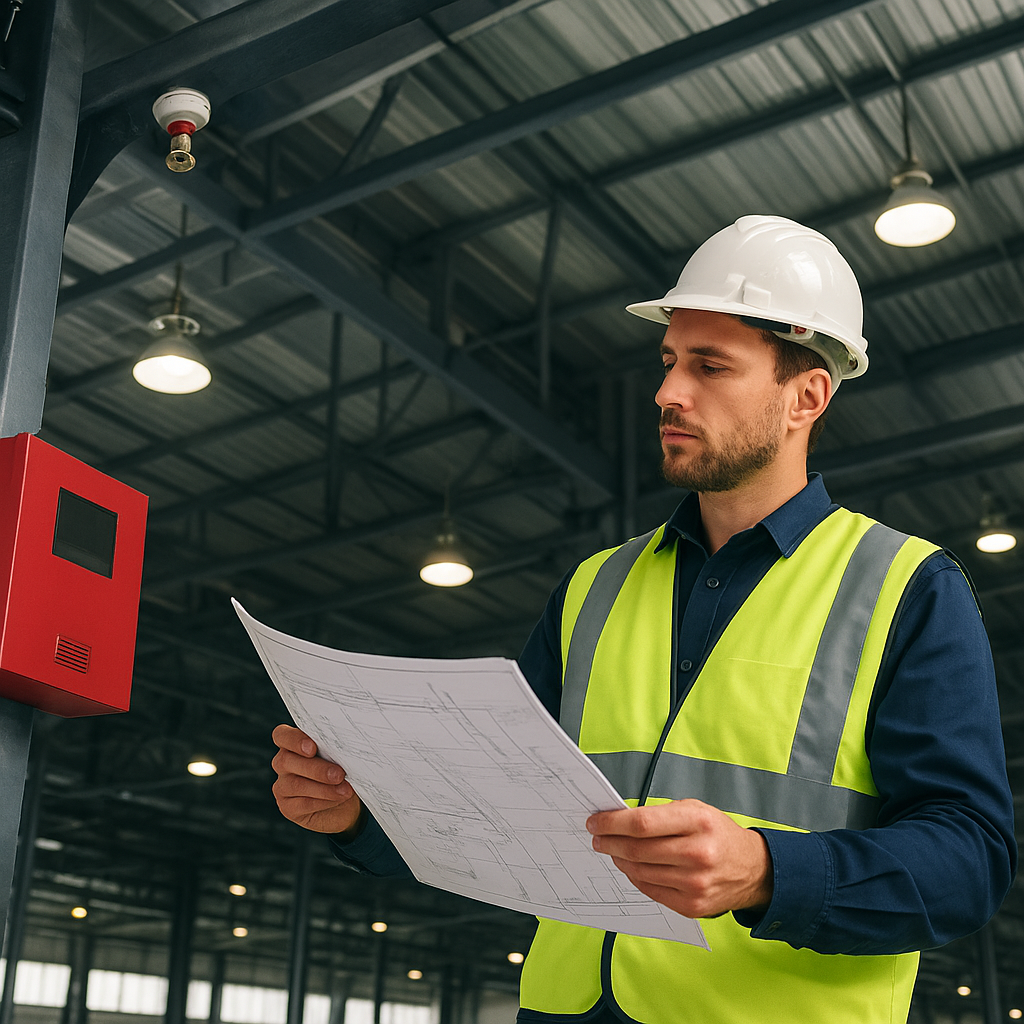
Expert Insights into Fire Risk Assessment: Navigating Compliance and Procurement Challenges
Fire risk assessment plays a pivotal role in safeguarding people, property, and operational continuity across a wide range of industry sectors. For procurement managers, plant engineers, and operations directors, understanding the nuances of fire risk assessment is essential not only to meet regulatory requirements but also to make informed decisions about fire safety equipment and systems. The value of a thorough fire risk assessment lies in its ability to identify hazards, evaluate risks, and inform strategic procurement and operational choices that mitigate fire-related dangers effectively.
In practice, fire risk assessment informs critical decisions around the specification, installation, and maintenance of fire detection and suppression solutions. It acts as a foundation for prioritising investments in fire safety, ensuring that resources are directed towards equipment and measures that address the unique risks within a given environment. This article explores the different types of fire risk assessments, the technical criteria that underpin equipment evaluation, long-term value considerations, compliance frameworks, and real-world procurement scenarios, offering expert guidance grounded in industry experience.
Understanding Different Types of Fire Risk Assessments and Their Impact on Equipment Choices
Fire risk assessments vary widely in scope, methodology, and application depending on the complexity and nature of the premises. Broadly, assessments can be categorised as generic, tailored, or dynamic, each with distinct implications for procurement decisions.
Generic fire risk assessments provide a high-level overview suitable for standard environments such as small office units or retail outlets. These assessments often rely on established checklists and baseline hazard identification procedures. While cost-effective, their limited detail means that resulting equipment choices may lean towards standard, off-the-shelf fire alarms and suppression systems. In such cases, procurement typically involves selecting conventional fire alarm panels and detectors from well-known manufacturers like Apollo or Gent, with less emphasis on custom integration.
Tailored fire risk assessments delve deeper, customised to the specific hazards, occupancy, and layout of the facility. For example, in a mid-sized warehousing operation storing flammable solvents, the assessment will consider storage methods, ventilation, and fire compartmentation in detail. This level of analysis often leads to specifying addressable fire detection systems with zone-specific control, as well as specialised suppression systems such as water mist or clean agent solutions from suppliers like Minimax or Kidde. Procurement decisions here involve balancing the sophistication of equipment with compatibility to existing infrastructure and operational demands.
Dynamic fire risk assessments are typically employed in high-risk or rapidly changing environments, such as chemical plants or manufacturing sites with hazardous processes. These assessments are iterative and continuous, reflecting real-time changes in operations or materials handled. Equipment specified following a dynamic assessment often includes integrated fire detection and suppression systems capable of interfacing with broader safety management platforms. Buyers in these contexts frequently consider advanced systems from manufacturers like Hochiki or Notifier, which support complex configurations and remote monitoring. The dynamic nature of the assessment also necessitates adaptable procurement strategies that accommodate phased upgrades or modular system expansions.
The type of fire risk assessment directly influences whether a facility opts for new installations or refurbishment of existing equipment. For instance, a tailored assessment revealing partial compliance gaps in an older building might lead to selective upgrades of fire alarm panels, detectors, and emergency lighting, whereas a dynamic assessment in a high-tech manufacturing plant may justify a complete overhaul to address emerging hazards comprehensively.
Key Technical Criteria for Evaluating Fire Safety Equipment Before Purchase
Selecting fire safety equipment following a risk assessment requires rigorous technical evaluation to ensure suitability, reliability, and compliance. Buyers frequently overlook critical inspection parameters that can impact system performance and lifecycle costs.
Detection sensitivity is paramount. Fire detection devices must be capable of recognising the specific fire signatures relevant to the environment, whether smoke, heat, or flame. For example, in environments with high dust or steam, standard optical smoke detectors may yield false alarms, requiring the procurement of specialised detectors such as aspirating smoke detection systems from providers like VESDA.
System integration is another key consideration. Modern fire safety equipment often needs to interface with building management systems (BMS), security controls, or evacuation systems. Buyers should verify compatibility with existing infrastructure, including communication protocols and control panel configurations. For example, integrating a new addressable fire alarm system into an older BMS may require custom gateways or software updates, which should be factored into procurement decisions.
Maintenance accessibility is also critical. Equipment should allow straightforward testing, calibration, and replacement of components without significant disruption to operations. This is especially important in sectors like healthcare or education, where downtime can affect patient care or learning. Procurement managers should assess whether devices support remote diagnostics or modular replacement to reduce maintenance overhead.
Certification and testing standards provide assurance of equipment quality and compliance. Buyers must confirm that products meet relevant standards such as BS 5839-1 for fire detection and alarm systems or EN 54 certification for fire detection components. Manufacturer traceability and documented quality control processes are vital for accountability and warranty support. For instance, procuring fire suppression equipment without proper certification can jeopardise insurance claims and regulatory compliance.
Considering Long-Term Value: Total Cost of Ownership in Fire Safety Equipment Decisions
Beyond initial purchase price, total cost of ownership (TCO) plays a decisive role in fire safety equipment procurement. Operational costs, maintenance demands, and support availability can significantly affect the value delivered over the equipment’s lifecycle.
Initial capital expenditure often dominates procurement discussions, but buyers frequently underestimate ongoing costs such as energy consumption, servicing frequency, and spare parts replacement. For example, older conventional fire alarm panels may have lower upfront costs but require more frequent manual testing and use components that are increasingly difficult to source. Conversely, modern addressable systems often feature self-diagnostics and lower power consumption, reducing operational expenditure.
Spare parts availability and manufacturer support are especially relevant when considering refurbishment or partial upgrades of legacy systems. In one scenario within a mid-sized logistics centre, the procurement team faced escalating downtime due to the unavailability of replacement modules for a 15-year-old conventional fire alarm panel. The decision to invest in a modern addressable system from Hochiki, despite higher initial costs, proved cost-effective due to improved reliability and readily available support.
Lead times for equipment delivery and installation can also affect TCO, particularly in industries with tight operational schedules. For example, in the educational sector, fire safety upgrades often need to be completed during school holidays to avoid disruption. Procuring equipment with shorter lead times and modular installation options supports this requirement and reduces indirect costs.
Navigating Compliance Frameworks and Ensuring Fire Safety Alignment
Fire risk assessments and associated equipment procurement must align with UK statutory requirements and recognised standards to ensure legal compliance and operational safety. The Regulatory Reform (Fire Safety) Order 2005 mandates that premises undertake suitable and sufficient fire risk assessments, with responsibility resting on the ‘responsible person’ to manage fire safety effectively.
British Standard BS 5839-1 provides detailed guidance on the design, installation, and maintenance of fire detection and alarm systems in non-domestic premises. Compliance with this standard is often a prerequisite for insurance coverage and contributes to meeting the duty of care obligations. ISO 45001, relating to occupational health and safety management systems, also intersects with fire safety by emphasising hazard identification and risk control.
Fire risk assessments play a critical role in fulfilling these regulatory frameworks by identifying deficiencies and recommending corrective actions. For example, healthcare facilities face complex challenges in maintaining compliance amid evolving regulations and operational demands. Phased fire safety upgrades informed by thorough risk assessments help these organisations maintain accreditation while minimising disruption to patient care.
Fire risk assessments also impact insurance negotiations. Insurers increasingly require documented evidence of risk management, including recent assessments and proof of equipment maintenance. Failure to align procurement and operational practices with assessment findings can lead to higher premiums or refusal of coverage.
Real-World Procurement Challenges and Solutions Across Industry Sectors
Procurement decisions informed by fire risk assessments vary considerably across sectors, reflecting differing hazards, operational priorities, and compliance demands.
In an industrial manufacturing site handling flammable liquids and powders, a tailored fire risk assessment identified the need for a combination of water sprinkler systems and inert gas suppression for specific process areas. The procurement challenge involved selecting suppression equipment capable of rapid activation without damaging sensitive machinery. The solution involved sourcing systems from two manufacturers, Minimax for sprinkler coverage and Ansul for gas suppression, and ensuring seamless integration via a central fire control panel.
Educational institutions often face the challenge of upgrading fire safety systems in phases to avoid disruption during term time. A university campus undertaking a comprehensive fire risk assessment opted for modular fire alarm panels and wireless detectors to simplify installation across multiple buildings. Procurement emphasised ease of maintenance and remote monitoring capabilities, enabling facilities managers to coordinate system upgrades with minimal impact on campus activities.
Commercial offices rely heavily on effective fire compartmentation and occupant evacuation strategies. A risk assessment in a multi-tenant office block revealed deficiencies in smoke control and emergency lighting. Procurement decisions prioritised the installation of addressable fire alarms with integrated voice alarm systems from manufacturers like Bosch, which facilitated coordinated evacuation protocols. The assessment also influenced the choice of fire doors and sealing materials to enhance compartmentation effectiveness.
Frequently Asked Questions About Fire Risk Assessment and Equipment Selection
How often should a fire risk assessment be updated, and what triggers a reassessment in operational settings?
Fire risk assessments should be reviewed regularly, typically at least annually, to ensure continuing suitability. However, several triggers necessitate earlier reassessment, including significant changes to premises layout, introduction of new processes or hazardous materials, changes in occupancy, or after a fire incident or near-miss event. In dynamic environments such as chemical plants, continuous monitoring and periodic reassessment are essential to capture evolving risks accurately.
What distinguishes a competent fire risk assessor, and why does this matter in complex facilities?
A competent fire risk assessor possesses both formal qualifications and practical experience relevant to the specific industry and building type. Competence includes knowledge of fire science, regulatory requirements, and the ability to identify hazards that may not be immediately obvious. In complex facilities like hospitals or manufacturing plants, an assessor’s ability to understand operational nuances and interface with technical staff ensures that recommendations are practical and effective, reducing the risk of costly oversights or inappropriate solutions.
Can existing fire safety equipment be adapted or refurbished following a new risk assessment, or is replacement often necessary?
Adaptation or refurbishment of existing fire safety equipment can be viable where equipment remains compliant, reliable, and supported by manufacturers. For example, upgrading control panels or replacing detectors within an established addressable system can extend service life cost-effectively. However, if equipment is obsolete, lacks certification, or cannot integrate with new systems identified by the risk assessment, full replacement is often the safer and more economical option in the long term. Each scenario requires careful technical evaluation to balance risks and costs.
What common mistakes do procurement teams make when selecting fire safety solutions based on risk assessments?
A common pitfall is focusing solely on upfront price without accounting for integration challenges, maintenance accessibility, or spare parts availability. Another frequent error is underestimating the importance of certification and compliance, leading to equipment that fails to meet regulatory standards or insurance conditions. Procurement teams sometimes overlook the need for user training and ongoing support, which can compromise the effectiveness of the fire safety system. Engaging with experienced suppliers and aligning procurement closely with risk assessment outcomes helps avoid these issues.
Integrating Fire Risk Assessment Expertise into Practical Fire Safety Management
The process of fire risk assessment extends far beyond a mere regulatory obligation; it is a strategic instrument that informs procurement and operational decisions with tangible impacts on safety and business resilience. In practice, organisations that invest in detailed, site-specific fire risk assessments benefit from tailored recommendations that directly influence the choice of fire detection and suppression systems. This targeted approach enables more efficient allocation of resources and a measurable reduction in fire-related risks.
Understanding the distinctions between generic, tailored, and dynamic fire risk assessments allows procurement professionals to anticipate the technical complexity and operational demands of the fire safety equipment they require. For instance, a dynamic assessment conducted in a chemical processing facility will highlight unique hazards and necessitate highly integrated, adaptable fire safety solutions, in contrast with the relatively straightforward needs of a standard office environment. Such insight shapes decisions about whether to refurbish existing systems or invest in new installations, factoring in compatibility, certification, and total cost of ownership.
Aligning fire risk assessments with compliance frameworks such as the Regulatory Reform (Fire Safety) Order 2005 and BS 5839-1 is essential to maintaining legal conformity and securing insurance coverage. This alignment also supports operational continuity, especially in sectors where phased upgrades must be coordinated carefully. Organisations seeking comprehensive support in navigating these technical and regulatory challenges may find valuable guidance and services through NPG Fire Safety’s fire risk assessment offerings, which reflect a deep understanding of the practical procurement and operational considerations involved.