
Understanding Fire Resistant Ductwork: Technical Insights for Procurement and Operations
Why Fire Resistant Ductwork Is a Critical Procurement and Operational Decision
Fire resistant ductwork plays a pivotal role in the passive fire protection strategy of commercial and industrial buildings. Beyond simply conveying air, these duct systems are integral to maintaining compartmentation and ensuring that fire and smoke do not propagate rapidly through ventilation routes. In practice, specifying the correct fire resistant ductwork is often a decision that directly impacts life safety outcomes as well as asset protection.
Within complex facilities such as hospitals, data centres, or manufacturing plants, fire resistant ductwork forms a crucial link between active fire suppression measures and passive fire containment. For example, in a hospital ventilation upgrade project, fire rated ductwork not only had to maintain air quality but also ensure that fire and smoke would be contained to specific zones, protecting vulnerable patients and staff. Operationally, failure to specify appropriate fire resistance ratings or suitable duct materials can lead to severe business continuity risks, including prolonged downtime and costly repairs following fire incidents.
Procurement managers and plant engineers must therefore approach fire resistant ductwork as a strategic investment rather than a routine HVAC component. The right choice affects system integration, regulatory compliance, and ultimately the resilience of the building’s fire safety infrastructure.
Understanding Different Types of Fire Resistant Ductwork and Their Impact on Buyer Choices
The market offers several variants of fire resistant ductwork, each with distinct construction methods, performance characteristics, and maintenance implications. The two primary categories are fire rated sheet metal ductwork utilising intumescent seals and proprietary fire resisting ductboard systems.
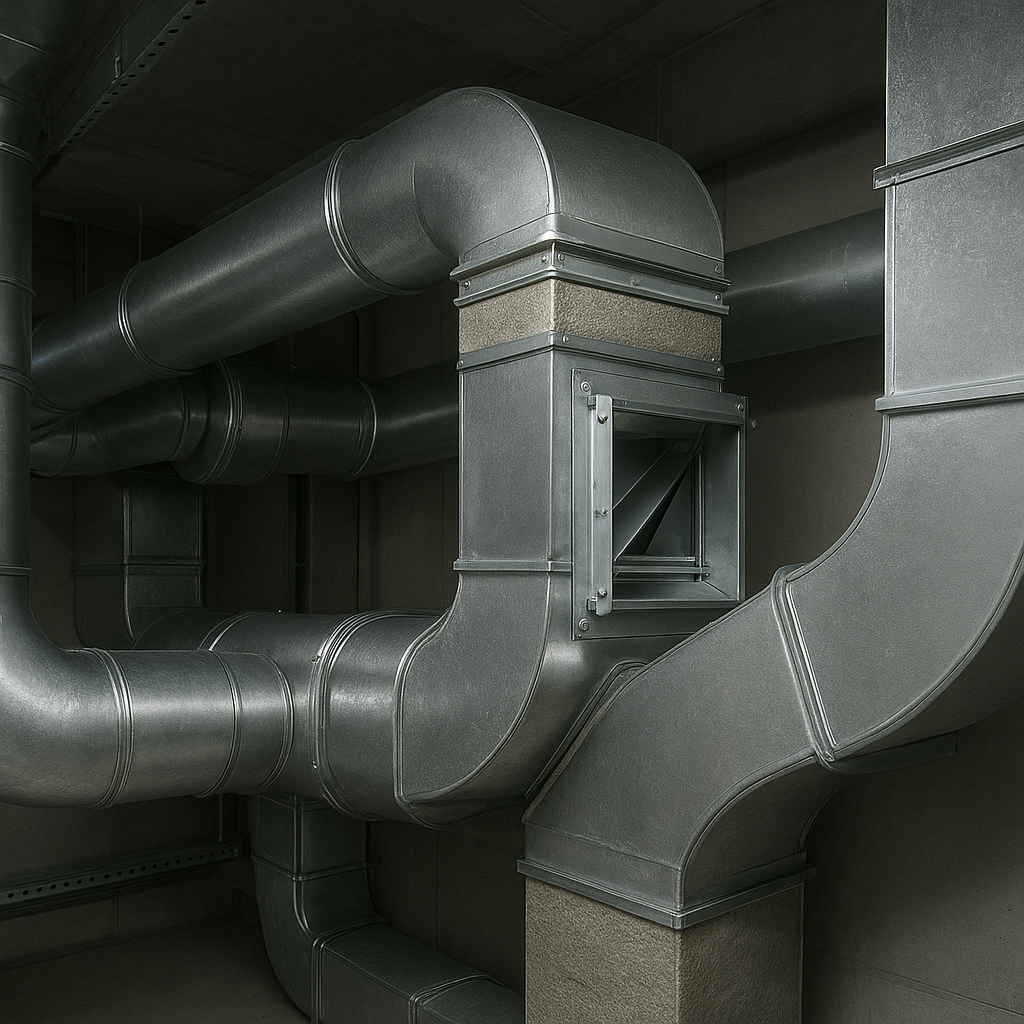
Fire rated sheet metal ductwork, often fabricated from galvanised steel or stainless steel, incorporates intumescent seals at joints that expand under heat to maintain airtightness and fire resistance. This type is favoured for its robustness and longevity, particularly in industrial settings where mechanical durability is critical. However, the installation demands skilled labour to ensure seals are correctly fitted and maintained; otherwise, the fire resistance can be compromised.
In contrast, fire resisting ductboard systems typically consist of mineral fibre or calcium silicate board with fire retardant binders. These systems are lighter and easier to install, making them suitable for commercial office refurbishments or retrofit applications where access is restricted. Their durability under mechanical stress is lower than metal systems, and routine inspections are necessary to detect damage that might reduce fire integrity.
Flexible fire resistant ducting also merits consideration, especially in retrofit or constrained environments. These flexible ducts, often lined with fire retardant materials, allow installation in tight spaces but typically carry lower fire resistance ratings and shorter service lives. In new build projects, rigid ductwork is generally preferred for its superior fire performance and integration capabilities with HVAC systems.
Fire resistance ratings such as FD30, FD60, or FD90 (indicating 30, 60, or 90 minutes of fire resistance) greatly influence buyer decisions. For example, a pharmaceutical manufacturing plant with stringent compartmentation requirements might specify FD90 metal ductwork to meet both regulatory and insurance standards, whereas a commercial office refurbishment might only require FD30 ductboard systems. The chosen rating affects not only material and installation costs but also compatibility with downstream equipment like smoke extract fans and dampers.
Key Technical Evaluation Criteria Before Committing to a Fire Resistant Ductwork Purchase
Before procurement, technical due diligence is essential to ensure the fire resistant ductwork meets both performance and regulatory requirements. Buyers frequently overlook the importance of third-party certification from recognised bodies such as Warringtonfire or BRE. Certifications to standards like BS 476-24 or EN 1366-1 provide evidence of fire resistance under controlled test conditions and are a critical baseline for specification.
Material specifications warrant close scrutiny as well. For sheet metal ductwork, the gauge and grade of steel, along with the quality and type of intumescent seals, determine how the system performs during a fire. Intumescent seals must be compatible with the duct material and correctly applied; otherwise, joints may fail. Similarly, for ductboard systems, the density and composition of the board influence both fire resistance and mechanical durability. In one scenario involving a commercial refurbishment, the procurement team identified that a commonly used ductboard product lacked adequate sealant compatibility, which would have led to premature failure during fire exposure.
Jointing methods are another critical consideration. Welded or riveted joints in metal ductwork provide strength but must accommodate thermal expansion during a fire. Flexible connectors and access panels should be positioned to facilitate inspection and maintenance without compromising fire integrity. Buyers should also verify that the system integrates smoothly with smoke control systems, ensuring that fire resistant ductwork does not impede smoke extraction or pressurisation in emergency conditions.
Balancing Initial Cost and Long-Term Value: Total Cost of Ownership in Fire Resistant Ductwork
While it can be tempting to opt for lower upfront costs, total cost of ownership often favours higher quality and more durable fire resistant ductwork. In data centres, for example, the resilience and low maintenance requirements of metal fire rated ductwork can justify the initial premium. The frequency and complexity of maintenance work, including access for inspections and repairs, significantly influence lifecycle costs.
Parts availability and lead times also affect procurement decisions. Older ductboard systems from discontinued product lines may present challenges for sourcing replacement seals or sections, leading to extended downtime. Modern modular designs with standardised components can reduce these risks by simplifying refurbishment and spare parts management.
Energy efficiency is another factor influencing long-term value. Fire resistant ductwork that maintains airtightness and minimises pressure drops helps HVAC systems operate more efficiently, reducing operational costs and supporting compliance with energy regulations. In one industrial plant, replacing ageing fire resistant ductwork with a modern, sealed metal system led to measurable reductions in fan power consumption, contributing to overall sustainability goals.
Navigating Compliance Requirements and Ensuring Compatibility with Building Fire Safety Strategies
Compliance with Building Regulations Approved Document B and relevant BS EN standards is non-negotiable for fire resistant ductwork. Different sectors have varying requirements; for example, commercial offices often require fire resisting ducts that coordinate with fire compartmentation to maintain escape routes, while industrial premises may face additional demands to withstand harsh environmental conditions.
Ensuring that the fire resistance rating of the ductwork aligns with the building’s fire compartmentation strategy is crucial. This includes verifying that ducts passing through fire rated walls or floors maintain the same or higher fire resistance. Coordination with active fire protection systems such as sprinklers and smoke extract fans is also essential to avoid conflicts that could undermine overall fire safety performance.
Documentation demonstrating fire resistance performance and traceability is vital for third-party audits and insurance. Buyers should require detailed test certificates, installation records, and maintenance schedules to ensure ongoing compliance and facilitate risk management.
Real-World Procurement Challenges and Solutions Across Industry Sectors
A hospital ventilation upgrade project provides a clear example of the complexities involved in procuring fire resistant ductwork. Patient safety and infection control protocols necessitated phased installation to avoid disrupting critical services. The procurement team worked closely with suppliers to specify FD60 metal ductwork with sealed joints that could be installed in sections, minimising downtime and maintaining air quality standards throughout the upgrade.
In an industrial manufacturing plant producing chemicals, high ambient temperatures and aggressive cleaning regimes posed unique challenges. The chosen fire resistant ductwork had to resist corrosion and thermal degradation while meeting FD90 fire resistance requirements. This led to the selection of stainless steel ductwork with specialised intumescent seals capable of withstanding both fire exposure and harsh operational conditions.
Meanwhile, a commercial refurbishment project faced tight budget constraints combined with strict fire safety demands. The procurement team collaborated with suppliers to identify a hybrid approach using fire resisting ductboard systems in low-risk areas and metal fire rated ducts near critical fire compartments. This strategy balanced cost control with compliance and was facilitated by clear communication and flexible lead times.
Common Questions from Procurement and Operations Professionals About Fire Resistant Ductwork
How do fire resistance ratings translate into real-world fire performance and what compromises might exist between rating and system integration?
Fire resistance ratings such as FD30 or FD60 indicate the duration the ductwork can maintain integrity and insulation during a standard fire test. However, these ratings are based on controlled laboratory conditions and may not fully replicate complex real-fire scenarios. In practice, compromises can arise when integrating ductwork with other systems; for example, incorporating access panels or flexible connectors might reduce the effective fire resistance if not properly designed. It is therefore critical to consider the entire duct system as a whole and ensure all components are tested and certified together to maintain the declared rating in real-world conditions.
What are the typical failure modes of fire resistant ductwork in fire conditions and how can design or installation mitigate these risks?
Common failure modes include joint leakage due to seal degradation, collapse of ductboard under thermal stress, and detachment of duct sections from structural supports. Incorrect installation, such as improper fitting of intumescent seals or insufficient clearance for thermal expansion, often exacerbates these issues. Mitigation involves specifying proven sealing systems, following manufacturer installation guidelines meticulously, and ensuring regular inspection regimes to detect early signs of wear or damage.
How should maintenance teams plan inspections and repairs to maintain fire resistance integrity over the lifecycle of the ductwork?
Maintenance should focus on checking the condition of seals, joints, and any flexible connectors, looking for cracks, gaps, or contamination that could impair fire resistance. Scheduled inspections aligned with building fire safety audits are advisable, with particular attention after any modification or repair work. Repairs should use manufacturer-approved materials and techniques to preserve certification. In facilities with high fire safety demands, such as hospitals, maintenance teams often follow detailed protocols and maintain records to demonstrate ongoing compliance.
What documentation and certification should be demanded from suppliers to satisfy regulatory and insurance requirements confidently?
Buyers should request comprehensive test certificates from accredited organisations such as Warringtonfire or BRE, demonstrating compliance with applicable standards like BS 476-24 or EN 1366-1. Installation manuals and maintenance guides should accompany the product to ensure correct application and upkeep. Traceability records linking components to batch numbers and production dates further support risk management and insurance claims. Without these documents, it is difficult to verify that the ductwork will perform as required under fire conditions and meet statutory obligations.
Bringing It All Together: Expert Insights on Selecting and Managing Fire Resistant Ductwork
Selecting fire resistant ductwork requires a nuanced understanding of technical performance, regulatory frameworks, and operational realities. Procurement managers and plant engineers must balance fire resistance ratings, material durability, installation complexity, and total lifecycle costs to ensure that the ductwork supports the building’s overall fire safety strategy without imposing undue maintenance burdens or operational risks.
Experience shows that partnering with specialists who offer tailored fire resistant ductwork services can significantly ease project delivery. These experts bring practical knowledge about the challenges encountered in diverse sectors and provide solutions that align with specific site constraints, compliance demands, and budgetary considerations. Such collaboration helps avoid common pitfalls like incompatible materials or overlooked certification requirements.
For organisations seeking comprehensive expertise in fire resistant ductwork, resources such as Caswell Fire Resisting Ductwork’s service offering provide valuable support. Their integrated approach to design, manufacture, installation, and maintenance addresses the full spectrum of considerations critical to effective fire protection in modern buildings.