
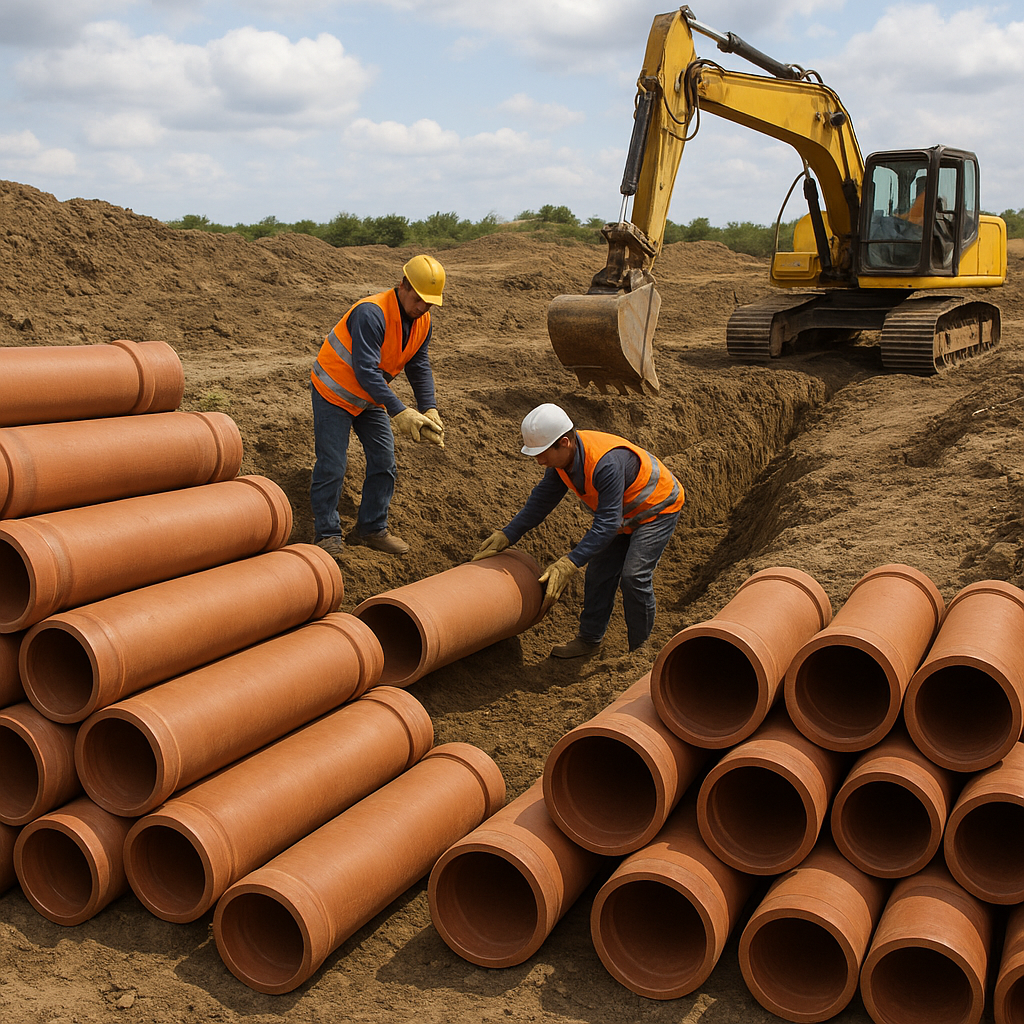
Clay Drainage Pipes: Expert Insights for Informed Procurement and Operation
Clay drainage pipes remain a cornerstone in many drainage infrastructure projects, valued for their durability and specific material properties that suit a range of environmental conditions. For procurement managers, plant engineers, and operations directors, understanding the nuances of clay drainage pipes is essential when specifying or maintaining drainage systems. This article draws on real-world experience and technical expertise to explore the variations in clay pipe types, inspection criteria, cost considerations, compliance frameworks, and practical procurement scenarios. It aims to provide actionable insights beyond standard product literature, helping professionals make informed decisions aligned with both operational and regulatory requirements.
Why Clay Drainage Pipes Remain Relevant in Modern Drainage Systems
Despite the widespread adoption of modern plastic alternatives such as PVC and HDPE, clay drainage pipes continue to hold a significant place in civil engineering and drainage projects. Their relevance stems from decades of proven durability, with many installations from the mid-20th century still functional today. This longevity is largely due to the inherent chemical inertness and mechanical strength of vitrified clay, which resists corrosive soils and aggressive effluents that often degrade plastic pipes prematurely.
In practice, buyers frequently overlook the material compatibility advantages that clay pipes offer in certain soil conditions. For example, in areas with high acidity or sulphate-rich soils, plastic pipes may suffer accelerated degradation, whereas vitrified clay remains stable. Maintenance teams managing existing clay pipe networks also benefit from the material’s resistance to root intrusion and abrasion, which reduces the frequency of blockages and repairs.
Operationally, integrating new clay pipes into ageing networks requires an understanding of jointing compatibility and installation techniques that differ from plastic systems. This is especially relevant for municipal projects or heritage sites where retaining the original drainage material is preferred or mandated.
Understanding the Varied Types of Clay Drainage Pipes and Their Impact on Procurement
Clay drainage pipes are not a uniform product. Their variants influence both performance and procurement decisions significantly. The three main types commonly encountered are vitrified clay pipes, salt-glazed clay pipes, and traditional unglazed clay pipes.
Vitrified clay pipes are formed by firing natural clay at high temperatures until the material vitrifies, creating a dense, glass-like structure. This process imparts excellent mechanical strength and chemical resistance, making these pipes ideal for foul water drainage and industrial effluent applications. Vitrified clay pipes are often specified in urban infrastructure projects where durability is paramount.
Salt-glazed clay pipes undergo an additional glazing process during firing, where salt is introduced to the kiln atmosphere, forming a smooth, glassy coating on the pipe surface. This glaze enhances chemical resistance and reduces surface roughness, which decreases the potential for blockages and facilitates fluid flow. Salt-glazed pipes are favoured in wastewater treatment plants and industrial sites where aggressive chemical exposure is expected.
In contrast, traditional unglazed clay pipes retain a porous surface, which in some agricultural drainage applications can be advantageous. Their permeability helps relieve soil water pressure and prevents saturation in clay-heavy soils. However, unglazed pipes generally have lower chemical resistance and are more vulnerable to root intrusion, factors that must be considered during procurement.
Jointing methods also differ. Plain-end pipes require mortar joints, which can be labour-intensive and time-consuming to install but provide strong, rigid connections. Socketed pipes, often incorporating rubber ring seals, allow for quicker assembly with reduced leakage risk and some flexibility to accommodate ground movement. For example, a recent procurement for a large-scale housing development in the Midlands opted for socketed salt-glazed vitrified clay pipes to balance installation speed with chemical resistance.
Diameter and wall thickness variations further affect suitability. Larger diameter pipes with thicker walls are common in municipal foul drainage, while smaller diameter, thinner-walled pipes may suffice for agricultural land drainage. Understanding these distinctions is critical when specifying pipes to meet flow capacity and mechanical load requirements.
Key Technical Evaluation Criteria Before Committing to Clay Pipe Purchases
Before finalising a clay drainage pipe purchase, rigorous technical inspection is essential to avoid costly failures. One common pitfall is insufficient scrutiny of reclaimed or surplus stock, which may show hairline cracks, chipping, or uneven wall thickness that compromise structural integrity. Visual inspection should be supplemented with dimensional checks to confirm compliance with standards such as BS EN 295, which governs clay piping systems.
Jointing components warrant particular attention. Compatibility between pipe ends and sealing materials is crucial to prevent infiltration or exfiltration. Mortar joints require skilled application and curing, while rubber ring seals must be checked for correct sizing, elasticity, and absence of damage. In one real-world scenario involving an industrial estate refurbishment, the procurement team discovered that rubber rings supplied did not match the socket dimensions of the pipes, leading to delays and additional costs.
Manufacturers’ compliance with British Standards and relevant certifications should be verified. Pipes meeting BS EN 295 ensure consistency in dimensions, mechanical strength, and resistance to chemical attack. This is particularly important when integrating pipes into systems subject to regulatory inspections or environmental monitoring.
Balancing Initial Cost Against Long-Term Value and Operational Efficiency
Procurement decisions often focus on upfront costs, yet the total cost of ownership (TCO) for clay drainage pipes encompasses much more. Life-cycle durability plays a major role; clay pipes typically require fewer repairs over decades compared to plastic alternatives, offsetting higher initial expenditure. However, buyers must consider the availability and cost of replacement parts or refurbishment services, especially for older pipe types that may no longer be in regular production.
Lead times can be a critical factor in project planning. Clay pipes from specialist manufacturers such as Pipes & Clay UK or Bray Clay Pipes may have longer delivery periods compared to mass-produced plastic pipes. When sourcing reclaimed or surplus stock, procurement teams must assess supplier reliability and stock condition rigorously to avoid unexpected downtime. For example, a municipal project replacing a damaged section of sewer relied on surplus socketed vitrified clay pipes sourced through a specialist supplier, but delays in delivery necessitated temporary pumping solutions, increasing overall project costs.
Refurbishment potential is another value consideration. Large-scale municipal or industrial networks with extensive clay pipe infrastructure often benefit from targeted refurbishment rather than wholesale replacement. Techniques such as relining or joint sealing can extend service life at a fraction of the cost of new pipe installation. This approach requires technical expertise to evaluate pipe condition accurately and select appropriate refurbishment methods.
Navigating Compliance and System Compatibility in Drainage Infrastructure
Clay drainage pipes must be specified and installed in accordance with applicable regulations, including the Water Industry Act and Building Regulations Part H, which set out requirements for drainage systems to protect public health and the environment. Understanding how clay pipes fit within these frameworks is essential to avoid compliance issues and ensure system longevity.
Compatibility with upstream and downstream components is another critical factor. Clay pipes often connect to concrete manholes, plastic fittings, or metal accessories, each with distinct jointing requirements and mechanical properties. Ensuring proper interface design and joint selection reduces the risk of leaks and structural failures. For example, in a recent wastewater treatment plant upgrade, the integration of salt-glazed clay pipes with modern polyethylene connectors was facilitated by custom-designed transition joints that met both hydraulic and structural demands.
Soil chemistry and exposure conditions also influence pipe selection. In areas prone to chemical contamination or aggressive soils, glazed pipes or those with thicker walls may be necessary to meet longevity targets. Conversely, in agricultural settings with less aggressive conditions, unglazed pipes may suffice and offer cost savings. Regulatory bodies increasingly expect procurement teams to document these considerations as part of risk assessments and quality control procedures.
Real-World Procurement Scenarios Illustrating Practical Challenges and Solutions
One scenario we encounter regularly involves a mid-sized wastewater treatment plant requiring replacement of a deteriorated foul drainage section. The project team evaluated salt-glazed vitrified clay pipes versus plastic alternatives, ultimately selecting the former due to superior chemical resistance and proven lifespan. The pipes were sourced from a specialist supplier, with careful inspection of jointing seals and dimensional compliance. Despite a longer lead time, the choice resulted in reduced maintenance needs and improved system reliability.
In an agricultural land drainage upgrade across a clay-heavy region in northern England, traditional unglazed clay pipes were preferred. Their permeability helped mitigate waterlogging while resisting root intrusion more effectively than plastic drainage tiles. Procurement involved coordination with local manufacturers to ensure pipe dimensions met site-specific hydraulic requirements and that jointing materials were suitable for trench bedding conditions.
Another case involved an industrial site maintenance team sourcing surplus socketed clay pipes to maintain an ageing drainage network. The team applied stringent inspection criteria, including surface integrity checks and dimensional verification against BS EN 295 standards. Supplier reliability was crucial, as delays would have caused costly operational downtime. The successful procurement balanced cost efficiency with technical rigour, extending the system’s service life without full replacement.
Addressing Common Buyer Queries with Practical Answers for Confident Decision-Making
How does the choice between glazed and unglazed clay pipes affect long-term maintenance needs?
Clay drainage pipes with salt-glaze finishes offer enhanced chemical resistance and smoother internal surfaces. This reduces blockages and eases maintenance compared to unglazed variants, which have rougher, more porous surfaces prone to sediment build-up and root intrusion. However, glazed pipes can be more brittle and require careful handling during installation to avoid chipping or cracking. The decision depends on the drainage environment; for example, industrial effluent systems benefit from glazed pipes, while agricultural drainage may be better served by unglazed types.
Are reclaimed clay drainage pipes a viable option for new installations?
Reclaimed pipes can be cost-effective and environmentally sustainable but require thorough technical inspection before use. Micro-cracks, joint wear, and surface defects may not be immediately visible yet can compromise performance. Additionally, obtaining compatible jointing materials for older pipe designs can be challenging, potentially complicating installation. Procurement teams must weigh these factors and, where possible, employ pressure testing or CCTV inspection to verify internal condition prior to committing to reclaimed pipes.
What inspection standards should be applied when evaluating clay drainage pipes on arrival?
Visual inspections should focus on detecting cracks, chips, and surface defects, complemented by dimensional checks against BS EN 295 requirements. Joint integrity needs particular attention, ensuring that socket dimensions and sealing surfaces are free from damage. For reused pipes, non-destructive testing such as pressure or vacuum testing, or CCTV inspection, can provide assurance of internal condition. Documentation from suppliers regarding manufacturing batch, compliance certificates, and handling procedures supports quality control.
How do clay drainage pipes perform compared to modern plastic alternatives in heavy industrial settings?
Clay pipes exhibit superior chemical resistance and longevity in environments with aggressive effluents, where some plastics may degrade or deform over time. Their rigidity and resistance to abrasion make them suitable for high-load or chemically harsh conditions. However, plastic pipes often offer advantages in installation flexibility, jointing speed, and lighter weight, which can reduce labour costs and installation time. The choice depends on balancing environmental factors, installation logistics, and long-term maintenance budgets.
Clay drainage pipes continue to play a vital role in many sectors where their inherent material properties and historical performance provide clear advantages. Selecting the appropriate type and variant, conducting thorough technical inspections, and understanding compliance requirements are essential for successful procurement and operation. Real-world scenarios demonstrate that integrating clay pipes demands careful consideration of installation methods, joint compatibility, and long-term value.
For organisations navigating these complexities, reliable suppliers like Knowles Drainage offer comprehensive product ranges and expert guidance. Their experience in sourcing both new and reclaimed clay drainage pipes supports informed decision-making aligned with project-specific demands and regulatory frameworks. Accessing such expertise ensures that drainage infrastructure investments deliver durability, compliance, and operational efficiency over the asset lifecycle.