
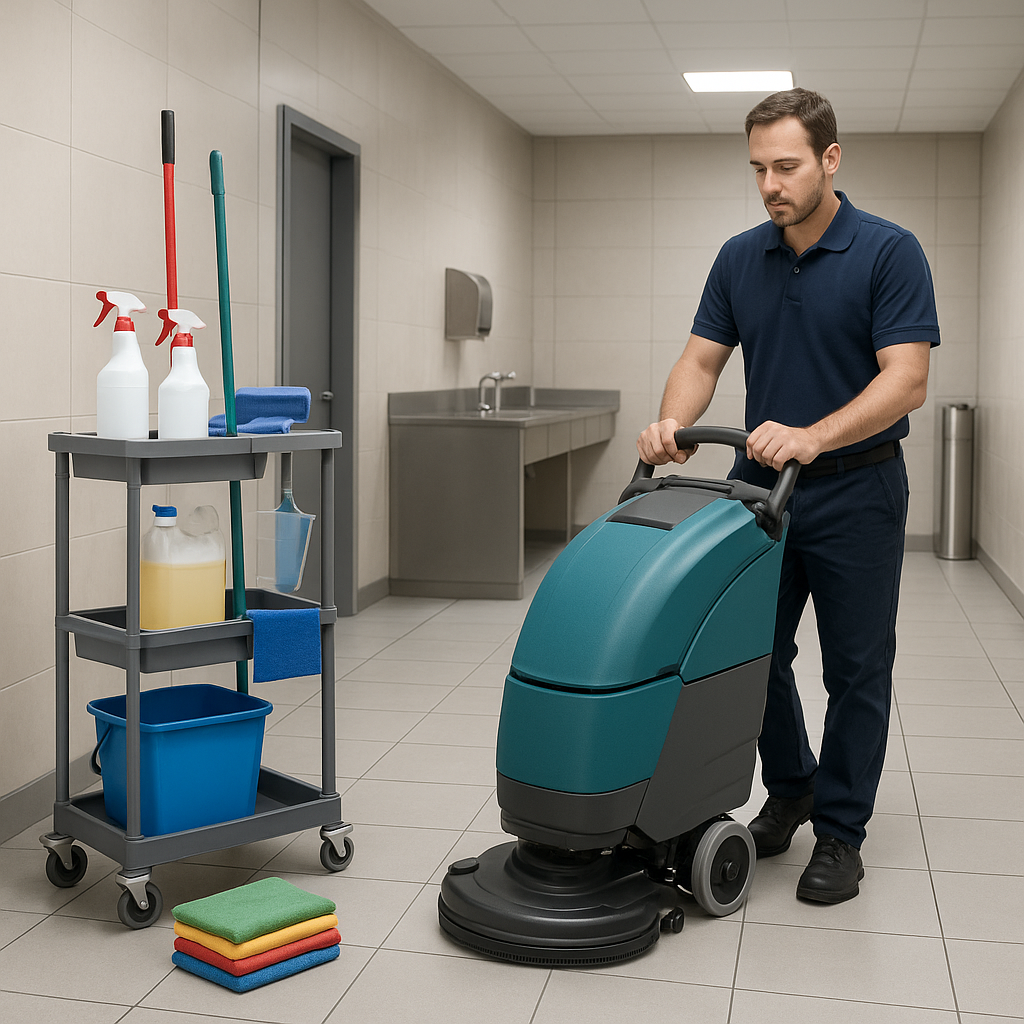
Strategic Procurement of Janitorial Supplies for Commercial and Industrial Facilities
Maximising operational efficiency and compliance through informed janitorial supply choices
Janitorial supplies form the backbone of hygiene and maintenance protocols across a diverse range of sectors, from healthcare to manufacturing. Effective procurement of these supplies is not merely a transactional process but a strategic decision influencing facility cleanliness, staff productivity, safety compliance, and long-term cost control. This article explores the technical nuances of janitorial supplies procurement, drawing on real-world industry experience and practical evaluation methods. It aims to equip procurement managers, plant engineers, and operations directors with the knowledge required to optimise their purchasing decisions and operational outcomes.
Why Choosing the Right Janitorial Supplies is a Strategic Procurement Decision
In practice, janitorial supplies impact far more than the immediate cleanliness of a facility. The choice of cleaning chemicals, tools, and consumables directly affects staff efficiency and safety, which in turn influences overall operational performance. For example, selecting ergonomic mops and brushes can reduce repetitive strain injuries among cleaning staff, an aspect often overlooked by procurement teams focused solely on purchase price. Similarly, the effectiveness of cleaning chemicals determines not only surface hygiene but also compliance with health and safety regulations, critical in sectors such as healthcare and food processing.
From an operational standpoint, janitorial supplies play a pivotal role in controlling cleaning costs. Many organisations encounter unpredictable expenditure patterns due to wasteful use of consumables or suboptimal chemical formulations that require repeated application. For instance, switching from traditional cotton mops to high-quality microfiber variants has been shown to reduce chemical usage by up to 30% while improving cleaning efficacy, as observed in a regional logistics centre managing a 15,000 square metre warehouse.
Procurement decisions also influence long-term maintenance budgets. Poor-quality equipment may require frequent replacement or repairs, driving up total cost of ownership. Furthermore, inconsistent supply chains can lead to operational disruptions, forcing ad hoc purchases at premium prices. Therefore, integrating janitorial supplies procurement within broader facility management strategies is essential to maintain service quality and budget predictability.
Distinguishing Between Janitorial Supplies: Materials, Equipment, and Consumables
Janitorial supplies encompass a broad spectrum of products, typically categorised into cleaning chemicals, tools and equipment, paper products, and dispensing systems. Each category presents distinct procurement challenges and considerations.
Cleaning chemicals range from general-purpose detergents to specialised formulations such as enzymatic cleaners for healthcare settings or acid-based descalers for industrial environments. Within this category, buyers must assess efficacy, safety profiles, and compatibility with surfaces and equipment. For example, procurement managers in food processing plants often prefer eco-friendly chemicals compliant with stringent residue limits, whereas manufacturing facilities may prioritise heavy-duty degreasers with rapid action.
Tools and equipment include manual items like mops, brushes, and buckets, as well as powered machinery such as scrubbers and vacuum cleaners. Variants within these types significantly affect purchasing strategies. Microfiber mops, for instance, offer superior dirt removal and durability compared to cotton alternatives, but initial costs are higher. In equipment, the decision between refurbished and new machines involves trade-offs between upfront savings and potential maintenance overheads.
Paper products such as toilet tissue, paper towels, and hand towels are consumables with high turnover rates. Procurement here often balances price against quality and environmental credentials. Dispensing systems, meanwhile, influence product usage efficiency and hygiene. Systems designed to limit user contact and control portion sizes can reduce waste and cross-contamination risks, a crucial factor in healthcare and education sectors.
Brand choice and supply chain stability further complicate decisions. Familiar manufacturers like Diversey and Ecolab dominate many categories, but procurement teams must verify product compatibility, especially when integrating new chemicals with existing dispensing systems. Incompatibility can cause dispenser malfunction or reduced chemical efficacy, a common pitfall encountered in multi-site organisations undergoing gradual product transitions.
Critical Evaluation Criteria for Janitorial Supplies Before Purchase
Before committing to purchase, thorough evaluation of janitorial supplies is essential to avoid costly mistakes. For equipment, durability and ergonomic design should be primary considerations. Buyers frequently overlook the importance of ease of maintenance, leading to prolonged downtime and increased repair costs. For example, a manufacturing plant recently experienced operational delays because their selected floor scrubber required specialist servicing unavailable locally, underscoring the need to assess serviceability and spare parts availability upfront.
For cleaning chemicals, compliance with COSHH (Control of Substances Hazardous to Health) regulations is non-negotiable in the UK. Buyers must request safety data sheets and verify that products have been efficacy-tested under conditions relevant to their environment. In healthcare settings, for instance, disinfectants should meet recognised standards such as BS EN 1276 or BS EN 13697 to ensure broad-spectrum antimicrobial action.
Supplier reliability is another critical factor. Consistent delivery lead times and responsive after-sales support mitigate risks related to stockouts or technical issues. One scenario we encounter regularly involves educational institutions struggling with seasonal demand spikes, where suppliers able to provide flexible delivery schedules and emergency restocking support prove invaluable. Additionally, the ability to supply product training and documentation can enhance end-user compliance and reduce misuse.
Understanding Total Cost of Ownership for Janitorial Equipment and Consumables
Procurement decisions based solely on purchase price often fail to account for total cost of ownership (TCO), a comprehensive metric encompassing initial expenditure, ongoing maintenance, consumable consumption, and end-of-life disposal or refurbishment. For example, a manufacturing plant faced with a choice between refurbishing an older fleet of floor scrubbers and investing in new automated machines conducted a detailed cost analysis. While refurbishment offered short-term savings, the older equipment’s higher downtime and energy consumption ultimately increased operational costs by 15% over three years.
Availability of spare parts and refurbishment options can extend the life of equipment and reduce capital expenditure, but only if the supplier maintains a robust support network. Conversely, investing in modern machines with improved energy efficiency and automation capabilities can reduce labour costs and improve cleaning consistency, justifying higher upfront costs. Consumable usage rates also play a role; for instance, switching to chemical concentrate systems with controlled dilution can lower chemical expenditure and waste.
Supply continuity and product standardisation contribute to operational efficiency. Facilities utilising standardised janitorial supplies across multiple sites benefit from simplified training, streamlined inventory management, and predictable usage patterns. Conversely, frequent product changes or supply interruptions can cause confusion, reduce compliance, and increase waste.
Navigating Compliance and Compatibility in Janitorial Supplies Procurement
Compliance with regulatory frameworks is a key consideration in janitorial supplies procurement. In the UK, COSHH regulations govern the safe use and storage of hazardous substances, including many cleaning chemicals. Procurement managers must ensure that all products are accompanied by up-to-date safety data sheets and that staff receive appropriate training in handling and disposal.
Environmental regulations also influence product choice, particularly regarding chemical disposal and packaging waste. For example, public sector contracts increasingly require suppliers to demonstrate sustainability credentials, such as reduced volatile organic compounds (VOCs) in chemicals or use of recyclable packaging. Compliance with standards like ISO 14001 for environmental management can be an important procurement criterion.
Compatibility is equally vital. Dispensers, chemicals, and equipment should function seamlessly together to prevent cross-contamination or operational failures. For instance, a healthcare facility upgrading to automated dosing systems had to carefully select cleaning agents compatible with the new dispensers to avoid clogging and chemical degradation. Additionally, adherence to industry-specific standards such as BRC for food hygiene or ISO 14644 for controlled environments ensures that janitorial supplies meet sector-specific quality and safety benchmarks.
Real-World Procurement Scenarios Highlighting Challenges and Solutions
A medium-sized secondary school managing fluctuating cleaning supply demand throughout the academic year faced challenges in balancing bulk purchasing benefits with storage constraints and product shelf-life. By implementing a just-in-time ordering system supported by a supplier with flexible delivery options, the school reduced waste and improved budget forecasting without compromising hygiene standards.
In a healthcare facility aiming to upgrade janitorial equipment to meet enhanced infection control standards, budget constraints required careful prioritisation. The procurement team opted for a phased replacement strategy, initially targeting high-risk areas with new automated scrubbers and antimicrobial chemicals. This approach allowed gradual capital expenditure while elevating overall hygiene performance.
A logistics warehouse dealing with heavy wear on consumables such as gloves, wipes, and floor mats required products that could withstand rigorous use without frequent replacement. After testing several brands, the operations director selected durable, industrial-grade alternatives with proven longevity, reducing downtime and consumption costs by nearly 20% annually.
Frequently Asked Questions That Procurement Managers Commonly Encounter
What factors should determine the choice between chemical concentrate systems and ready-to-use cleaning products in high-volume settings?
Chemical concentrate systems offer significant cost and environmental benefits by reducing packaging waste and transport volumes. However, they require compatible dosing equipment and trained staff to ensure correct dilution, which can pose initial implementation challenges. Ready-to-use products provide convenience and consistency but often come at a higher per-use cost and increased plastic waste. In high-volume settings, the decision often hinges on balancing operational complexity against long-term savings and sustainability goals.
How can one effectively evaluate the ergonomic suitability of janitorial equipment to reduce staff injury risks?
Ergonomic evaluation involves assessing factors such as equipment weight, handle design, adjustability, and ease of manoeuvrability. Procurement managers should involve end users in trials to gather feedback on comfort and usability. For powered equipment, vibration levels and noise emissions should also be considered. Selecting equipment with recognised ergonomic certifications or endorsements can further reduce injury risks and improve staff retention.
What are the key indicators that a janitorial supply vendor offers reliable after-sales service and support?
Reliable suppliers provide clear communication channels, offer timely spare parts availability, and maintain a local or regional service network for equipment maintenance. Evidence of structured training programmes and technical documentation availability also signals strong after-sales support. References from other clients in similar sectors can provide valuable insights into the supplier’s reliability and responsiveness.
How do sustainability credentials of janitorial supplies influence procurement decisions in public sector contracts?
Public sector procurement increasingly mandates sustainability criteria, including reduced chemical toxicity, carbon footprint, and packaging recyclability. Suppliers demonstrating compliance with recognised environmental certifications or providing transparent lifecycle data gain competitive advantage. Incorporating sustainability objectives helps organisations meet regulatory requirements and corporate social responsibility goals while potentially reducing operating costs through efficiency gains.
Drawing Practical Insights to Optimise Janitorial Supplies Procurement with Jangro
Effective procurement of janitorial supplies requires a nuanced understanding of product categories, technical evaluation standards, compliance frameworks, and total cost of ownership considerations. Integrating these factors enables facility managers and procurement professionals to select solutions that not only meet immediate hygiene needs but also align with broader operational and regulatory objectives. The diversity of environments—from healthcare to logistics—demands tailored approaches, balancing quality, cost, and sustainability.
Working with a knowledgeable distributor such as Jangro can streamline this complex process by providing access to a comprehensive range of janitorial supplies, backed by expert advice and reliable supply chains. Their ability to support multi-site operations with consistent product standards and flexible delivery addresses many practical challenges faced in procurement scenarios. Furthermore, Jangro’s commitment to compliance and sustainability aligns well with the evolving demands of modern facility management.
Continuous engagement with suppliers and periodic review of product performance and regulatory changes remain vital. By adopting a strategic approach to janitorial supplies procurement, organisations can enhance hygiene standards, improve staff wellbeing, and achieve cost efficiencies over time. For more detailed information on sourcing janitorial supplies suited to various commercial needs, exploring the resources available at Jangro offers valuable guidance and product solutions tailored to professional cleaning requirements.