
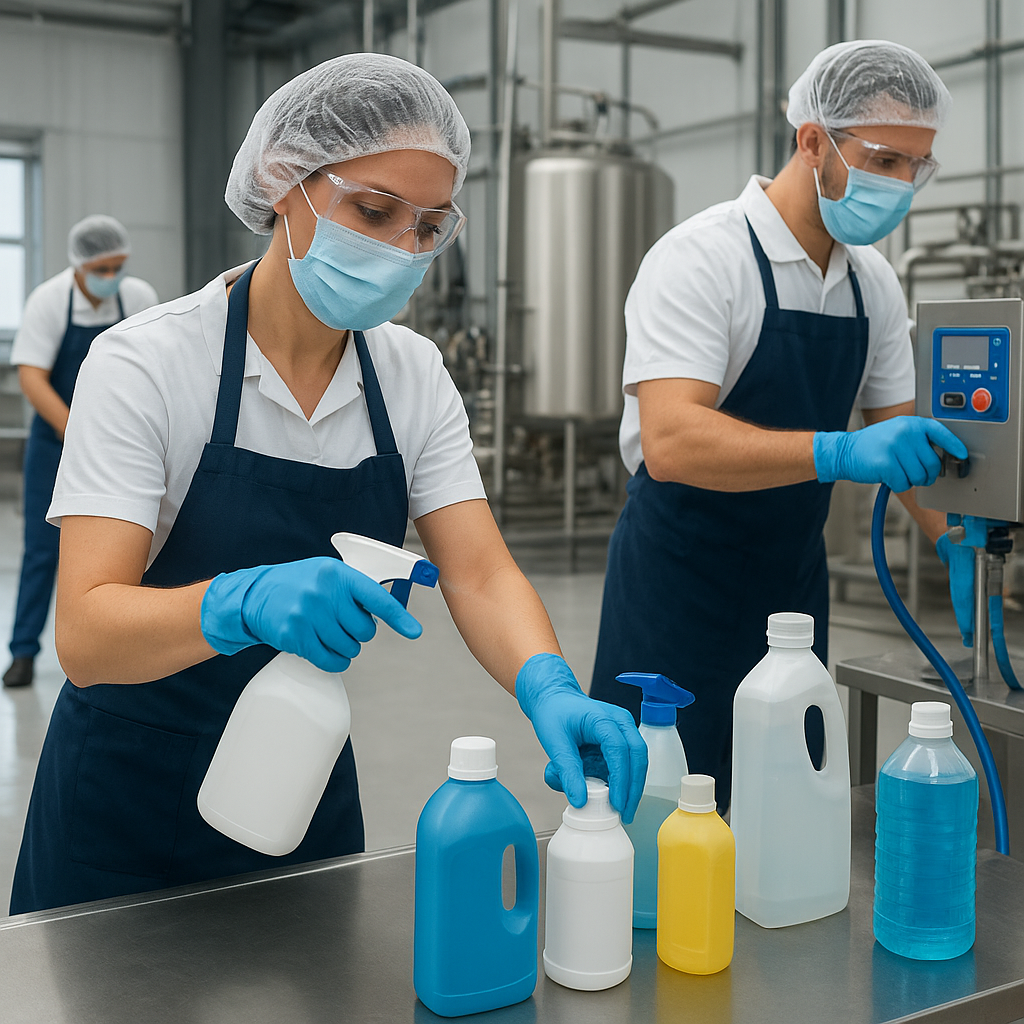
Strategic Approaches to Cleaning Products Procurement for Industrial and Commercial Operations in Cork
Why the choice of cleaning products is a strategic operational decision
In industrial and commercial environments, the selection of cleaning products goes far beyond simple janitorial concerns. It directly influences hygiene standards, staff safety, regulatory compliance, and ultimately operational efficiency. For procurement managers and operations directors, choosing the right cleaning products is a strategic decision that impacts daily workflow and long-term maintenance costs.
For example, in a manufacturing facility where contamination control is critical, selecting disinfectants with proven efficacy against specific pathogens is essential. Conversely, in office environments, factors such as odour control and user safety take precedence. The choice of cleaning products also affects labour costs; products that require less dilution or shorter dwell times can significantly reduce cleaning durations and thus staffing expenses.
Beyond immediate cleaning outcomes, product compatibility with existing cleaning equipment and surface materials plays a vital role in preserving asset longevity. Using overly aggressive chemicals on sensitive surfaces can lead to premature wear and costly repairs. Supplier reliability and local support networks are equally critical. In practice, buyers frequently overlook the benefits of partnering with suppliers who can provide rapid delivery, technical support, and training, all of which contribute to maintaining smooth operations.
Understanding the varieties of cleaning products and their effect on procurement choices
Cleaning products come in varied chemical classes, each designed for specific applications and environments. Detergents, disinfectants, degreasers, and specialised sanitising agents form the core categories, but within these lie numerous subtypes that influence procurement decisions.
Detergents, often the first line of cleaning, are primarily surfactant-based and effective at removing dirt and organic residues. Disinfectants, on the other hand, are formulated to eliminate microorganisms and are typically classified by their active ingredients, such as quaternary ammonium compounds, chlorine-based agents, or hydrogen peroxide. Degreasers are crucial in industrial settings where oils and heavy soils accumulate, requiring solvents or alkaline formulations to break down tough residues.
Product variants also differ by application area. Surface cleaners for general purpose use must balance efficacy with surface safety, while floor care products often include polymers or waxes to protect and enhance durability. Restroom hygiene products require formulations that tackle odours, limescale, and microbial contamination simultaneously. Food-safe cleaning products must meet rigorous standards to avoid chemical residues that could compromise food safety.
Procurement decisions must consider these distinctions carefully. For instance, a food processing plant will prioritise HACCP-compliant, non-toxic sanitising agents that do not corrode stainless steel, whereas a large office complex may focus on eco-friendly and low-odour formulations to maintain indoor air quality.
Key technical and quality criteria to evaluate before committing to a cleaning product purchase
Technical assessment is crucial before procurement to ensure cleaning products meet operational needs and regulatory requirements. A fundamental parameter is the concentration of active ingredients, which directly determines efficacy. For instance, disinfectants must contain sufficient biocidal agents at effective pH levels to neutralise pathogens without damaging surfaces.
Certification and compliance documentation are vital for verifying product claims. ISO 9001 certification indicates quality management standards in manufacturing, while EN standards, such as EN 1276 or EN 13697, validate disinfectant efficacy against bacteria and viruses. COSHH (Control of Substances Hazardous to Health) assessments provide essential information on safe handling, storage, and disposal, critical for staff safety and regulatory adherence.
Procurement managers should also verify product shelf life and storage requirements, as chemical degradation can reduce effectiveness and pose safety risks. Packaging integrity must be examined to prevent leaks or contamination during transport and storage. In practice, buyers frequently overlook these factors, leading to unexpected failures or regulatory non-compliance.
Balancing initial price with total cost of ownership in cleaning product procurement
While initial purchase price is a natural focus, total cost of ownership (TCO) considerations often have a greater impact on operational budgets. Product dilution rates are a key factor; a concentrate with a high dilution ratio can reduce consumption and lower recurring costs despite a higher upfront price. Coverage area and actual usage patterns should be analysed based on cleaning schedules and surface types.
Another dimension involves associated equipment such as dosing systems and automated dispensers. Availability of spare parts and compatibility with cleaning chemicals influence maintenance costs and system uptime. For example, older dosing pumps may not support newer, more concentrated formulations, requiring either costly retrofits or replacement.
Lead times and supplier responsiveness also affect TCO. Delays in delivery can disrupt cleaning schedules and compromise hygiene standards, potentially incurring penalties or reputational damage. Bulk ordering discounts and the supplier’s flexibility to provide product reformulation or substitution options can further optimise costs and operational continuity.
Navigating compliance and compatibility within regulated sectors and diverse operational environments
Cleaning product selection must align with a complex web of health and safety legislation, environmental regulations, and sector-specific hygiene protocols. For instance, food production facilities must adhere to strict HACCP guidelines, ensuring all sanitising agents are food-safe and residue-free. Healthcare environments require compliance with HSE standards and the use of virucidal agents effective against healthcare-associated infections.
Compatibility checks are indispensable. Procurement teams should confirm that cleaning chemicals do not degrade or discolour surfaces, damage equipment seals, or interfere with electronic components. A common pitfall is overlooking the cumulative effect of repeated chemical exposure on floor finishes or stainless steel fittings, which can lead to costly refurbishments.
Environmental impact assessments are increasingly important, particularly with evolving waste disposal regulations. Buyers must ensure proper chemical waste handling procedures are in place and that cleaning products have minimal ecological footprints. Biodegradability, low VOC content, and compliance with REACH regulations are often deciding factors in product approval.
Practical procurement scenarios illustrating challenges and solutions across industries
One scenario we encounter regularly involves a medium-sized food processing plant in Cork with a production volume exceeding 50 tonnes weekly. The plant required HACCP-compliant disinfectants that maintained efficacy without corroding stainless steel surfaces in processing lines. After evaluating multiple products, the procurement team selected a hydrogen peroxide-based disinfectant with proven EN 13697 certification and a neutral pH. This choice minimised surface damage and met stringent residue limits, ensuring compliance and operational uptime.
In another case, a large commercial office facility faced challenges balancing janitorial costs with an organisational mandate to adopt eco-friendly cleaning products. The facility management opted for plant-based detergents with low VOC emissions and incorporated automated dosing systems to control chemical usage precisely. This approach reduced chemical waste and improved indoor air quality, aligning with corporate social responsibility goals while maintaining cleaning standards.
Healthcare procurement teams often require rapid-acting virucidal agents compatible with sensitive medical equipment. One hospital we worked with needed disinfectants effective against norovirus and MRSA but safe for use on touchscreens and monitoring devices. Selecting quaternary ammonium compounds formulated with non-corrosive additives and validating them through on-site trials ensured compliance with HSE guidelines without risking equipment damage.
Local suppliers such as Cork Hygiene play a vital role in these scenarios by offering tailored product sourcing, technical support, and rapid delivery. Their understanding of regional operational demands and regulatory frameworks helps clients mitigate risks and optimise cleaning protocols.
Addressing common procurement questions with expert insights
How can procurement managers verify the true effectiveness of cleaning products beyond manufacturer claims? In practice, relying solely on manufacturer literature is insufficient. Buyers should request independent third-party laboratory test reports, certifications such as EN standards, and if possible, conduct in-house trials simulating real operational conditions. Sampling products on-site allows assessment of efficacy, surface compatibility, and user acceptance, reducing the risk of underperformance after purchase.
What are the pitfalls in switching suppliers or product lines mid-contract? Changing products without thorough evaluation can disrupt cleaning protocols and impact hygiene outcomes. Variations in chemical formulations may affect dosing equipment calibration, surface compatibility, or even regulatory compliance if the new product lacks necessary certifications. Additionally, staff training and safety data sheets must be updated to prevent handling errors. A structured change management process involving technical trials and stakeholder consultation is essential to avoid these pitfalls.
How should organisations manage stock levels to avoid expiry or downtime in critical hygiene processes? Effective inventory management requires tracking product shelf lives and usage rates accurately. Overstocking can lead to chemical degradation and waste, while understocking risks operational interruptions. Implementing a just-in-time procurement strategy combined with buffer stock calculations tailored to lead times helps maintain optimal availability. Coordination with reliable local suppliers ensures rapid replenishment without excessive storage.
What role do third-party audits and sampling play in ongoing quality assurance? Regular audits by independent bodies validate that cleaning products continue to meet efficacy and safety standards over time. Sampling during audits verifies product consistency and compliance with specifications. This process uncovers potential deviations due to formulation changes or storage issues and supports continuous improvement. For sectors such as food processing and healthcare, audit results are crucial for compliance documentation and risk management.
Bringing expertise to cleaning product decisions in Cork’s commercial and industrial sectors
Procurement of cleaning products in industrial and commercial settings demands a nuanced understanding of operational requirements, regulatory frameworks, and product chemistry. Experience shows that integrating these elements enables organisations to optimise hygiene outcomes while controlling costs and risks. The diversity of cleaning product types and applications mandates a tailored approach rather than a one-size-fits-all mindset.
Local market knowledge and supplier partnerships are equally important. Suppliers with proven expertise in the Cork region, such as those represented by Cork Hygiene, provide valuable insights into regulatory changes, product availability, and technical support. Their ability to respond quickly to urgent requests and customise solutions based on sector-specific needs contributes significantly to operational resilience.
Ultimately, cleaning product procurement should be approached as a strategic function that balances technical evaluation, cost management, compliance, and supplier collaboration. This holistic perspective is essential for maintaining high hygiene standards, protecting assets, and supporting the health and safety of staff and customers alike.