
Understanding Passive Fire Protection in Fire-Rated Ductwork: Technical Insights for Procurement and Operations
The Critical Role of Passive Fire Protection in Building Safety and Procurement Decisions
Passive fire protection plays a fundamental role in a building’s overall fire safety strategy, serving as a critical complement to active systems such as sprinklers and detection alarms. Unlike active measures that respond once a fire has started, passive fire protection is built into the fabric of the building and its services to contain fire and smoke, slow fire spread, and safeguard escape routes. For procurement managers and plant engineers, specifying appropriate fire-rated ductwork is an essential component of this strategy, particularly within complex fire compartmentation and smoke control systems.
Fire-rated ductwork forms part of the passive fire protection system by preserving the integrity of fire compartments and maintaining safe evacuation routes. In practice, buyers frequently overlook that ductwork is not simply a conduit for air but a potential pathway for fire and smoke to spread rapidly unless correctly rated and installed. This oversight can lead to costly retrofits or compliance failures during building inspections. Selecting the right fire-rated ductwork requires a careful balance between meeting regulatory demands, ensuring system performance, and anticipating operational challenges.
Variants of Passive Fire Protection in Ductwork and Their Influence on Buyer Selection
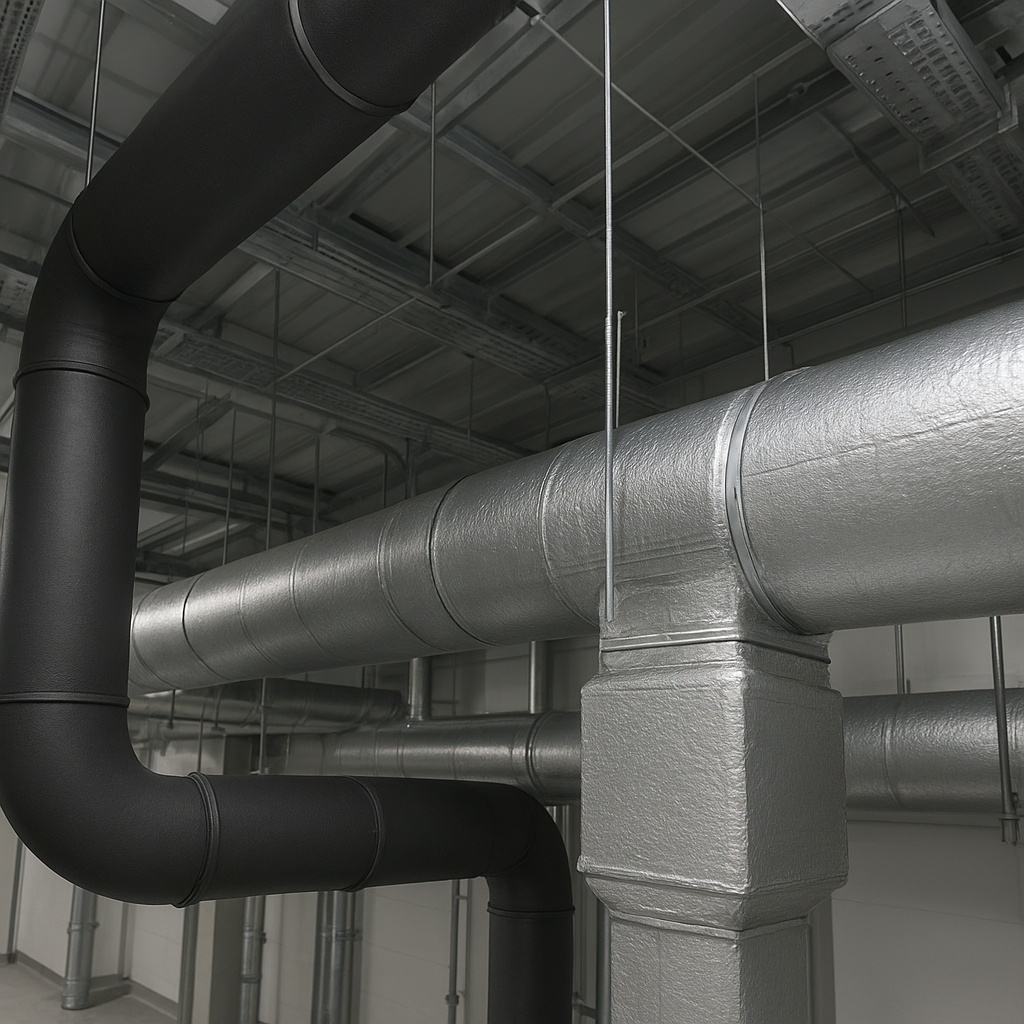
When specifying fire-rated ductwork, understanding the material composition and fire resistance classification is crucial. The market primarily offers steel and composite fire-resisting ducts. Steel ducts, often galvanised and insulated, provide robust fire resistance and structural stability, making them suitable for high-risk environments such as healthcare or data centres. Composite ducts incorporate layers of fire-resistant materials and sometimes intumescent coatings to expand and seal gaps during a fire, offering a lighter solution that may be advantageous in retrofit or space-constrained installations.
Fire resistance ratings such as FD30 or FD60 indicate the duct’s ability to maintain function and integrity for 30 or 60 minutes respectively, under test conditions aligned with standards like BS EN 1366-1. The choice of rating depends on the fire compartment requirements and building classification under Approved Document B or BS 9999. For example, a commercial office refurbishment with open-plan HVAC systems might require FD60 ductwork to ensure compliance with compartmentation rules, whereas smaller retail units could use FD30.
Insulated versus uninsulated ducts also influence selection. Insulated fire ducts can provide both thermal performance and fire resistance but add to weight and complexity. Intumescent coatings offer a thinner fire protection layer but demand precise application and validation. These design choices affect integration with existing HVAC systems, ease of access for maintenance, and compatibility with fire dampers and smoke control devices.
Key Technical Criteria to Verify Before Committing to Fire-Rated Ductwork Purchases
Before procurement, it is essential to verify the technical credentials of fire-rated ductwork to avoid non-compliance and costly rework. Buyers should insist on comprehensive certification documentation, including third-party test reports to BS EN 1366-1 or equivalent. Product data sheets must clearly specify fire resistance classifications, construction materials, installation methods, and any limitations such as maximum duct lengths between fire barriers.
A common pitfall is accepting generic product literature without confirming site-specific suitability. For instance, ductwork installed in ceiling voids with limited access must be compatible with the building’s HVAC air pressures and noise criteria while maintaining fire resistance. Site constraints such as irregular ceiling heights or integration with legacy systems demand bespoke solutions that some suppliers may not be equipped to handle.
Experience with complex installations is another critical factor. Suppliers who have delivered bespoke, fire-rated ductwork for sectors like healthcare or data centres typically understand the nuances of coordinating with fire engineers and building control. Procurers should request case studies or references to validate this expertise and ensure that the product will perform reliably in real-world conditions.
Evaluating Total Cost of Ownership: Beyond Initial Purchase Price
Procurement decisions often focus heavily on upfront costs, yet the total cost of ownership (TCO) of fire-rated ductwork extends far beyond the initial purchase price. Factors such as refurbishment feasibility, availability of spare parts, and lead times for replacements significantly influence the overall value of the investment.
For example, a large commercial refurbishment project in the education sector initially opted for a lower-cost fire-rated duct solution. However, the ductwork lacked modularity and required extensive downtime for maintenance, leading to increased labour costs and disruption. Conversely, modern systems from manufacturers like Caswell offer modular designs with standardised components, enabling quicker access for inspection and more straightforward repairs. This efficiency translates into lower lifecycle costs despite a higher initial outlay.
Lead times also matter. Older ductwork systems or bespoke materials may have longer procurement and delivery times, impacting project schedules and increasing risks. The availability of spare parts and compatibility with existing HVAC systems further affect operational continuity. Evaluating these aspects helps avoid scenarios where short-term savings lead to long-term expenses and compliance headaches.
Navigating Compliance and Compatibility within UK and European Fire Safety Frameworks
Compliance with UK and European fire safety regulations is non-negotiable when specifying fire-rated ductwork. Approved Document B sets out essential fire safety requirements for buildings, while BS 9999 provides guidance on fire safety design and management. Fire ductwork must also comply with testing standards such as BS EN 1366-1, which governs fire resistance of service installations. Third-party certification schemes like LPCB and Warrington Certification add further assurance of product reliability and performance.
Ensuring compatibility between fire-rated ductwork and other passive fire protection elements is critical. Fire dampers, firestopping materials, and compartment walls must work together seamlessly to maintain integrity during a fire. In practice, coordination between suppliers and contractors is often overlooked, resulting in gaps or weak points in the fire barrier.
Moreover, fire-rated ductwork must meet HVAC performance requirements. Airflow efficiency and noise control cannot be compromised by fire protection measures. For instance, intumescent coatings must not degrade airflow or cause excessive pressure drops, which can burden fans and increase energy consumption. Balancing fire safety compliance with operational efficiency demands detailed technical evaluation and collaboration among fire engineers, HVAC specialists, and procurement teams.
Real-World Procurement Examples from High-Risk and High-Value Sectors
One scenario encountered regularly involves a large NHS hospital requiring bespoke fire-rated ductwork with enhanced acoustic insulation and tight fire resistance ratings. The project’s complexity arose from the need to maintain infection control standards and ensure uninterrupted air quality in critical care areas. The procurement team worked closely with specialist suppliers to design lightweight, FD60-rated composite ducts with integrated acoustic linings, balancing fire safety with operational priorities.
In the data centre sector, a major retrofit project highlighted coordination challenges between fire protection engineers, HVAC contractors, and building control authorities. The existing ductwork was non-compliant, and replacing it required phased installation to avoid downtime. The procurement strategy prioritised modular, pre-fabricated fire-rated duct sections with proven certification and rapid installation, minimising operational risks and ensuring compliance with BS EN 1366-1.
A manufacturing plant upgrade demonstrated the value of modular fire-rated ductwork in reducing downtime and simplifying maintenance. The plant’s high-temperature environment demanded steel ducts with FD90 ratings and corrosion-resistant coatings. Selecting modular components allowed phased replacement during scheduled shutdowns, avoiding production losses and enabling easier future inspections.
Common Queries from Procurement and Engineering Teams on Firesafe Ductwork Solutions
What factors determine the appropriate fire resistance rating for ductwork in different building types and occupancies? The appropriate fire resistance rating depends on the building’s fire compartmentation strategy, occupancy risk, and regulatory requirements. For example, healthcare facilities often require FD60 or higher ratings to protect vulnerable occupants, while commercial offices might accept FD30. The choice must align with Approved Document B and BS 9999 guidance, as well as any client-specific safety mandates.
How do installation conditions influence the fire performance and certification validity of fire-rated ductwork? Installation conditions such as ceiling void dimensions, duct orientation, and proximity to other services can affect fire performance. Certificates and test reports usually specify installation parameters; deviations may invalidate certifications. It is vital to ensure that the installation environment matches these conditions or that alternative solutions are engineered and tested accordingly.
What maintenance routines are recommended to ensure ongoing compliance and performance of passive fire protection duct systems? Regular inspections should verify the physical integrity of ductwork, check for damage to fire-resistant coatings or insulation, and confirm that fire dampers and seals remain operational. Maintenance schedules often align with building fire safety audits, and any repairs must use approved materials to maintain certification. Documenting maintenance activities helps demonstrate compliance during regulatory inspections.
How does lead time variability impact project scheduling and risk management when sourcing fire-rated ductwork? Lead time variability can significantly affect project timelines, especially for bespoke or certified products. Delays may arise from manufacturing capacity, material shortages, or certification processing. Effective procurement planning includes buffer periods, early engagement with suppliers, and contingency options to mitigate risks. Failure to manage lead times can jeopardise project delivery and increase costs.
Bringing Passive Fire Protection Expertise to Your Next Project with Firesafe Ductwork
Selecting the right fire-rated ductwork demands more than a cursory review of product specifications. It requires detailed technical knowledge, an understanding of relevant regulations, and practical experience with installation environments and operational demands. Procurement managers and plant engineers who apply these insights can avoid common pitfalls such as non-compliance, excessive lifecycle costs, and integration challenges with other fire safety systems.
Prioritising thorough evaluation of certification, installation compatibility, and total cost of ownership safeguards both building occupants and long-term investment. The choice of fire-resisting ductwork must be considered in the context of the entire passive fire protection strategy, ensuring effective compartmentation and smoke control while maintaining HVAC system performance.
For those seeking a comprehensive resource and specialist solutions in this area, the Firesafe Ductwork website offers extensive technical information, product ranges, and expert guidance tailored to the demanding requirements of passive fire protection. Engaging with such a resource can provide valuable support in navigating the complexities of fire-rated ductwork procurement and installation.