
Informed Procurement and Practical Insights on Thermal Imagers with R. Macleod & Son
Thermal imagers have become indispensable tools across a wide range of industrial, security, and environmental applications. Their ability to detect heat signatures beyond the visible spectrum enables enhanced safety, predictive maintenance, and surveillance capabilities that traditional optical devices cannot match. For procurement managers, plant engineers, and operations directors, selecting the right thermal imaging equipment is a decision that can significantly impact operational effectiveness and cost efficiency. This article offers an expert perspective on thermal imagers, drawing on real-world experience and technical insight to guide informed purchasing decisions, with a contextual reference to the comprehensive range available from R. Macleod & Son.
Why Thermal Imagers Are Critical Tools for Operational Excellence
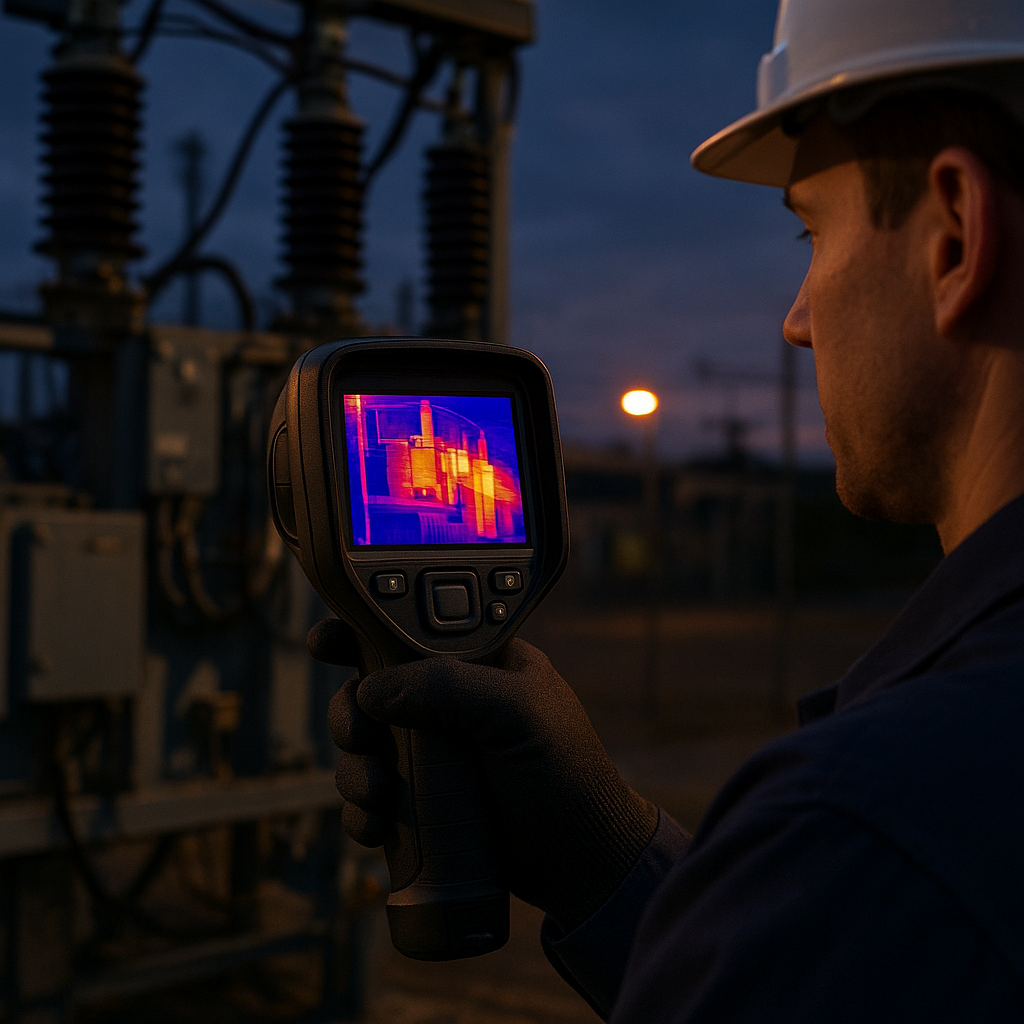
Thermal imagers translate infrared radiation into visible images, allowing users to identify temperature variations invisible to the naked eye. This functionality is vital for applications such as electrical inspections, mechanical diagnostics, security surveillance, and environmental monitoring. In industrial settings, thermal imaging aids in early fault detection by revealing hotspots in electrical panels or bearings before catastrophic failure occurs, preventing costly downtime and safety incidents.
Operationally, thermal imagers also enhance security protocols by enabling detection of intruders or wildlife in complete darkness or obscured conditions. In forestry management, for example, thermal imaging assists in early wildfire detection, where rapid response is crucial to containment. Despite these advantages, buyers frequently overlook the importance of matching the device’s technical capabilities to the intended operational environment, resulting in suboptimal performance or unnecessary expenditure.
A common pitfall is underestimating the role of thermal imagers in predictive maintenance workflows. For instance, a medium-sized manufacturing plant recently faced repeated unscheduled outages due to undetected overheating in switchgear. After procuring handheld thermal imagers with insufficient sensitivity and inadequate data logging features, the maintenance team struggled to identify intermittent faults. This scenario underscores the need for careful assessment of equipment specifications aligned with operational demands.
Distinguishing Thermal Imager Types and Their Influence on Buyer Decisions
Thermal imagers come in several core variants, each suited to specific use cases. Handheld devices are the most common, prized for portability and ease of use during routine inspections. Clip-on thermal imagers attach to standard daylight riflescopes, favoured in hunting or security operations requiring quick thermal observation without switching optics. Fixed-mount units are installed permanently on vehicles, machinery, or infrastructure, often integrated into monitoring systems for continuous surveillance. Increasingly, UAV-compatible thermal imagers are deployed in environmental and industrial sectors to survey large or inaccessible areas efficiently.
Sensor technology is another critical differentiator. Most commercially available thermal imagers use uncooled microbolometer detectors, which operate at ambient temperature and offer reliable performance at moderate cost. These are suitable for general maintenance, security, and environmental applications. Conversely, cooled detectors, which require cryogenic cooling, provide higher sensitivity and resolution but at significantly greater cost and maintenance complexity. Cooled systems are typically reserved for specialised applications such as research, high-end security, or military use.
Resolution tiers vary widely, from entry-level 160×120 pixels arrays up to advanced 640×480 pixels and beyond. Higher resolution improves image clarity and detection range but increases device cost and data processing requirements. Buyers must balance resolution needs against budget constraints and intended operational scenarios. For example, a utilities company conducting substation inspections may prioritise handheld, mid-resolution devices for rapid deployment, while a security firm monitoring perimeter intrusion might invest in higher resolution fixed-mount imagers.
The used and refurbished equipment market reflects these distinctions. Handheld and clip-on thermal imagers tend to have robust secondary markets with competitive pricing, while fixed-mount and cooled systems are less frequently traded due to their specialised nature. Procurement managers should consider how device type impacts availability, warranty options, and refurbishment feasibility.
Key Technical Criteria for Evaluating Thermal Imagers Before Purchase
When assessing thermal imagers, several technical specifications require close scrutiny. Thermal sensitivity, expressed as Noise Equivalent Temperature Difference (NETD), indicates the smallest temperature difference the device can detect. In practice, a lower NETD value (e.g., <50 mK) translates to greater detail and accuracy in identifying subtle thermal anomalies, essential for predictive maintenance or detailed surveillance.
Frame rate is another critical factor. Devices operating at 30 Hz or higher provide smooth real-time imaging, which is imperative for dynamic environments such as UAV operations or moving vehicle surveillance. Lower frame rates may suffice for static inspections but can hinder situational awareness in fast-paced settings.
The spectral response range of the sensor affects the types of heat signatures detected. Most thermal imagers operate in the long-wave infrared (LWIR) band, approximately 8-14 microns, optimal for ambient temperature detection. Some specialised models operate in mid-wave infrared (MWIR) for higher temperature applications but require cooled detectors and increased maintenance.
Lens quality and field of view (FOV) are practical considerations directly influencing detection range and image detail. A narrower FOV increases magnification and detection distance but narrows the observation area, while a wider FOV offers broader situational awareness at reduced detail. Selecting the appropriate lens depends on application specifics—security teams monitoring wide perimeters favour wider FOVs, whereas maintenance engineers inspecting small components may require zoom capabilities.
Durability is paramount for field applications. Devices with high Ingress Protection (IP) ratings, such as IP67, offer resistance to dust and water, critical for harsh environments like offshore platforms or forestry. Shock and vibration resistance standards ensure reliability during transport and operation. Operating temperature ranges must also be compatible with the deployment environment; for example, cold climate operations demand equipment rated for sub-zero performance.
User interface and data management capabilities often differentiate products in operational use. Intuitive controls, clear displays, and robust data output options, including video recording, still image capture, and streaming via Wi-Fi or USB, enhance usability and integration with existing monitoring systems. Some units offer onboard image analysis or connectivity with software platforms for trend analysis, facilitating data-driven decision-making.
Assessing Total Cost of Ownership Beyond the Purchase Price
While initial purchase price is a significant consideration, total cost of ownership (TCO) encompasses refurbishment, spare parts availability, service contracts, and operational costs. Buyers often underestimate the impact of these factors, especially when procuring older or used equipment.
For example, a mid-sized petrochemical plant acquired refurbished thermal imagers to extend inspection capabilities without exceeding budget limits. However, delays in obtaining replacement parts and limited after-sales support from the refurbisher resulted in extended downtime for several units. This experience highlights the importance of verifying refurbishment quality and ensuring spare parts availability before committing to a purchase.
Lead times for new thermal imagers can vary considerably, particularly for specialised models or during periods of high demand. Projects in utilities or law enforcement requiring rapid deployment may benefit from suppliers who maintain a ready stock of popular models or can offer refurbished units with warranty coverage to bridge gaps.
Energy efficiency and battery life represent ongoing operational expenses often overlooked initially. Field teams conducting extended patrols or inspections need devices with long-lasting batteries or swappable power sources to avoid frequent recharging. Modern thermal imagers incorporate power-saving features and improved battery technology, reducing costs and improving usability compared to legacy equipment.
Navigating Compliance, Standards, and Industry-Specific Compatibility
Compliance with relevant standards and regulations is essential for lawful operation and procurement assurance. Thermal imagers marketed within the UK and EU must carry CE marking or UKCA certification, demonstrating conformity with health, safety, and environmental protection standards. Electromagnetic compatibility (EMC) requirements ensure devices do not interfere with other electronic equipment and are resilient to external interference.
Industry-specific regulations affect device selection and deployment. Offshore energy operations, for example, require intrinsically safe thermal imagers certified for use in hazardous environments to prevent ignition of flammable gases. Forestry management applications may demand compliance with environmental protection regulations and compatibility with UAV payload constraints.
Ensuring compatibility with existing hardware and software ecosystems is a practical consideration frequently overlooked. Procurement managers should verify that thermal imagers can integrate seamlessly with current night vision systems, surveillance networks, or asset management platforms. This includes support for standard video outputs, data formats, and communication protocols. Devices offering open APIs or compatibility with popular software suites facilitate smoother integration and future scalability.
Practical Procurement Scenarios Highlighting Sector-Specific Challenges
One scenario frequently encountered involves a utility company responsible for maintaining numerous electrical substations across a wide geographic area. The operations director required handheld thermal imagers that combined reliability, ease of use, and sufficient resolution to identify early signs of component degradation. The key challenge was balancing device ruggedness with lightweight portability, as field engineers often travel on foot across rough terrain. After testing several options, the company selected mid-tier uncooled microbolometer devices with 320×240 resolution, strong IP ratings, and integrated data capture capabilities. This solution reduced inspection times and improved fault detection rates.
In a contrasting example, a forestry management team sought UAV-compatible thermal imagers to monitor wildfire risks over extensive woodland areas. The procurement manager had to factor in payload weight limits, sensor performance in variable weather, and battery endurance affecting flight duration. The eventual choice was a compact, lightweight thermal imager with a 640×480 resolution and a 30 Hz frame rate, optimised for long-wave infrared detection. This enabled early hotspot identification and enhanced situational awareness during critical fire seasons.
Law enforcement agencies often require rugged, discrete thermal monoculars for urban surveillance. Here, procurement decisions hinge on factors such as battery life, image refresh rate, and device form factor to facilitate covert operations. One metropolitan police department prioritised devices with extended battery endurance and enhanced image processing to support night-time tactical deployments. The procurement process included field trials to assess usability under operational conditions, ensuring the selected thermal imagers met both technical and practical needs.
Common Questions from Procurement Managers and Operations Directors
How do thermal imagers differ in performance for indoor versus outdoor environments, and what does that mean for device selection?
Thermal imagers perform differently depending on environmental conditions. Indoors, stable temperatures and controlled lighting enable devices with lower thermal sensitivity and resolution to deliver effective results for tasks like electrical panel inspections or building diagnostics. Outdoors, variable ambient temperatures, weather conditions, and longer detection distances require imagers with higher sensitivity, robust environmental sealing, and often faster frame rates to accommodate movement. Selecting a device optimised for the intended environment ensures reliable performance and avoids overspending on unnecessary features.
What are the trade-offs between image resolution and frame rate when selecting thermal imagers for continuous monitoring applications?
Higher image resolution enhances detail and detection range but typically demands more processing power and may reduce achievable frame rates unless hardware is optimally designed. Conversely, higher frame rates provide smoother real-time imaging essential for tracking moving targets or dynamic scenes but may require compromises in resolution or sensor sensitivity. Continuous monitoring applications must balance these factors in line with operational priorities. For example, fixed surveillance cameras may favour stable, high-resolution images at moderate frame rates, while handheld devices used in rapid inspections might prioritise higher frame rates for better situational awareness.
How should buyers approach refurbishment options to ensure warranty and operational reliability are maintained?
Refurbished thermal imagers can offer cost-effective alternatives to new equipment but require careful evaluation. Buyers should verify that refurbishment is performed by qualified technicians using genuine parts, with full functional testing and calibration. Warranty terms should be clearly defined, ideally matching or approaching those of new devices, to mitigate risk. Additionally, confirming spare parts availability and after-sales support from the refurbisher is critical. Engaging suppliers with transparent refurbishment processes and positive industry reputation reduces the likelihood of operational issues.
What data formats and connectivity options are essential for seamless integration with existing monitoring or reporting platforms?
Thermal imagers must support standardised data outputs to facilitate integration with broader operational systems. Common formats include JPEG or TIFF for still images and MPEG or AVI for video. Connectivity options such as USB, Wi-Fi, or Ethernet enable data transfer and remote control. Advanced devices may offer streaming protocols compatible with network video recorders (NVRs) or cloud platforms. Procurement teams should assess existing infrastructure and select imagers with compatible interfaces and software support to ensure smooth data workflow and accurate reporting.
Bringing Expertise into Practice: Final Thoughts on Choosing the Right Thermal Imagers
Making a well-informed purchase of thermal imagers demands a thorough understanding of both the technical specifications and the operational context in which the equipment will be deployed. Oversights in matching device capabilities with real-world requirements often lead to increased costs, reduced efficiency, or compromised safety. It is crucial to evaluate factors such as sensor technology, resolution, durability, and integration potential alongside the total cost of ownership, including refurbishment quality and after-sales support.
R. Macleod & Son provide a valuable resource for buyers navigating this complex landscape. Their range of thermal imagers encompasses both new and refurbished devices, supported by expert guidance tailored to specific industry needs. Leveraging such expertise helps procurement managers and operational leaders avoid common pitfalls, ensuring that investments in thermal imaging technology deliver sustained operational benefits and align with compliance requirements.
For organisations seeking to enhance their thermal imaging capabilities, exploring the detailed product information and advisory services available through R. Macleod & Son offers a practical starting point. This approach enables buyers to make decisions grounded in technical depth and real-world application, ultimately supporting operational excellence across diverse sectors.