
Crafting Effective Corporate Visuals: Navigating the Complexities of Corporate Video Production
Corporate video production plays a pivotal role in contemporary brand communications and operational strategies. As organisations increasingly rely on video content to engage stakeholders, train personnel, and promote their offerings, the decisions made during procurement and production have far-reaching implications. Beyond aesthetic appeal, corporate videos must align with strategic messaging, technical standards, and compliance requirements to serve their intended purpose effectively. For procurement managers, plant engineers, and operations directors, understanding the nuances of corporate video production is essential to commissioning content that not only resonates but also integrates seamlessly with existing platforms and long-term communication goals.
Understanding Core Corporate Video Types and Their Influence on Equipment and Production Choices
Corporate video production encompasses a range of content types, each with distinct production demands that influence equipment selection and vendor expertise. Typical categories include training videos, promotional films, executive interviews, and event coverage, each tailored to specific corporate objectives.
Training videos often require detailed, clear visuals to demonstrate procedures or safety protocols. For instance, a manufacturing company producing safety training content might prioritise high-definition cameras capable of capturing slow-motion sequences to analyse hazard scenarios effectively. This necessitates equipment with high frame-rate capabilities—such as 120fps or above—and specialised lighting setups to ensure clarity in industrial environments. In contrast, promotional films designed to elevate brand image rely heavily on cinematic techniques, including dynamic camera movements, controlled lighting, and advanced colour grading in post-production. These projects typically demand cameras with high dynamic range and 4K resolution or higher to deliver polished, visually compelling results.
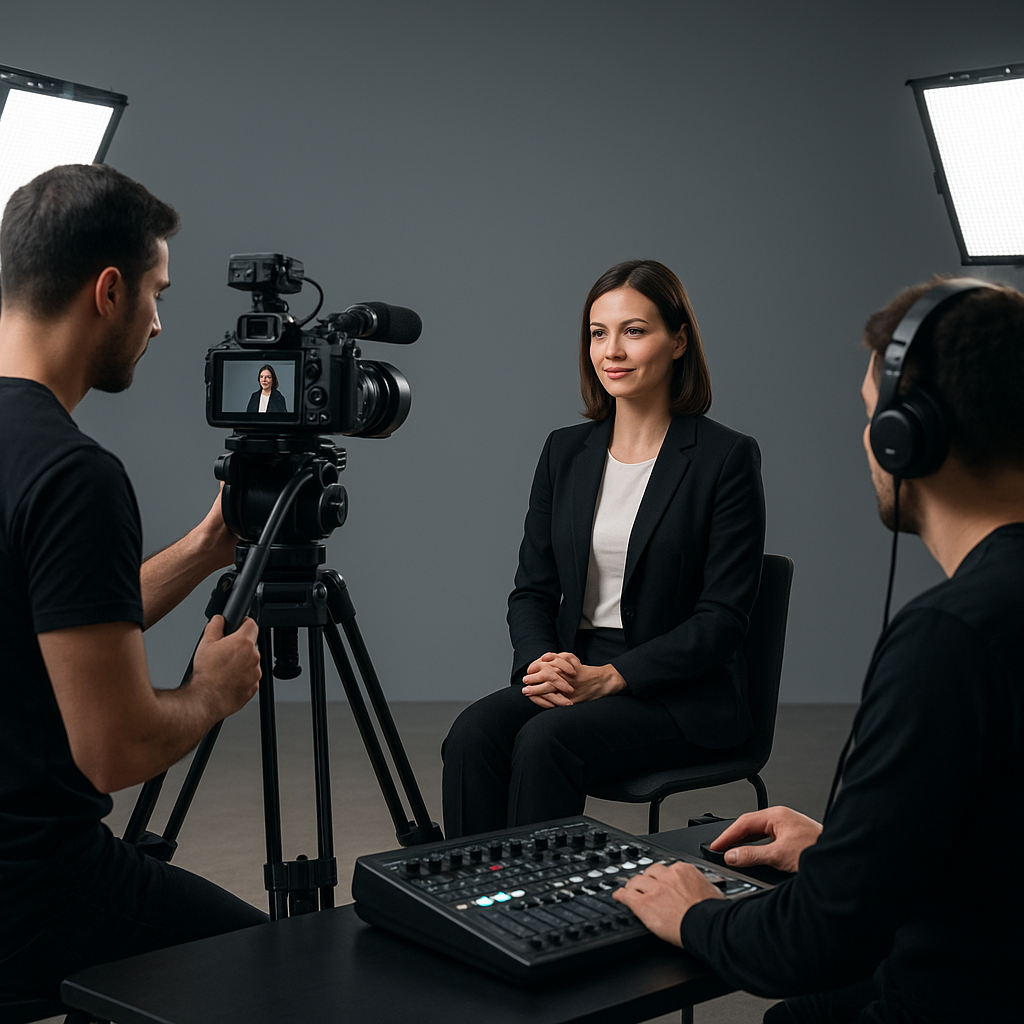
Executive interviews and testimonial videos require a different approach. The focus here is on clear audio capture and flattering, consistent lighting to enhance the subject’s presence. Equipment choices may lean towards professional-grade lavalier microphones, softbox lighting, and controlled studio environments. Meanwhile, event coverage demands flexibility, with mobile camera rigs, stabilisers, and multi-camera setups to capture live proceedings from various angles. The rapid turnaround often needed for event highlights also influences post-production workflows, favouring editing software that supports efficient collaboration and fast rendering.
Production companies specialising in corporate video need to demonstrate versatility across these types, as well as an understanding of the client’s industry context to recommend suitable equipment and workflows. For example, a vendor experienced in technology sector product launches will be familiar with integrating animation and motion graphics alongside live footage, whereas a firm working predominantly with financial services clients will prioritise confidentiality and brand consistency in interview formats.
Critical Technical Aspects to Verify Before Commissioning Corporate Video Services
When selecting a corporate video production partner, technical evaluation is crucial to ensure the final product meets both creative and operational requirements. Buyers should start by scrutinising equipment specifications, including resolution standards and frame rates. While 1080p remains a baseline for many corporate videos, 4K resolution is increasingly standard due to its superior detail and future-proofing benefits. Frame rate considerations vary by content type; standard narrative footage often uses 24 or 30fps, but training or safety videos may require higher frame rates for slow-motion playback.
Audio quality is another critical factor often underestimated during procurement. Clear dialogue capture necessitates professional microphones and soundproofing measures, especially in noisy environments like manufacturing floors or busy offices. Production companies should demonstrate proficiency with multi-channel audio setups and post-production sound editing to deliver intelligible, broadcast-quality audio.
Assessing a vendor’s portfolio offers insight into their lighting techniques and editing capabilities. Effective lighting is essential to avoid shadows or glare that can distract from the message, particularly in corporate interview or product showcase videos. The choice of editing software also impacts the final output; industry-standard tools like Adobe Premiere Pro, DaVinci Resolve, or Final Cut Pro are preferred for their advanced features and compatibility with various file formats.
Compatibility with the client’s digital ecosystem is equally important. Corporate videos are distributed across internal platforms such as intranets or learning management systems, as well as external channels like websites and social media. The chosen production partner must ensure the video formats, codecs, and aspect ratios align with these platforms. For example, a multinational firm launching product videos globally must consider localisation needs and streaming optimisation for different bandwidths and devices.
Evaluating Total Cost of Ownership in Corporate Video Production Investments
While initial production costs often dominate procurement discussions, a more comprehensive evaluation considers total cost of ownership and long-term value. Corporate video content is frequently reused and updated, so buyers should factor in the flexibility of the original footage and editing files. High-quality raw footage and well-organised project files enable easier revisions, reducing costs for future updates.
For organisations maintaining in-house video production equipment, refurbishment and upgrade potential are key considerations. Equipment from manufacturers such as Canon, Sony, or Blackmagic Design remains widely supported, but older models may face obsolescence challenges. Spare parts availability and manufacturer support influence maintenance costs and operational continuity. For example, a logistics company investing in internal video production capabilities encountered delays due to discontinued batteries for their primary cameras, leading to unexpected downtime and additional rental expenses.
Outsourcing production to specialised vendors can mitigate some of these risks by transferring equipment management to experts. However, buyers should evaluate vendor pricing models carefully, including costs for reshoots, additional edits, and licensing of stock footage or music. Efficient workflows and clear contractual terms around deliverables help control overall expenditure.
Navigating Compliance, Accessibility, and Corporate Governance in Video Content
Corporate video production must adhere to a range of legal and regulatory frameworks to avoid compliance pitfalls. Copyright clearance is fundamental; all third-party materials, whether music, images, or footage, require proper licensing to prevent infringement claims. Similarly, talent release forms are essential to secure permissions for using individuals’ likenesses, particularly in interviews or testimonial videos.
Data protection regulations such as the UK’s Data Protection Act 2018 and the GDPR impose strict controls on handling personal data, including video content that may capture employees or clients. Production companies and procurement teams must ensure that consent procedures and data security measures are in place throughout filming, storage, and distribution.
Accessibility is increasingly mandated by corporate governance and public sector standards. Including subtitling and audio descriptions ensures videos are usable by audiences with hearing or visual impairments and broadens content reach. For example, a healthcare provider producing patient education videos integrated professional captioning services to comply with NHS accessibility guidelines, enhancing both legal compliance and user engagement.
Additionally, content must align with corporate ethics policies and industry-specific regulations. Financial services videos, for example, require careful review to avoid misleading claims or disclosures that could breach FCA rules. This necessitates involvement from compliance officers during scripting and post-production stages.
Real-World Procurement Scenarios Illustrating Sector-Specific Corporate Video Needs
One scenario we encounter regularly involves a large manufacturing firm commissioning safety training videos. The client sought to capture intricate machinery operations with high-definition slow-motion footage to highlight potential hazards. The procurement team worked closely with the production company to specify cameras capable of 120fps at 1080p, alongside ruggedised lighting setups suitable for factory floors. The result was a series of videos that significantly improved worker comprehension and reduced on-site incidents.
In the financial services sector, a mid-sized investment firm required an executive interview series to reinforce brand consistency and maintain confidentiality. The production company employed controlled studio environments with uniform lighting and professional audio capture to ensure a polished yet secure presentation. The vendor also implemented strict data handling protocols to safeguard sensitive information, addressing compliance concerns.
A multinational technology corporation recently launched a product video campaign targeting diverse global markets. The procurement process emphasised multi-format delivery, including vertical video cuts for social media and subtitled versions for non-English-speaking audiences. The production partner coordinated with regional marketing teams to tailor content, ensuring cultural relevance and adherence to local advertising standards.
Frequently Asked Questions about Corporate Video Production Buying Decisions
What technical qualities should I prioritise when choosing a corporate video production partner?
Technical qualities to prioritise include camera resolution and frame rate, audio capture fidelity, and lighting expertise. High-resolution cameras, preferably 4K or above, future-proof video content and offer flexibility in post-production cropping or zooming. Frame rates should be matched to the video’s purpose; for example, higher frame rates benefit training videos requiring slow-motion playback. Audio quality is equally important, as poor sound can undermine even the best visuals. Ensure the production partner uses professional microphones and has sound editing capabilities. Additionally, evaluate their lighting techniques to ensure consistent, flattering illumination that enhances the subject matter without introducing unwanted shadows or glare.
How can I ensure the produced content will be compatible with our varied internal and external distribution channels?
Compatibility begins with clear communication of the client’s distribution requirements during the briefing phase. The production company should provide video files in formats and codecs supported by your platforms, whether that is MP4 with H.264 for web streaming or MOV for internal presentations. Aspect ratio considerations matter, especially if content will be repurposed for social media, mobile devices, or widescreen displays. It is also advisable to test sample files on your platforms before finalising delivery to avoid playback issues. Finally, consider the availability of closed captions and metadata tagging to enhance accessibility and searchability across channels.
What are the risks of selecting low-cost video production solutions in terms of quality and compliance?
Low-cost production options often result in compromised video and audio quality, which can dilute the intended message and damage brand perception. Insufficient lighting or inferior cameras can produce grainy or poorly lit footage, while lack of professional audio equipment may yield unclear dialogue. Furthermore, budget providers may overlook critical compliance aspects such as copyright clearances, talent releases, or data protection procedures, exposing organisations to legal risks. The absence of robust post-production workflows also increases the likelihood of errors and delays. Therefore, while cost is a factor, it should not override considerations of quality, compliance, and long-term value.
How does corporate video production integrate with wider marketing and communications strategies?
Corporate video production serves as a core component of integrated marketing and communications, enhancing message delivery across multiple channels. Videos can reinforce brand narratives, educate employees, and engage customers more effectively than text-based content alone. When aligned with broader strategies, video content supports campaign consistency, drives engagement metrics, and facilitates storytelling that resonates emotionally with audiences. Production teams should collaborate closely with marketing and communications departments to ensure tone, style, and messaging align with corporate objectives. Additionally, video assets can be repurposed across platforms, from websites and social media to internal training portals, maximising return on investment.
Bringing Strategic Value to Corporate Video Production: Insights and Recommendations
Corporate video production is a sophisticated discipline that demands a harmonious blend of creative vision and technical precision. Procurement decisions should be grounded in a comprehensive understanding of the video’s intended purpose, target audience, and long-term content strategy. Engaging production specialists with sector-specific experience enhances the likelihood of achieving compelling, compliant, and impactful results. This expertise is crucial when navigating the complexities of equipment capabilities, regulatory frameworks, and distribution requirements.
In practice, buyers frequently overlook nuances such as equipment compatibility with existing digital platforms or the importance of accessibility features, which can lead to unforeseen costs or restricted audience reach. A thorough evaluation of total cost of ownership—encompassing maintenance, content lifecycle management, and potential upgrades—is essential to informed decision-making. Adherence to relevant legal and ethical standards protects organisations from reputational and operational risks, reinforcing the importance of partnering with production companies that prioritise compliance.
Ultimately, investing in corporate video production represents a commitment to clear communication and brand strength. By approaching vendor selection and project planning with strategic foresight and technical knowledge, companies can maximise the impact of their video assets and support broader organisational aims. For those seeking tailored solutions that address these multifaceted requirements, exploring the services detailed at https://video-productioncompany.com/corporate-video-new/ offers valuable insights and options aligned with complex corporate needs.