
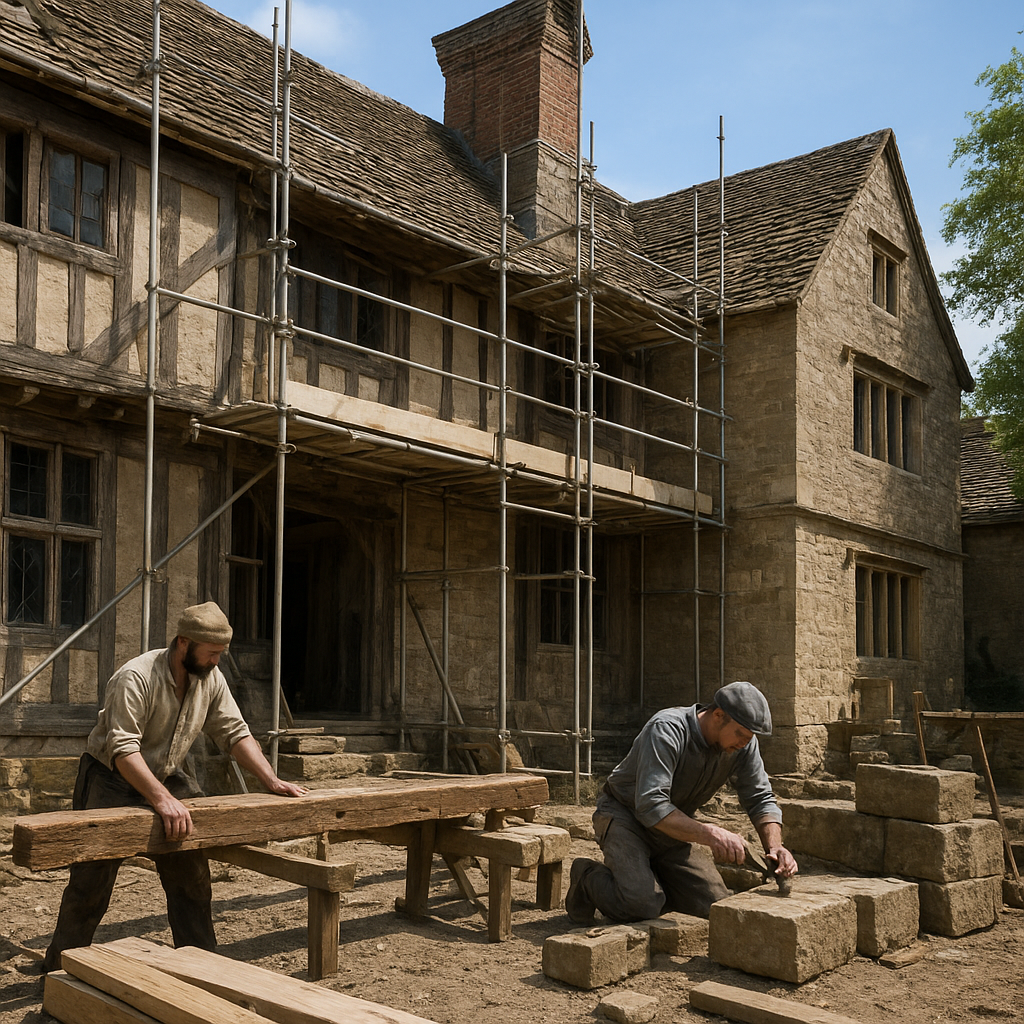
Heritage Restoration and Procurement Insights from the Winstanley Hall Development
Understanding the Strategic Importance of Winstanley Hall in Heritage Property Development
Winstanley Hall stands as a prominent example within the heritage property sector, not only for its architectural significance but also for the operational complexities it presents to restoration specialists and procurement professionals alike. The project encapsulates the multifaceted challenges faced when balancing historical authenticity with modern functional requirements. For procurement managers and plant engineers, Winstanley Hall represents a benchmark case where sourcing decisions, material compatibility, and specialist services must be carefully coordinated to meet conservation standards while ensuring long-term viability.
In practice, the restoration of Winstanley Hall demands a nuanced understanding of both the physical fabric of the building and the regulatory environment governing listed properties. The project drives home the importance of detailed technical evaluations before committing to purchase, whether for structural materials, bespoke joinery, or mechanical systems adapted for heritage contexts. These operational challenges necessitate a thorough procurement strategy that accounts for both immediate restoration needs and the ongoing maintenance burden.
One of the key reasons Winstanley Hall matters in a procurement context is its layered history, which influences decisions on sourcing and specification. The hall’s phased construction, varied material palette, and period-specific craftsmanship require suppliers and contractors to demonstrate not only product quality but also a genuine understanding of heritage sector expectations. This complexity impacts vendor selection and project scheduling, as delays or inappropriate materials can compromise conservation outcomes.
Variants of Winstanley Hall and Their Influence on Restoration and Equipment Selection
Winstanley Hall is not a monolithic structure; it comprises several architectural phases spanning from the 17th century through later Victorian-era additions. Each variant presents distinct restoration challenges and informs the choice of materials and equipment. For example, the original masonry sections predominantly use locally sourced sandstone and lime mortar, which necessitates compatible repair mortars and lime-based paints to maintain breathability and minimise chemical incompatibility.
In contrast, the later Victorian extensions incorporate brickwork and early industrial-age ironwork, which require different conservation approaches. This differentiation influences procurement decisions, especially when sourcing replacement materials or mechanical components such as heating and ventilation systems. Buyers frequently overlook how these variants affect the suitability of modern equipment; a heating system designed for the brick-built wing may not be appropriate for the older, more delicate stone sections.
Moreover, the building techniques employed in each variant directly impact the choice between new and refurbished equipment. For example, timber elements from the original construction demand specialist conservation-grade treatments, while later additions allow for more standardised interventions. This variance affects supply chain considerations, as vendors must provide products that either match traditional specifications or meet stringent retrofit standards.
Key Technical Inspection Criteria for Procurement of Equipment and Materials at Winstanley Hall
Before committing to any purchase, procurement professionals involved with Winstanley Hall must conduct meticulous technical inspections focused on structural integrity and historical authenticity. A common pitfall is the failure to identify hidden deterioration in timber beams or masonry, which can lead to premature equipment failure or costly remedial work. Detailed condition surveys, often involving non-destructive testing methods such as infrared thermography or moisture mapping, are essential to uncover these latent issues.
Material compatibility is another critical factor. For instance, specifying modern cement-based mortars in place of traditional lime mortars can cause trapped moisture and accelerated stone decay. Similarly, when procuring heating systems, buyers must check that any retrofit installations do not compromise the building’s fabric by introducing excessive vibrations or requiring intrusive ductwork.
Assessment of equipment condition extends to evaluating wear patterns and compliance with conservation standards. In one scenario encountered in a comparable heritage project, a procurement team rejected a second-hand cast iron radiator system due to hidden corrosion that would have jeopardised both safety and authenticity. The potential for retrofitting is also a key consideration; equipment must be adaptable to meet current energy efficiency standards without undermining heritage values.
Assessing Total Cost of Ownership in Heritage Restoration: Balancing Traditional and Modern Equipment
When evaluating restoration equipment and materials for Winstanley Hall, buyers must look beyond the initial purchase price and factor in the total cost of ownership. This includes refurbishment expenses, spare parts availability, and the frequency of servicing. For example, while original wrought iron fixtures may require specialist blacksmith-led refurbishment costing significantly more upfront, their long-term durability and authenticity often justify the investment compared to cheaper modern replicas with limited lifespan.
Efficiency is another dimension where traditional and modern equipment diverge. Modern heating systems adapted for heritage properties can offer substantial energy savings but might involve extensive installation work and higher upfront costs. Conversely, maintaining or refurbishing original cast iron radiators or boiler systems may reduce installation disruption but incur higher ongoing maintenance and fuel costs.
Lead times and supplier reliability are critical practical factors influencing procurement strategy. For example, sourcing specialist lime mortar from a manufacturer with a history of delayed deliveries can stall project timelines and inflate costs. In a recent heritage hospitality restoration, a procurement manager mitigated this risk by establishing relationships with multiple vetted suppliers, balancing quality assurance with logistical flexibility.
Navigating Compliance, Conservation Regulations, and Compatibility in Heritage Property Development
Winstanley Hall’s status as a listed building imposes strict statutory regulations that shape every aspect of restoration procurement. Listed building consent requirements mandate that materials and methods preserve the building’s character and fabric, which often rules out standard commercial products. Procurement managers must therefore be conversant with conservation area guidelines and national standards such as BS 7913 for conservation of historic buildings, ensuring that all purchases align with legal obligations.
Compliance considerations extend to health and safety regulations, particularly where modern building codes intersect with heritage constraints. For example, fire safety upgrades must be sensitively integrated without damaging original features, requiring specialist fire-retardant coatings or bespoke alarm system configurations. These requirements influence vendor selection, as suppliers must demonstrate capability in delivering compliant yet non-invasive solutions.
Compatibility between modern building regulations and heritage best practices often presents a delicate balancing act. Procurement decisions must prioritise materials and equipment that satisfy current energy efficiency standards while maintaining breathability and avoiding irreversible alterations. This dual focus demands detailed technical knowledge and close collaboration with conservation officers and heritage consultants.
Real-World Procurement Scenarios Reflecting Challenges at Winstanley Hall
One instructive example comes from a heritage hospitality project where the procurement team faced the challenge of installing period-appropriate heating systems that complied with modern efficiency standards. The original wrought iron radiators were beyond repair, but sourcing exact replacements proved difficult due to limited manufacturers. The team collaborated with a specialist fabricator experienced in heritage castings, balancing authenticity with the need for modern thermostatic controls. This bespoke approach required careful negotiation of lead times and budget but ultimately preserved the building’s character.
Another scenario involved an industrial heritage site where reclaimed timber was essential to maintaining visual and structural integrity. Procurement managers sourced rare oak beams from a specialist reclaimed timber merchant, navigating logistical challenges such as variable stock quality and tight project deadlines. The procurement strategy included pre-inspection visits and detailed sampling, ensuring that the timber met both structural requirements and aesthetic expectations.
A public-sector heritage project highlighted the tension between budget constraints and high-spec conservation materials. The procurement team prioritized materials with a proven track record for durability and compliance, such as natural hydraulic lime mortars and heritage-grade glazing. By engaging early with suppliers and utilising framework agreements, they managed to secure competitive pricing without compromising on quality or regulatory compliance.
Common Questions from Procurement and Operations Professionals Regarding Winstanley Hall Equipment and Restoration
What are the essential checks when evaluating second-hand restoration equipment for Winstanley Hall projects?
Evaluating second-hand equipment requires a comprehensive condition assessment that goes beyond surface appearance. Buyers should inspect for hidden corrosion, structural fatigue, and compatibility with existing building fabric. It is also vital to verify provenance and ensure that the equipment complies with current conservation standards. In many cases, non-destructive testing or expert appraisal is necessary to avoid costly mistakes.
How do heritage compliance regulations affect procurement timelines and vendor selection?
Heritage compliance regulations often extend procurement timelines due to the need for detailed planning approvals and material testing. Vendors must have demonstrated experience working within these regulatory frameworks, as unfamiliar suppliers can inadvertently introduce delays or non-compliant products. Early engagement with conservation officers and clear communication of compliance requirements to suppliers are essential to streamline procurement processes.
In what ways can total cost of ownership impact decision-making between refurbishment and new equipment purchase?
Total cost of ownership encompasses not only purchase price but also refurbishment costs, maintenance frequency, spare parts availability, and energy efficiency. While refurbished original equipment may have higher initial costs, its longevity and authenticity can justify the investment. Conversely, new equipment might reduce maintenance but increase upfront expenditure and risk of incompatibility. Procurement decisions must weigh these factors in the context of project priorities and operational budgets.
What strategies help mitigate risks associated with lead times and supply chain disruptions in heritage restoration?
Mitigating lead time risks involves developing relationships with multiple vetted suppliers and incorporating contingency buffers into project schedules. Early procurement of long-lead items, such as bespoke joinery or specialist mortars, helps prevent bottlenecks. Additionally, leveraging local suppliers familiar with heritage requirements can reduce logistical complexities. Transparent communication across project teams ensures that potential delays are identified and managed proactively.
Synthesising Expertise for Successful Heritage Restoration Procurement, Featuring Winstanley Vision
The restoration and development of Winstanley Hall exemplify the intricate interplay of technical, regulatory, and operational considerations essential to successful heritage procurement. Navigating these complexities demands a sophisticated approach that balances preserving historical authenticity with integrating modern efficiencies. The project underlines how detailed inspection criteria, thorough understanding of variants within a heritage site, and careful total cost of ownership analysis form the backbone of informed procurement decisions.
Moreover, compliance with conservation regulations and compatibility with existing fabric cannot be treated as afterthoughts. They must be embedded within procurement strategies from the outset to avoid costly reworks and compliance failures. Real-world scenarios from comparable heritage sectors demonstrate that partnering with specialists and adopting flexible, well-informed sourcing approaches are key to overcoming challenges inherent in heritage restoration.
For those seeking further insights and tailored services related to heritage property development and restoration, the expertise showcased at Winstanley Hall offers a valuable resource. Their practical knowledge and sector-specific experience provide a grounded perspective that supports effective procurement and conservation outcomes, making them a trusted partner in complex heritage projects.