
Optimising Waste Management Efficiency Through Informed Waste Baler Procurement
Waste balers play an essential role in modern industrial and commercial waste management, extending far beyond compacting refuse into manageable shapes. For procurement managers, plant engineers, and operations directors, selecting the right waste baler is a strategic decision that influences operational efficiency, cost control, and environmental compliance. Understanding the technical nuances, operational demands, and sector-specific challenges shapes how organisations deploy baling equipment to optimise waste handling and recycling outcomes.
Understanding the Strategic Role of Waste Balers in Industrial and Commercial Waste Management
Waste balers are critical operational assets, especially in sectors generating high volumes of recyclable or residual waste. Unlike simple compactors, balers compress waste into dense, transportable bales that streamline logistics, reduce storage footprints, and enable more effective material recovery. This compression reduces the frequency and cost of waste collection, while facilitating compliance with recycling mandates and landfill diversion targets.
From a procurement perspective, waste balers must be evaluated not only on upfront cost but on how well they integrate with existing workflows, throughput requirements, and site constraints. For example, a manufacturing facility producing consistent cardboard offcuts faces a different operational profile than a retail distribution centre handling mixed plastics and cardboard packaging. In practice, buyers frequently overlook how baler throughput capacity interacts with peak waste generation periods, leading to bottlenecks or underutilisation.
Common operational challenges that waste balers address include managing bulky packaging waste in logistics hubs, minimising floor space dedicated to loose waste in retail back-of-house areas, and ensuring safe, ergonomic waste handling in manufacturing environments. For instance, a mid-sized automotive parts factory recently transitioned from manual compaction to vertical balers, successfully reducing labour costs and meeting enhanced waste diversion goals imposed by their sustainability programme.
Differentiating Waste Baler Types: How Form and Function Shape Buyer Decisions
Waste balers come in several variants, each tailored to specific waste streams, site layouts, and operational demands. The two primary categories are vertical and horizontal balers, with further specialisations such as closed-end, auto-tie, and two-ram balers offering nuanced advantages.
Vertical balers typically have a smaller footprint and are suited to sites with limited space or lower waste volumes. They operate by compressing waste vertically, often requiring manual loading. This type is common in retail, hospitality, and small manufacturing sites where cardboard and plastic film predominate. Their relatively straightforward design can mean lower acquisition costs and simpler maintenance, but throughput is often limited compared to horizontal balers.
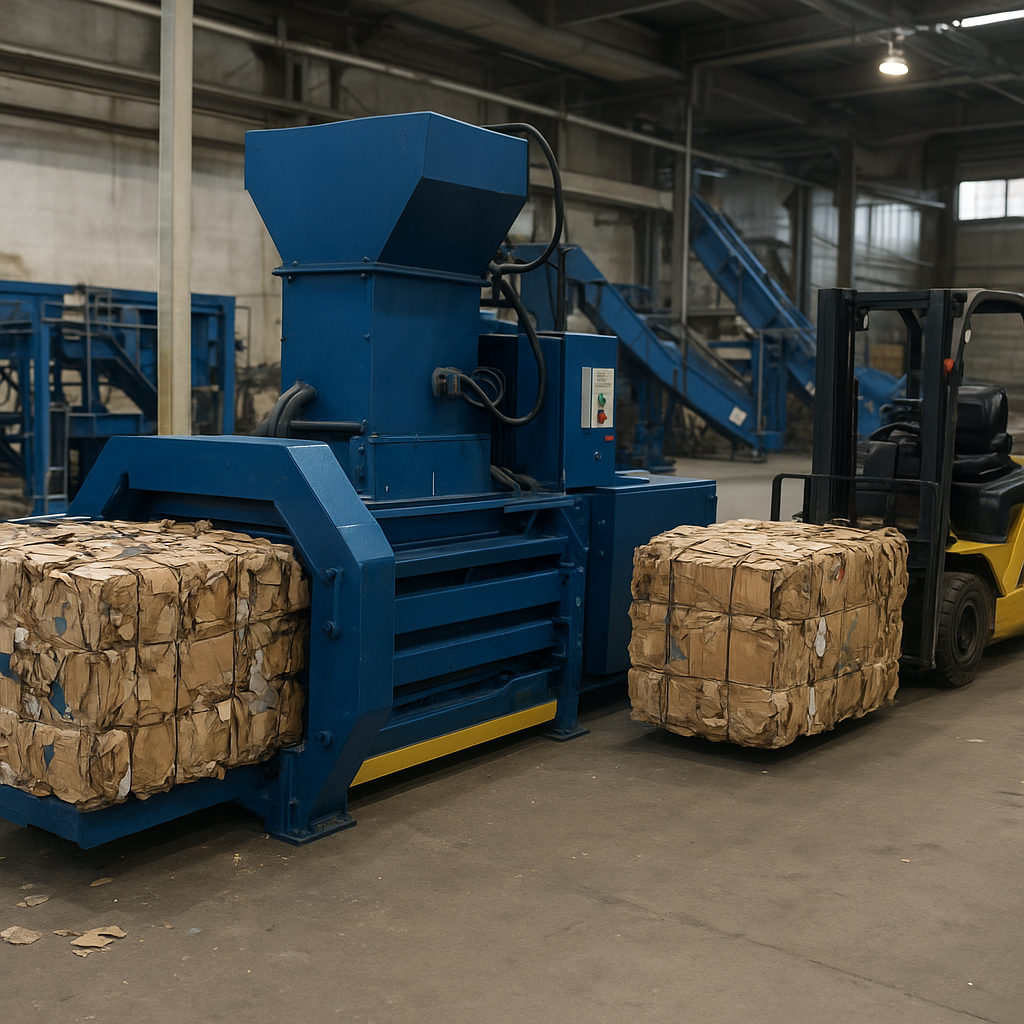
Horizontal balers, by contrast, are designed for higher throughput and can compress larger volumes of material. They are more prevalent in logistics hubs, large manufacturing plants, and recycling centres. These balers allow continuous or semi-automatic feeding and often incorporate auto-tying mechanisms, significantly reducing manual intervention and improving operator safety. For instance, a national retail chain upgrading balers across its distribution centres opted for horizontal, auto-tie balers in their largest hubs to handle peak packaging waste efficiently, while deploying vertical balers in smaller stores.
Specialised balers such as two-ram models provide enhanced compaction and are suitable for dense or awkward waste types like textiles or plastic drums. Closed-end balers prevent material leakage and dust escape, important in food processing and pharmaceutical sectors where hygiene is paramount.
The type of baler chosen also affects the used equipment market. Horizontal balers tend to have a longer lead time for new procurement due to their complexity and demand, whereas vertical balers are more readily available secondhand. Buyers must weigh availability against site requirements, recognising that refurbished horizontal balers often come with modern control upgrades that improve reliability.
What to Inspect When Evaluating Waste Balers for Purchase: Technical and Practical Considerations
When assessing waste balers, whether new or used, technical inspection is crucial to avoid costly downtime or safety risks. Mechanical integrity should be a primary focus. Cylinder seals and hydraulic rams must be checked for leaks and wear, as these components are subject to significant stress and costly to replace if neglected. Frame straightness and weld integrity are equally important, especially on used machines where metal fatigue can develop over years of operation.
Hydraulic systems are a common failure point. Buyers frequently overlook the condition of hoses, pumps, and reservoirs, which may reveal deferred maintenance or improper servicing. In one procurement scenario, a logistics operator rejected an otherwise suitable horizontal baler because a detailed hydraulic inspection revealed signs of contamination and seal degradation, which would have led to premature breakdowns.
Control systems and safety features must meet current UK health and safety standards, including emergency stop functionality, interlock guards, and lockout/tagout compatibility. The Provision and Use of Work Equipment Regulations 1998 (PUWER) and the Lifting Operations and Lifting Equipment Regulations 1998 (LOLER) impose strict requirements on equipment safety and inspection regimes. Buyers should verify that control panels are intuitive and that any programmable logic controllers (PLCs) are supported with accessible diagnostics and spare parts.
Practical considerations also include bale size and weight capabilities, cycle times, and operator ergonomics. For example, a food processing plant required a baler with closed-end design and minimal manual bale handling to maintain hygiene standards and reduce operator strain.
Evaluating Total Cost of Ownership: Balancing Initial Investment with Long-Term Value
Beyond purchase price, total cost of ownership (TCO) is a decisive factor in waste baler procurement. Spare parts availability can vary widely across manufacturers and models. Proprietary components may offer performance benefits but carry higher replacement costs and longer lead times, especially for older or niche equipment. Conversely, balers built with standard hydraulic and electrical components often simplify maintenance and reduce downtime.
Refurbished balers present a viable alternative to new equipment, particularly when refurbishment includes modern control system upgrades and warranty coverage. In one example, a mid-sized manufacturing company acquired a refurbished two-ram baler that had been retrofitted with an advanced auto-tying system and energy-efficient hydraulic pumps, extending the machine’s operational life by over five years while reducing energy consumption.
Energy efficiency is increasingly important, especially for high-volume sites operating balers continuously over multiple shifts. Modern variable speed drives and improved hydraulic designs lower electricity consumption, contributing to reduced operational expenditure. Procurement managers should request energy usage data and consider the impact of cycle times on both labour and utility costs.
Navigating Compliance and Operational Compatibility in Waste Baler Procurement
Compliance with environmental and safety regulations is non-negotiable when selecting waste balers. The Waste Electrical and Electronic Equipment (WEEE) Directive, for instance, imposes requirements on how certain waste types must be handled and processed, affecting baler design and operation. Environmental permits may also stipulate noise and emission limits, particularly in urban or mixed-use industrial estates.
Operational compatibility extends to how the baler integrates with site logistics. Feed system compatibility is essential, especially where waste arrives via conveyor or chute. Bale handling solutions, such as forklift compatibility, bale ejectors, or automated stacking, influence downstream processes and storage efficiency. For example, a large logistics operator carefully evaluated baler discharge mechanisms to ensure seamless transfer to container loading systems, reducing manual handling and improving throughput.
Noise levels can be a limiting factor, particularly in urban locations where local planning conditions restrict operational hours or impose maximum decibel limits. Buyers should request noise level data and consider acoustic enclosures or vibration damping where necessary.
Real Procurement Scenarios Illustrating Critical Decision Factors in Waste Baler Selection
A national retail chain recently embarked on a programme to upgrade waste balers across its distribution network. Their challenge was balancing uniformity for simplified maintenance against site-specific constraints such as footprint and waste stream composition. In larger distribution centres, horizontal auto-tie balers were installed to manage high volumes of cardboard and plastic film efficiently. Smaller regional hubs utilised vertical balers to optimise space. The procurement team emphasised modularity and standardised parts to reduce inventory complexity.
In a different context, a mid-sized manufacturing facility producing consumer electronics faced rising costs from manual waste compaction and labour. Transitioning to automated vertical balers reduced labour requirements and increased recycling rates, helping the company meet newly introduced waste diversion targets. Their selection process incorporated detailed inspection of hydraulic systems and control interfaces to ensure reliability and compliance with PUWER.
A large logistics operator evaluating baler options for mixed waste streams had to choose between vertical and horizontal balers. The decision hinged on throughput demands and operator safety. Horizontal balers offered higher capacity but required significant floor space and higher capital investment. Vertical balers, while lower throughput, provided flexibility and a smaller footprint. Ultimately, a mix of both types was deployed strategically across sites, with horizontal balers reserved for high-volume hubs and vertical units supporting satellite locations.
Frequently Asked Questions About Waste Balers from Procurement and Operations Perspectives
What are the most common hidden costs when buying used balers, and how can buyers mitigate these?
Hidden costs often include hydraulic repairs due to worn seals or contaminated fluids, electrical control system upgrades, and structural repairs to frames or welds. These issues might not be immediately apparent without a thorough technical inspection. Buyers can mitigate risk by conducting detailed mechanical and hydraulic assessments, requesting maintenance histories, and, where possible, choosing refurbished balers from reputable suppliers who offer warranties and documented refurbishment processes.
How do different waste materials affect baler wear and maintenance schedules?
Waste materials vary in abrasiveness, moisture content, and density, all of which influence wear rates. Cardboard and dry plastics generally cause less wear but can generate dust that affects hydraulic components. Wet or abrasive wastes, such as food packaging or mixed industrial scraps, accelerate seal and ram wear, requiring more frequent maintenance. It is vital for operators to align maintenance schedules with the specific waste profiles and to use appropriate baler types designed for the intended material streams.
What safety features are mandatory in UK waste balers, and what should buyers insist on?
Mandatory safety features include emergency stop buttons accessible from multiple points, safety interlocks on access doors to prevent operation while open, and clear warning signage. Compliance with PUWER and LOLER regulations means balers must be regularly inspected and maintained to ensure these features function correctly. Buyers should insist on balers with comprehensive safety systems, robust control panel diagnostics, and adherence to CE marking standards to ensure legal compliance and operator protection.
How can operators assess whether a baler will integrate effectively with their existing waste handling processes?
Operators should evaluate feed system compatibility, bale discharge methods, and space requirements to ensure seamless integration. Site walkthroughs and process mapping help identify potential bottlenecks or ergonomic issues. It is also important to consider downstream logistics such as bale storage, transportation, and recycling contracts. Engaging with suppliers who provide detailed technical documentation and site-specific consultation can facilitate better integration outcomes.
Drawing Together Practical Insights on Waste Balers and Directing Readers to In-Depth Resources
Effective procurement of waste balers demands comprehensive technical assessment aligned with operational realities. The decision extends beyond upfront cost to encompass throughput capacity, maintenance regimes, compliance with safety and environmental standards, and integration within existing waste management systems. In practice, overlooking hydraulic system condition or control system functionality can lead to significant operational disruptions, while failing to consider site-specific constraints may undermine the value of even the most sophisticated baler.
Balancing initial investment against total cost of ownership involves evaluating spare parts availability, refurbishment quality, and energy efficiency. Refurbished balers with modern upgrades can offer excellent value, particularly when supported by warranties and ongoing technical service. Conversely, new balers may provide the latest compliance features and operational efficiencies essential for high-volume or highly regulated environments.
For procurement managers and operations directors seeking detailed guidance and a broad selection of waste balers suited to diverse industry requirements, Pakawaste’s dedicated waste baler solutions page is a valuable resource. It offers in-depth product information and expert support tailored to the complexities of industrial and commercial waste management, helping buyers make well-informed decisions that align with their operational objectives and regulatory obligations.