
Optimising Residential Care Home Procurement: Insights from Industry Practice
The Strategic Importance of Residential Care Homes in Healthcare Procurement
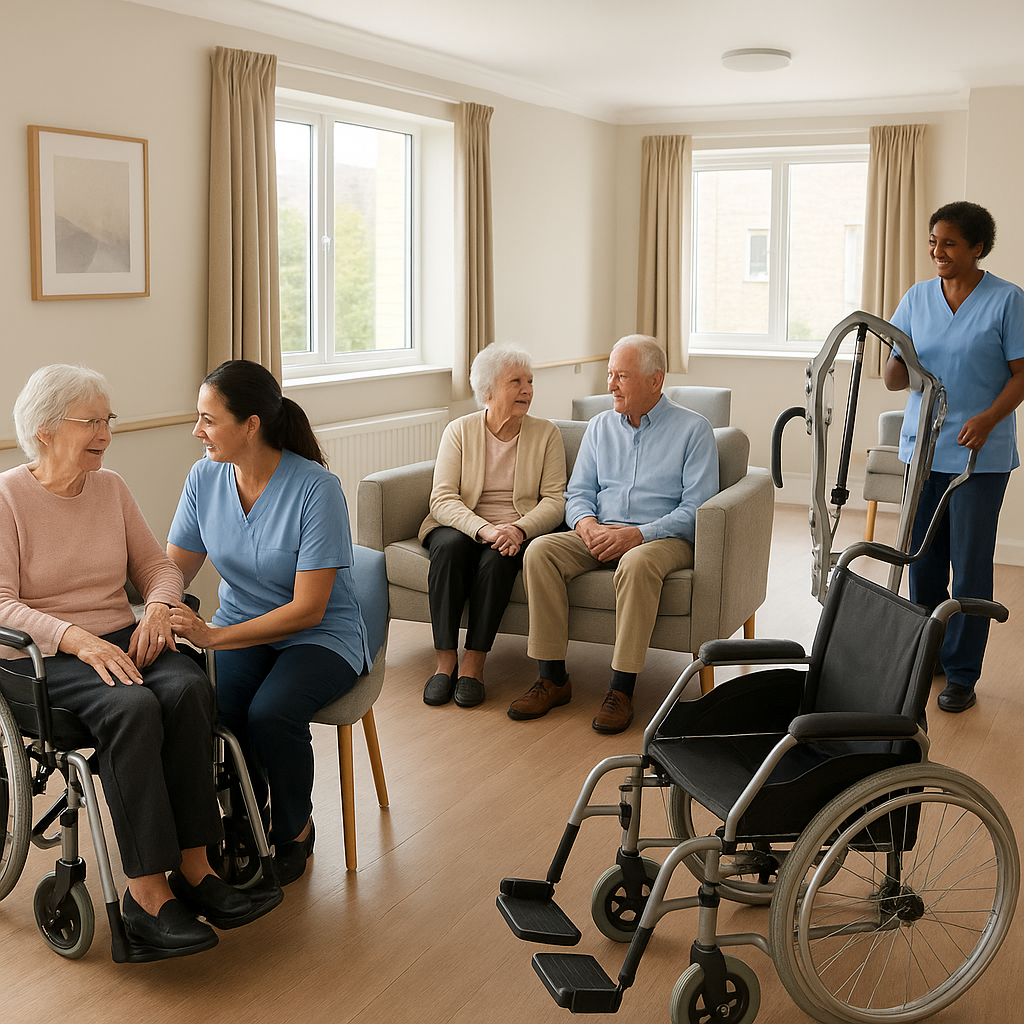
Residential care homes represent a vital component within the elderly care sector, serving as both living spaces and healthcare environments for vulnerable populations. For procurement managers, plant engineers, and operations directors, decisions related to residential care homes extend far beyond basic purchasing. They directly influence resident wellbeing, regulatory compliance, operational efficiency, and budget management. In practice, the procurement process must balance these interdependent factors to ensure that care delivery is safe, comfortable, and sustainable.
Specialist suppliers such as Fylde Care Group play a crucial role in meeting the complex demands of residential care homes. Their expertise lies in providing products and services tailored to the specific needs of care environments, from adjustable profiling beds to mobility aids and durable furniture designed for infection control. By understanding the nuances of residential care homes, these suppliers enable buyers to make informed decisions that align with both clinical requirements and operational constraints.
Varieties of Residential Care Homes and Their Influence on Equipment Selection
Residential care homes are not a monolithic category; they vary significantly in the level of care provided and resident needs. Broadly, three primary variants warrant consideration: standard residential care homes, dementia care units, and nursing care homes. Each type demands distinct equipment specifications and procurement strategies.
Standard residential care homes typically accommodate residents requiring assistance with daily activities but not intensive medical interventions. Here, equipment such as basic profiling beds, standard hoists, and robust yet comfortable furniture is appropriate. In contrast, dementia care units require specialised products designed to enhance safety and reduce confusion or agitation. For example, beds with integrated sensor systems or furniture with rounded edges and non-glare finishes are commonly specified to minimise risks.
Nursing care homes, by comparison, combine residential living with clinical care, necessitating higher-grade equipment. This includes electrically profiling beds with advanced pressure relief mattresses and hoists capable of managing higher weight capacities. The level of care directly affects the procurement decision, as products must meet stringent technical and safety standards suitable for medical interventions and frequent use.
The distinction between these types also impacts the market for new versus used equipment. For instance, nursing homes often require the latest models with advanced features due to regulatory scrutiny, while standard residential homes may find value in refurbished equipment that meets basic operational needs without significant compromise.
Key Technical Criteria for Evaluating Residential Care Home Equipment
When assessing equipment for residential care homes, technical evaluation should focus on several critical areas. Structural integrity is paramount; beds, hoists, and furniture must be robust enough to withstand daily use in a demanding environment. Materials should facilitate thorough cleaning and support infection control protocols. Stainless steel frames and antimicrobial coatings, for example, are preferred in many cases to reduce contamination risks.
Functional features such as adjustability, safety mechanisms, and ergonomics are equally important. Adjustable beds must offer smooth and reliable profiling functions with fail-safe controls that prevent accidental movement. Safety rails should be secure yet unobtrusive, and hoists must include emergency lowering systems. Ergonomics also extend to user-friendly controls for staff, reducing the risk of injury during patient handling.
Evaluating second-hand equipment demands additional scrutiny. Certification of refurbishment processes, compliance with current safety standards, and warranty coverage are essential checkpoints. Buyers frequently overlook the importance of verifying the recertification status of used profiling beds or mobility aids, which can lead to costly downtime or safety incidents. Suppliers like Fylde Care Group typically provide detailed refurbishment documentation, offering reassurance on product condition and compliance.
Understanding Total Cost of Ownership in Residential Care Home Asset Management
Procurement decisions should incorporate a comprehensive view of total cost of ownership (TCO), encompassing upfront purchase price as well as ongoing expenses. While new equipment may carry a higher initial cost, it often benefits from manufacturer warranties, readily available spare parts, and lower maintenance requirements. Conversely, refurbished units may offer short-term savings but could incur higher costs over time due to increased servicing needs or limited availability of replacement components.
One scenario encountered regularly involves a mid-sized residential care home in the Midlands replacing profiling beds. The facility initially sought refurbished units to reduce expenditure but found that extended lead times for parts and limited warranty coverage led to operational disruptions. After recalculating TCO, management opted for new equipment from a reputable manufacturer with strong aftersales support, resulting in improved reliability and reduced downtime.
Lead times also influence procurement strategy. Equipment with long delivery periods can jeopardise compliance deadlines or service continuity. Suppliers who maintain stock or provide rapid refurbishment services offer a distinct advantage. In the context of Fylde Care Group, their capacity for timely delivery and comprehensive refurbishment ensures that care homes can manage asset replacement without compromising resident care.
Navigating Compliance, Safety Standards, and Compatibility in Residential Care Settings
Compliance with regulatory frameworks is a non-negotiable aspect of residential care home procurement. The Care Quality Commission (CQC) mandates that all care environments maintain equipment that meets safety and infection control standards. Additionally, healthcare technical memoranda such as HTM 01-04 provide guidance on the design and maintenance of healthcare facilities, which influence equipment choices.
British and European standards (such as BS EN 60601 for electrical medical equipment) govern the safety and performance of beds, hoists, and other critical assets. Buyers must verify that products adhere to these standards and that documentation is complete and up to date. Traceability is essential, particularly for equipment subject to regular inspection or audit.
Compatibility with existing infrastructure often presents a practical challenge, especially in older buildings. Electrical supply constraints, room dimensions, and structural load limits necessitate careful specification and sometimes bespoke solutions. For example, a care home with limited power outlets may require battery-operated hoists or beds with low power consumption. Similarly, narrow corridors or compact rooms demand equipment with smaller footprints or modular designs.
Real-World Procurement Challenges and Solutions in Residential Care Homes
Practical procurement scenarios frequently reveal the complexity of balancing technical, operational, and financial factors. A northern care home with 50 beds faced an urgent need to replace malfunctioning profiling beds after several units failed safety inspections. The operational disruption risked non-compliance with CQC regulations. The procurement team sourced refurbished beds from a trusted supplier, prioritising units with full refurbishment certification and immediate availability. This approach minimised downtime, ensured compliance, and aligned with budget constraints.
In another case, a dementia care unit sought to integrate new mobility aids that complied with mental health care guidance emphasising non-intrusive and safe designs. The procurement team worked closely with suppliers to select hoists featuring soft materials, quiet operation, and sensors to prevent accidental movement. This scenario underscored the importance of aligning equipment features with resident needs beyond basic specifications.
Local authority-run homes often operate under fluctuating budgets, making cost-effective procurement essential without sacrificing quality. In one instance, a council-managed residential care home leveraged a combination of new and refurbished equipment sourced from a single supplier to optimise value. The supplier’s ability to offer tailored packages, including installation and maintenance, proved critical in maintaining service continuity within financial limits.
Common Questions from Procurement and Operations Professionals in Residential Care
How do I verify that used equipment meets current safety and infection control standards?
Verification requires a thorough review of refurbishment documentation, including certification from accredited workshops that comply with relevant safety standards such as BS EN 60601 for electrical equipment. Buyers should request evidence that used equipment has undergone full mechanical and electrical testing, with replacement of worn parts as necessary. Additionally, infection control standards demand that materials are suitable for frequent cleaning and that surfaces are free from damage that could harbour pathogens. Engaging suppliers who specialise in healthcare refurbishment, like Fylde Care Group, ensures these criteria are consistently met.
What factors should influence choosing a supplier for residential care home equipment?
Key factors include the supplier’s experience with residential and elderly care environments, their ability to provide comprehensive aftersales support, and the availability of both new and refurbished equipment to suit varying budgets. Reliability in delivery and maintenance services is crucial to avoid operational interruptions. Suppliers who offer tailored advice on compliance and compatibility, and who can manage installation and staff training, add significant value. Procurement teams should also evaluate supplier reputations through industry references and case studies.
How can I ensure compatibility of new beds and hoists with existing room layouts and power supplies?
Compatibility begins with a detailed site survey assessing room dimensions, doorway widths, corridor access, and electrical infrastructure. Selecting equipment with adjustable dimensions or modular components can accommodate spatial constraints. For electrical compatibility, understanding the local power supply capacity and outlet placement is essential. Battery-operated or manually operated hoists may be necessary in areas with limited power access. Collaboration between procurement, facilities management, and suppliers during specification development mitigates risks of incompatibility.
What are the hidden costs that might arise after purchasing residential care home equipment?
Hidden costs often include maintenance and servicing fees, spare parts replacement, and potential downtime during repairs. Older or refurbished equipment may require more frequent servicing or have limited parts availability, increasing long-term expenses. Training staff to operate new equipment safely is another frequently overlooked cost. Additionally, non-compliance with evolving regulations can lead to penalties or forced early replacement. A thorough total cost of ownership analysis helps identify and mitigate these risks before committing to a purchase.
Bringing Expertise to Residential Care Home Procurement Decisions with Fylde Care Group
Making informed procurement decisions within residential care homes demands a deep understanding of both the technical requirements and operational realities of elderly care environments. The interplay between resident needs, regulatory compliance, and budget constraints requires buyers to consider equipment features, refurbishment quality, and supplier capabilities carefully. Specialist providers like Fylde Care Group offer a combination of expertise and tailored service that supports procurement managers and operations directors in navigating these complexities.
Fylde Care Group’s extensive experience in supplying and refurbishing residential care home equipment ensures that buyers gain access to products engineered for durability, safety, and compatibility with care settings. Their approach addresses not only the physical attributes of beds, hoists, and furniture but also the compliance documentation and aftersales support essential for ongoing operational success. Buyers seeking detailed information and practical guidance will find the resource at residential care homes particularly useful in aligning procurement strategies with sector-specific demands.
Ultimately, successful residential care home procurement hinges on recognising the nuanced differences between care home types, rigorously evaluating technical criteria, and adopting a total cost of ownership mindset. By engaging with knowledgeable suppliers and leveraging real-world insights, care providers can enhance resident safety, maintain compliance, and optimise resource utilisation in an increasingly challenging healthcare landscape.