
In-depth Insights into Collision Investigation: Practical Considerations for Procurement and Operations
Understanding the Critical Role of Collision Investigation in Operational Decision-Making
Collision investigation plays a fundamental role in managing risk and liability across industrial and transport sectors. Whether for commercial fleets, public transport systems, or heavy plant operations, the ability to accurately analyse collisions can mean the difference between swift resolution and prolonged operational disruption. Beyond the immediate assessment of fault, collision investigation feeds directly into insurance claims, legal proceedings, and the continuous improvement of safety protocols.
In practice, procurement managers and operations directors must recognise that the quality of collision investigation is highly dependent on the capabilities of the equipment and services engaged. A thorough investigation reduces ambiguity in incident reports, helping insurers and legal teams to reach fair conclusions more quickly. Moreover, detailed collision data allows safety teams to identify systemic risks and implement preventive measures, which can lower future incident rates and associated costs.
From an operational perspective, the choice of collision investigation tools and providers affects turnaround times and the depth of analysis possible. For example, a logistics company operating hundreds of vehicles cannot afford delays in collision reporting that extend vehicle downtime or inflate insurance premiums. Consequently, procurement decisions must balance technical sophistication with practical factors such as availability, ease of use, and compatibility with existing systems.
Differentiating Collision Investigation Types and Their Influence on Procurement Choices
Collision investigation encompasses several distinct variants, each with unique technical requirements and implications for procurement. The primary types include forensic vehicle collision analysis, scene reconstruction, and digital data extraction from vehicles and infrastructure.
Forensic vehicle collision analysis focuses on the detailed examination of vehicle damage, deformation patterns, and mechanical failures to reconstruct the dynamics of a collision. This often involves specialised measuring equipment such as high-precision gauges, deformation mapping tools, and material testing devices. Procurement in this area typically requires sourcing rugged, portable equipment capable of operating in various environments and delivering consistent accuracy.
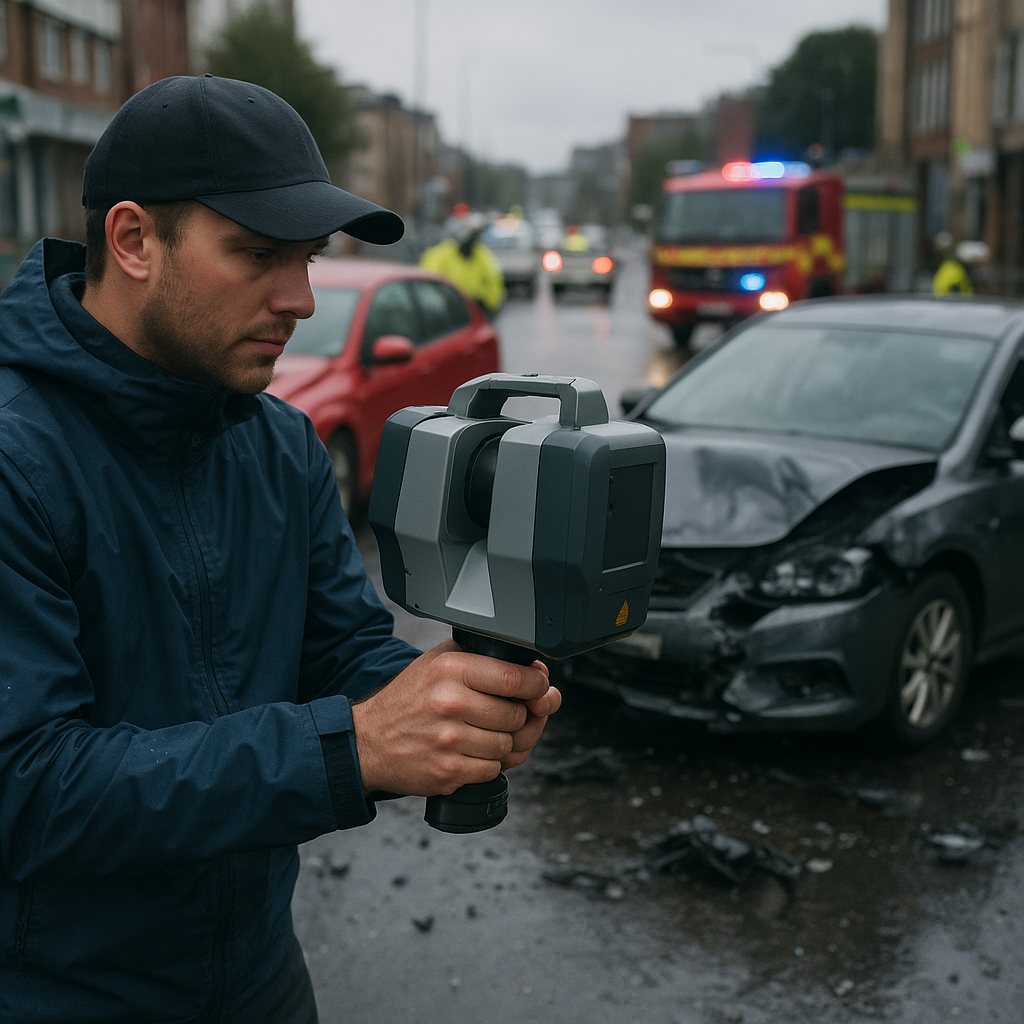
Scene reconstruction involves capturing the physical environment where the collision occurred. This is increasingly performed using 3D laser scanners and photogrammetry systems, which generate detailed spatial models. These tools must be highly accurate, often achieving millimetre-level precision, and compatible with software that can integrate multiple data sources for comprehensive analysis. Buyers often face decisions between purchasing new, state-of-the-art scanning technology from manufacturers like Leica or FARO, or opting for refurbished units that balance cost with acceptable precision.
Digital data extraction is critical in modern collision investigation, relying on telematics devices, black box data readers, and infrastructure sensors connected to intelligent transport systems. These tools require constant software updates and compatibility with a variety of vehicle makes and models. Procurement managers must consider the breadth of supported vehicle protocols, ease of data retrieval, and integration with forensic analysis platforms to ensure seamless workflows.
The chosen type of collision investigation directly influences equipment lifecycle expectations and support requirements. For instance, digital extraction tools often necessitate frequent software licensing renewals and technical support, whereas physical measurement devices may have longer service lives but require periodic calibration and maintenance. Understanding these distinctions helps buyers align their procurement strategies with operational priorities and budget constraints.
Evaluating Collision Investigation Equipment: Technical Criteria That Matter
When committing to a purchase, technical evaluation of collision investigation equipment must go beyond headline features and manufacturer claims. Precision and accuracy of measurement devices form the cornerstone of reliable investigations. Buyers should verify calibration protocols and ensure traceability to national measurement standards, such as those maintained by the UK’s National Physical Laboratory. Calibration certificates and documented quality assurance procedures are essential documentation that procurement teams should request.
Data integration capabilities represent another critical consideration. Equipment must be compatible with existing forensic analysis software, such as PC-Crash or HVE (Human Vehicle Environment), and align with law enforcement databases where applicable. In practice, buyers frequently overlook the importance of seamless data transfer, leading to workflow bottlenecks and increased manual processing, which can delay case resolution.
Durability and usability in field conditions are equally important. Collision investigation equipment is often deployed outdoors under varying weather and terrain conditions. Devices with environmental resistance ratings, such as IP65 or higher, and ruggedised casings reduce the risk of damage during site inspections. Portability and ergonomic design also impact investigator efficiency, particularly during extended deployment periods or when working in confined spaces.
Operator interface design should not be underestimated. Complex menus and unintuitive controls can increase training requirements and raise the risk of operator error. In one scenario involving a municipal transport authority, the procurement of a 3D scanning system with a steep learning curve resulted in underutilisation and additional training costs. Procurement teams must factor in ease of use, operator feedback, and vendor support services when evaluating options.
Balancing Total Cost of Ownership with Operational Efficiency in Collision Investigation Procurement
The total cost of ownership (TCO) for collision investigation equipment extends well beyond the initial purchase price. Buyers should adopt a long-term perspective that includes refurbishment cycles, spare parts availability, software licensing fees, and potential downtime costs.
Refurbishment is a common practice in this sector, especially for high-value 3D scanners and data extraction hardware. Manufacturer-authorised refurbishment can restore equipment to near-new performance levels at a fraction of replacement costs. However, buyers must ensure that refurbished units come with warranties and updated software to avoid costly failures. One logistics firm managing a fleet of over 200 vehicles found that investing in refurbished laser scanners with full manufacturer support reduced their capital expenditure by 30%, while maintaining investigation turnaround times.
Spare parts availability is another factor that directly impacts operational continuity. For older or niche equipment models, sourcing critical components can be challenging, leading to prolonged downtime. Procurement managers should assess the supply chain robustness and vendor support networks before committing. Lead times for key parts, such as sensor modules or data storage devices, should be factored into maintenance planning to avoid unexpected delays.
Software licensing and update fees also contribute significantly to TCO, particularly for digital data extraction tools that require frequent updates to support new vehicle models and regulatory changes. Evaluating the licensing model—whether subscription-based or perpetual—alongside the frequency and cost of updates is crucial. Some vendors bundle support and updates within the purchase price, while others charge separately, influencing long-term budget forecasts.
Finally, the trade-off between investing in the latest technology and extending the life of legacy equipment through upgrades is a common dilemma. Modern systems often offer improved accuracy, speed, and integration capabilities, but come with higher upfront costs and potentially steeper training requirements. Conversely, upgrading existing tools can be cost-effective but may limit investigative scope or compatibility. Procurement decisions should be informed by operational risk assessments and projected case volumes.
Navigating Compliance and Compatibility: Ensuring Alignment with Industry Standards and Regulations
Collision investigation activities in the UK and European contexts are subject to stringent regulatory frameworks governing data handling and quality assurance. Compliance with the General Data Protection Regulation (GDPR) is paramount when processing collision data that includes personal information, such as driver details or vehicle telematics. Procurement managers must ensure that equipment and software solutions incorporate robust data security features, including encryption and controlled access mechanisms.
Technical standards relevant to forensic inspection bodies include ISO 17020, which specifies requirements for the competence of inspection bodies, and BS EN ISO 9001 quality management standards, which underpin consistent forensic processes. Selecting vendors and service providers who comply with these standards supports the credibility and admissibility of investigative findings in legal contexts.
Compatibility with police and insurance sector systems is another important consideration. For instance, data exchange protocols must support chain of custody requirements to preserve evidential integrity. In practice, procurement teams often encounter challenges ensuring that digital extraction tools and forensic software can seamlessly interoperate with law enforcement databases and insurance claim platforms. Careful due diligence during the procurement process can identify potential integration issues early and avoid costly retrofits post-deployment.
Real-World Procurement Scenarios Highlighting Industry-Specific Challenges and Solutions
Consider a logistics firm operating a fleet of over 200 delivery vehicles across the UK. Their primary challenge was minimising downtime following collisions while ensuring detailed incident analysis for insurance purposes. Their procurement team prioritised acquiring portable 3D laser scanners with rapid setup times and high accuracy to expedite scene reconstruction. They opted for refurbished units from established manufacturers that included full calibration and software licensing. This approach enabled them to reduce investigation turnaround by 20% and maintain fleet utilisation.
In contrast, a municipal transport authority faced the complexity of investigating collisions involving both road vehicles and trams. Their procurement challenge centred on sourcing multi-modal collision analysis tools capable of integrating infrastructure sensor data with vehicle telematics. After extensive market research, they selected a hybrid digital extraction system with customisable sensor arrays and compatible software platforms that supported both road and rail standards. The investment required careful planning for operator training and software updates but ultimately improved investigatory scope and data quality.
Another scenario involved an engineering consultancy specialising in heavy plant machinery collisions on construction sites. Their investigations required bespoke sensor arrays capable of capturing high-impact data and complex site geometries. Procurement decisions focused on modular equipment that could be easily configured for different machinery types and environmental conditions. The consultancy also emphasised software compatibility with CAD and structural analysis tools to support detailed reconstruction and failure mode analysis. This specialised procurement strategy enhanced their service offerings to clients in the heavy industry sector.
Frequently Asked Questions About Collision Investigation Procurement and Operational Use
What are the key technical features to prioritise when selecting collision investigation equipment for a mixed fleet environment?
For mixed fleet environments, versatility and compatibility are paramount. Equipment should support a broad range of vehicle makes and models, including commercial vehicles, passenger cars, and specialised machinery. Prioritising devices with modular software that can adapt to different data protocols ensures flexibility. Additionally, ease of calibration and robust field performance are crucial since diverse vehicles often mean varied environmental conditions during investigations.
How do refurbishment and spare parts availability influence long-term operational reliability?
Refurbishment can significantly extend equipment lifespan and reduce capital expenditure, but only if performed to stringent quality standards. Reliable refurbishment includes comprehensive testing, recalibration, and software updates. Spare parts availability directly affects operational reliability; delays in obtaining critical components can halt investigations and increase downtime. Procurement teams should verify vendor supply chains and consider stocking key spares to mitigate risks.
In what ways can software compatibility issues disrupt collision data analysis workflows, and how can they be mitigated?
Software compatibility problems can cause delays in data processing, increase manual data handling, and introduce errors. For example, if a digital extraction tool’s output format is not supported by forensic analysis software, investigators must perform time-consuming conversions or data entry. To mitigate these issues, buyers should conduct interoperability testing during procurement, engage vendors on integration capabilities, and choose solutions adhering to common data standards. Training and ongoing vendor support also play vital roles in maintaining workflow efficiency.
What compliance considerations should be front of mind when handling sensitive collision data from multiple jurisdictions?
Handling collision data across jurisdictions demands strict adherence to data protection laws such as GDPR in the UK and EU. Organisations must ensure data minimisation, secure storage, and controlled access. Cross-border data transfers require clear legal frameworks and documentation. Additionally, compliance with forensic quality standards ensures that investigation findings retain evidential value. Procurement decisions should favour vendors with demonstrated compliance credentials and robust data governance policies.
Bringing Together Expertise and Practical Insights for Effective Collision Investigation Procurement
Collision investigation is a complex discipline requiring a nuanced understanding of both technical and operational factors. The effectiveness of investigative outcomes hinges on selecting the right mix of equipment and services that align with the specific types of collisions encountered, regulatory requirements, and organisational priorities. Real-world experience highlights common pitfalls such as neglecting data integration capabilities or underestimating total cost of ownership, which can compromise both the quality and timeliness of collision analysis.
Procurement managers and operations directors benefit from a strategic approach that balances upfront investment with long-term operational efficiency. This involves rigorous technical evaluation, due diligence on compliance frameworks, and an appreciation of industry-specific challenges. Whether managing a large logistics fleet, municipal transport assets, or heavy plant machinery, understanding the interplay of equipment capabilities, software ecosystems, and regulatory considerations is essential.
For those seeking detailed guidance on professional collision investigation services and equipment tailored to these complex requirements, the resources available at GBB UK’s collision investigation service page offer valuable, experience-based insights. Their expertise reflects the practical realities of procurement and operational deployment, helping organisations make informed decisions that enhance both investigative rigour and operational resilience.