
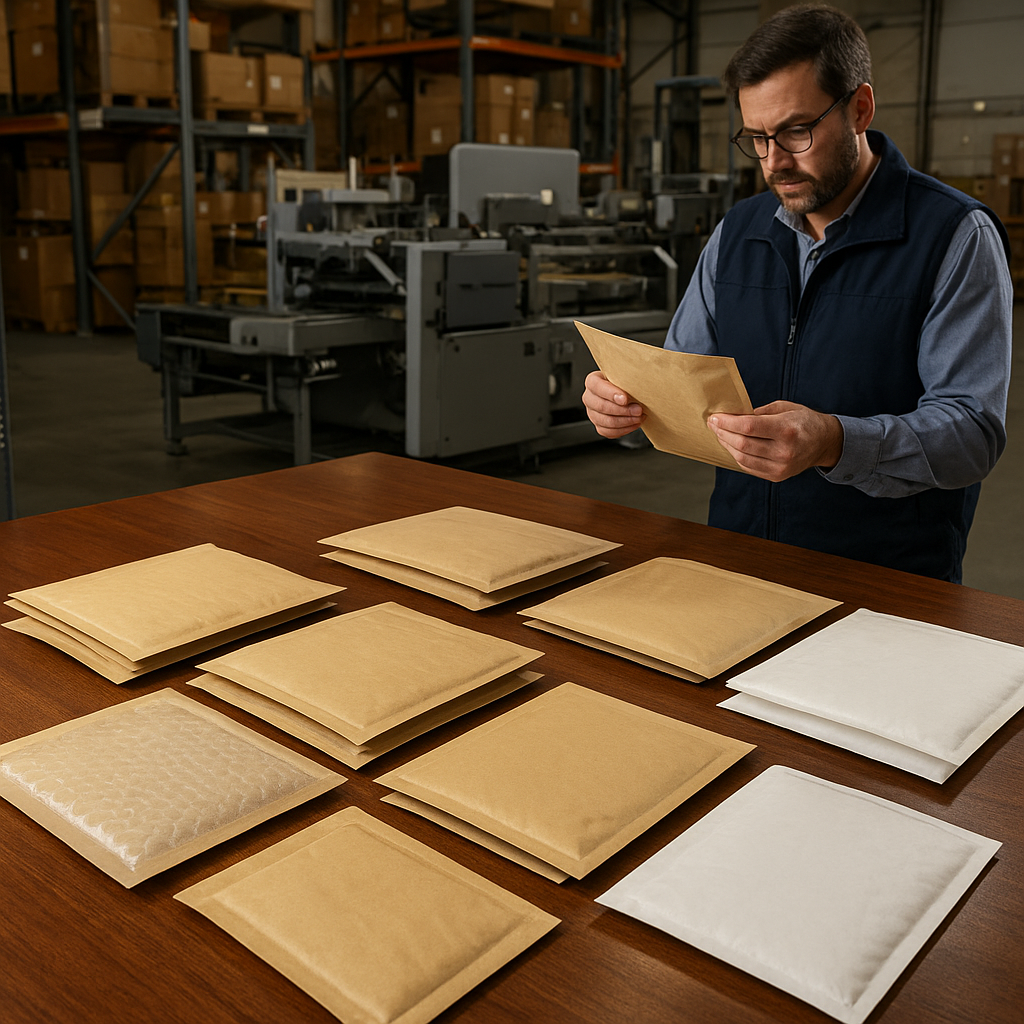
Optimising Packaging Operations with Expert Insights on Padded Envelopes
How Strategic Choices in Padded Mailing Solutions Influence Efficiency, Protection, and Compliance
Padded envelopes are a critical component in many packaging and postal operations, offering a blend of protection, convenience, and cost-effectiveness. However, their selection and integration into the supply chain demand a nuanced understanding that goes beyond surface-level features. For procurement managers, plant engineers, and operations directors, choosing the right padded envelopes is a strategic decision that can affect product safety, shipping costs, packing efficiency, and regulatory compliance. This article draws on extensive sector experience to explore the technical, operational, and commercial factors that inform best practices in padded envelope procurement and use.
The Strategic Importance of Choosing the Right Padded Envelope for Your Packaging Operation
In practice, the choice of padded envelopes impacts far more than just the immediate physical protection of goods. It influences the entire packaging workflow, customer satisfaction, and logistics economics. For instance, a procurement manager for a mid-sized consumer electronics distributor recently shared how shifting to a more robust bubble-lined padded envelope reduced return rates by nearly 15 per cent due to improved cushioning against transit shocks. This directly translated into lower costs associated with replacements and customer service.
Operational challenges often arise around damage rates and handling conditions. Many buyers initially focus on unit cost without fully considering how envelope durability interacts with packing speed and postage. Lightweight envelopes may reduce postage fees but could increase damage rates if cushioning is inadequate. Conversely, overly bulky padded mailers can slow down manual packing lines or cause jams in automated feeders, disrupting throughput and increasing labour costs.
Furthermore, the downstream effects on waste management and environmental impact are increasingly scrutinised. Packaging that cannot be efficiently recycled or that contributes to excessive landfill waste may conflict with corporate sustainability goals, which in turn influence procurement decisions. Thus, selecting the right padded envelopes requires balancing protection, operational efficiency, and environmental considerations.
Distinct Types of Padded Envelopes and Their Influence on Procurement Decisions
The market broadly divides padded envelopes into two main categories: bubble-lined and paper-padded variants. Bubble-lined envelopes typically incorporate a polyethylene bubble wrap lining sealed inside a kraft paper or plastic outer layer. The size and density of these bubbles vary, affecting cushioning performance and envelope thickness. Paper-padded envelopes, on the other hand, use recycled paper fibres or pulp as padding, offering a more eco-friendly profile but sometimes at the expense of cushioning efficiency for fragile items.
Recent developments have introduced biodegradable padding materials, such as starch-based foams or recycled fibre blends, to address sustainability concerns without compromising protection. These eco-friendly options, while promising, often come with higher unit costs and require careful compatibility checks with existing packing equipment.
Choosing between these types depends heavily on the product category and operational context. For example, fragile electronics benefit from bubble-lined envelopes with consistent air cushioning, whereas apparel or printed materials might fare well with paper padding that offers protection against bending and abrasion without adding bulk. Importantly, the envelope construction influences how well the mailer feeds through automated machinery. Bubble-lined envelopes are generally smoother and more uniform, which can reduce machine jams, while paper-padded envelopes may require slower feed speeds or manual handling to avoid misfeeds.
Evaluating Technical Criteria: What Buyers Must Inspect Before Committing to a Padded Envelope Supplier
Technical inspection is a crucial step often underestimated in procurement processes. Buyers frequently overlook detailed material quality assessments, which can result in supply problems or packaging failures. Key factors to evaluate include polyethylene thickness in bubble envelopes, as thinner films may puncture more easily under stress. The bubble size and air retention properties are equally important since smaller bubbles provide a firmer cushion but may compress more quickly during transit, while larger bubbles absorb shocks better but add to envelope thickness.
For paper-padded envelopes, ply strength and fibre composition affect tear resistance and durability. Adhesive seal reliability is another critical area. In automated packing lines, poor-quality seals can cause envelope opening or leakage, leading to product loss or damage. Testing should include peel strength and resealability under varied humidity and temperature conditions, reflecting real-world postal environments.
Performance tests in practice involve assessing tear resistance, burst strength, and moisture permeability. For example, a pharmaceutical distributor dealing with sensitive supplements conducted rigorous burst strength tests in line with ASTM D774 standards to ensure their padded envelopes withstood pressure during sorting and transport. Compatibility with packaging lines is equally vital. Sizing tolerances must align precisely with equipment feed rollers and sealing jaws to avoid jams or misalignments. Some buyers have reported that even minor deviations in envelope dimensions lead to significant downtime on high-speed packing machines from manufacturers like Pitney Bowes or Neopost.
Understanding Total Cost of Ownership When Investing in Padded Envelopes: Beyond the Unit Price
Procurement decisions based solely on the per-unit price of padded envelopes often miss the bigger picture of total cost of ownership (TCO). Lead times and supplier responsiveness are critical, especially for operations processing tens of thousands of parcels monthly. Delays in envelope delivery can halt packing lines, causing costly downtime. One logistics operator in the fashion sector experienced a production bottleneck after switching to a lower-cost supplier with inconsistent supply reliability, which eventually cost more in lost revenue than the savings achieved on unit pricing.
Spare parts and service support for associated packaging machinery also factor into TCO. Older packing equipment may struggle with newer padded envelope designs, requiring retrofit kits or upgrades. In some cases, refurbishment of older machines extends their usable life, but parts availability becomes a bottleneck. For example, operators using automated feeders from manufacturers such as Ranpak or Mima Packaging have noted that newer bubble-lined envelopes with thicker films demand more robust sealing jaws, necessitating investment in replacement parts to maintain efficiency.
Used or overstock envelopes occasionally provide cost advantages, but buyers must weigh the risks of variable quality, outdated materials, and potential non-compliance with current postal standards. A balanced approach involves close collaboration with suppliers who can guarantee batch consistency and offer technical guidance on product suitability.
Navigating Compliance and Compatibility: Standards and Regulations Relevant to Padded Mailing Solutions
Padded envelopes must comply with a range of industry standards and regulatory frameworks. Postal authorities in the UK and internationally impose requirements on dimensions, weight, durability, and address visibility to ensure seamless mail processing. For instance, Royal Mail’s guidelines specify minimum burst strength and seal integrity to prevent damage or loss during automated sorting.
Environmental directives such as the UK Packaging Waste Regulations and EU’s Single-Use Plastics Directive increasingly influence material choices. Compliance with ISO 18601 series standards on packaging sustainability helps buyers demonstrate adherence to best practices and legal mandates. ASTM International standards, including ASTM D5261 for cushioning materials and ASTM D4169 for transport simulation testing, provide benchmarks for assessing envelope performance under realistic conditions.
International shipments impose further constraints. Customs authorities may require documentation verifying packaging materials to prevent the import of non-compliant or hazardous substances. Compatibility with sorting equipment and conveyor systems abroad should also be considered. Buyers often find that envelopes optimised for domestic postal machines require adjustment or alternative specifications to meet requirements in markets such as the United States or the European Union.
Real-World Procurement Scenarios Illustrating Practical Decision-Making in Different Sectors
A mid-sized electronics distributor handling approximately 50,000 shipments monthly faced a challenge balancing protection and cost. Initially using paper-padded envelopes, they experienced a 12 per cent damage rate on fragile components such as circuit boards. After switching to a higher-spec bubble-lined envelope with 10mm bubble cushioning and reinforced seals, damage rates dropped to under 3 per cent. This transition required testing with their existing Neopost folding and sealing equipment to ensure feed reliability, which was achieved through minor machine adjustments.
In the publishing sector, a magazine distributor struggled with high postage costs due to bulky packaging. By adopting lightweight, tear-resistant bubble-lined padded envelopes, they reduced package thickness and weight, cutting postage expenses by 18 per cent. The envelopes also improved customer satisfaction by arriving in pristine condition, reducing complaints about bent or torn copies. Importantly, they verified compliance with Royal Mail’s automated sorting standards to prevent sorting delays.
A food supplement retailer recently integrated biodegradable padded envelopes made from recycled paper fibres and starch-based padding to meet corporate sustainability targets. Despite initial concerns about cushioning effectiveness, rigorous drop tests and moisture resistance evaluations confirmed that the new mailers protected capsules and powders effectively. The supplier worked closely with the client’s packing plant engineers to fine-tune packing line speeds and adhesive sealing parameters, ensuring a smooth transition without operational disruption.
Common Questions Procurement Managers and Operations Leaders Ask About Padded Envelopes
How do I assess whether bubble-lined or paper-padded envelopes are better suited for my product range and shipping conditions?
Assessment begins by analysing the fragility and weight of your products alongside your shipping environment. Bubble-lined envelopes typically provide superior shock absorption, making them ideal for delicate electronics or glass items. Paper-padded envelopes, while less cushioned, offer adequate protection for softer goods like clothing or documents and tend to be more environmentally friendly. Testing samples under simulated transit conditions and consulting with your packaging line engineers will provide clarity. It is also important to consider the compatibility of each envelope type with your packing machinery to avoid operational hiccups.
What are the key technical tests I should require from suppliers to avoid costly failures in the packing line?
You should insist on comprehensive test data covering tear resistance, burst strength, moisture permeability, and adhesive seal integrity. Tear resistance ensures the envelope withstands handling stresses, while burst strength confirms its ability to resist punctures during sorting. Moisture permeability testing is crucial if your products are sensitive to humidity. Adhesive seals must be tested for strength and consistency, especially under the temperature and humidity ranges encountered in your supply chain. Additionally, machine compatibility trials on your actual packing lines can prevent unexpected feed or sealing issues.
Can older packaging machinery handle modern padded envelopes, or will I need to upgrade equipment?
Older machinery can often handle modern padded envelopes, but this depends on the envelope’s construction and material thickness. For example, automated feeders designed for thin paper envelopes may struggle with thicker bubble-lined mailers, causing jams or seal failures. Some operators have successfully retrofitted sealing jaws or adjusted feed rollers to accommodate newer materials. However, if your operation relies on very high-speed lines or requires specific sealing standards, investing in equipment upgrades or refurbishment might be the most cost-effective solution in the long term. Always involve your equipment supplier early in the evaluation process.
What environmental regulations must I consider when choosing padded envelopes, especially for international shipments?
You need to be aware of national packaging waste regulations, such as the UK’s Packaging Waste Regulations, which govern recycling and disposal obligations. The EU’s Single-Use Plastics Directive restricts certain plastic materials used in padding. For international shipments, customs authorities may require declarations confirming packaging compliance with environmental standards. Selecting envelopes made from recycled or biodegradable materials can help meet these requirements. Additionally, aligning your packaging choices with ISO standards on sustainability provides assurance to regulators and customers alike. Always verify that your supplier can provide appropriate certification and documentation.
Drawing Together Practical Insights on Selecting Padded Envelopes and Introducing Further Resources
Choosing the right padded envelopes is a multifaceted challenge that requires understanding the interplay between material properties, operational demands, and regulatory requirements. The subtle differences between bubble-lined and paper-padded variants have significant implications for packing line compatibility, product protection, and environmental impact. In practice, buyers must engage in thorough technical evaluation, including material testing and machinery compatibility assessments, to avoid costly failures that disrupt operations or damage goods.
Beyond initial purchase price, a comprehensive view of total cost of ownership includes supplier reliability, lead times, service support, and the potential need for equipment upgrades or refurbishment. Real-world procurement scenarios from sectors such as electronics distribution, publishing, and food supplements highlight how tailored solutions and close collaboration with suppliers contribute to operational resilience and customer satisfaction.
For organisations seeking a dependable source of quality padded envelopes that balance protection, compliance, and cost-efficiency, the selection available at Redmont Packaging represents a carefully curated range. Their product offerings reflect an understanding of the technical and commercial complexities outlined here, providing practical options for diverse operational needs and helping procurement professionals make informed decisions aligned with their strategic objectives.